
Explore our export-ready range of FRP/GRP fiberglass gratings, electroforged carbon steel panels, stainless steel drain systems, and heavy-duty industrial surfacing.
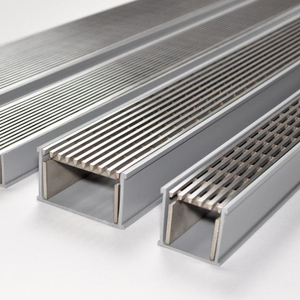
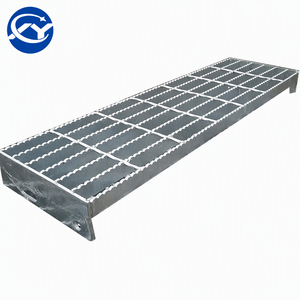
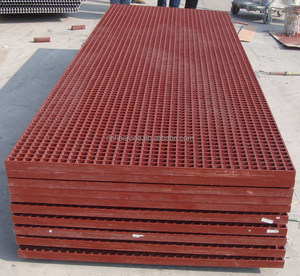
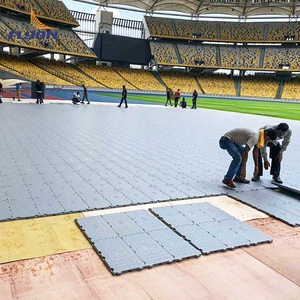
As industrial processing plants, marine off-shore platforms, water treatment infrastructure, and chemical containment zones push the limits of operational severity, traditional metallic flooring systems—including hot-dip galvanized carbon steel and standard stainless grades—face rapid degradation from galvanic corrosion, chemical exposure, and mechanical fatigue. Structural Fiberglass Reinforced Polymer (FRP/GRP) Gratings have established themselves as the definitive non-metallic engineering alternative, offering an unmatched ratio of strength-to-weight, complete non-conductive electrical safety, and superior life-cycle ROI.
Our facility operates as a tier-1 OEM/ODM manufacturer specializing in high-performance molded fiberglass grating and pultruded GRP structural profiles. By combining continuous high-modulus E-glass roving yarns with advanced thermosetting resin matrices (Isophthalic Polyester, Vinyl Ester, and Orthophthalic systems), we engineer bespoke grating solutions tailored to precise mechanical spans, deflection limits, and severe chemical micro-environments.
Technical Insight: Unlike standard carbon steel grating which requires periodic recoating and electroforged joint maintenance, molded FRP grating features continuous interlocking glass fiber strands woven in a bi-directional matrix, fully wetted by liquid resin to achieve 100% monolithic structural integrity.
Whether you require custom mesh depths (25mm, 38mm, 50mm), specific panel dimensions for turnkey project layouts, anti-slip quartz grit surface toppings, or fire-retardant formulations compliant with ABS and ASTM E84 Class 1 standards, our OEM manufacturing pipeline delivers exact design compliance with zero margin for structural compromise.
Precision-molded resin matrices, custom toolings, and flexible structural profiles designed to meet international engineering standards.
Formulated with premium Vinyl Ester (VE) for aggressive acids/alkalis, Isophthalic (ISO) for industrial food/chemical processing, or Orthophthalic (ORTHO) for cost-effective architectural applications.
Full customization of panel sizes (up to 1220x3660mm), mesh pattern densities (square mesh, rectangular mesh, mini-mesh, micro-mesh), and thickness profiles ranging from 13mm to 60mm.
Integrated anti-slip options including embedded quartz grit (coarse/fine), concave self-cleaning meniscus top, smooth finish, or solid covered top plates for liquid containment decks.
To assist EPC consultants, plant engineers, and procurement managers in material selection, the following data matrix highlights the operational trade-offs across common grating materials under rigorous industrial service conditions:
| Performance Criterion | Molded FRP Grating | Pultruded GRP Grating | Hot-Dip Galvanized Steel | 316 Stainless Steel |
|---|---|---|---|---|
| Corrosion Resistance | Exceptional (Immune to rust/salts) | Exceptional (High resin/glass ratio) | Poor (Zinc layer degrades over time) | Moderate to High (Subject to pitting) |
| Strength-to-Weight Ratio | Very High (1/4 weight of steel) | Ultra High (Unidirectional strength) | Moderate (High dead-weight) | High (Heavy structural loading) |
| Electrical & Thermal Conductivity | Non-conductive (Insulator) | Non-conductive (Insulator) | High Conductor | High Conductor |
| Fabrication & Cutting | Easy (Standard diamond tools) | Easy (Standard diamond tools) | Requires hot-cutting & re-galvanizing | Requires specialized plasma cutting |
| Maintenance & Field Repairs | Zero Maintenance (Color molded through) | Zero Maintenance | High (Frequent re-painting required) | Moderate (Acid washing required) |
| Estimated Service Lifespan | 25+ Years | 25+ Years | 5 - 10 Years (Corrosive zone) | 15+ Years (Non-chloride zone) |
The global industrial flooring market is undergoing a major paradigm shift driven by three core macro-economic trends: Total Cost of Ownership (TCO) optimization, stricter workplace safety regulations (OSHA/HSE), and decarbonization target compliance.
While carbon steel gratings often present lower initial procurement costs (CAPEX), international engineering buyers are increasingly modeling 20-year Total Cost of Ownership. When factoring in the recurring OPEX costs of sandblasting, recoating, structural downtime, and corrosion-induced replacements in coastal, offshore, or chemical facilities, structural fiberglass grating delivers up to 60% total lifecycle cost savings. OEM suppliers who offer verified corrosion testing and finite element analysis (FEA) load data are gaining dominant market share.
The rapid rise of green hydrogen production plants, seawater desalination facilities, and EV battery gigafactories has sparked surge demand for specialized fiberglass grating. In lithium-ion battery production facilities, non-magnetic and non-sparking electrical insulation is critical to prevent short circuits and fire hazards. Customized non-conductive FRP mini-mesh gratings are rapidly replacing metallic flooring in automated battery assembly line walkways and electrolyte mixing zones.
Global EPC contractors are standardizing on prefabricated composite module kits. As an OEM/ODM leader, we supply pre-cut, CNC-machined fiberglass grating panels complete with banded edges, mounting clip kits (M-clips, C-clips, L-clips), and factory-installed toe plates. This modular approach reduces field installation hours by up to 70%, eliminating on-site hot work permits completely.
Expert insights covering structural resin selection, load-bearing capacities, installation hardware, and OEM ordering workflows.
A: Molded FRP grating features continuous inter-woven glass fiber strands placed vertically and horizontally in a square mesh mold, yielding bi-directional load capability. This makes molded panels ideal for custom cut-outs as structural strength is maintained across both axes. Pultruded GRP grating, by contrast, uses continuous roving and mat pulled through a shaping die to create rigid structural profiles (I-bars or T-bars) joined by cross rods. Pultruded grating offers significantly higher glass content (~70% vs. ~35% in molded), making it far stiffer over wide spans, but its strength is unidirectional along the bearing bar length.
A: Resin selection depends directly on exposure temperatures and chemical concentrations:
A: All our fire-retardant engineered resin systems are tested in accordance with ASTM E84 standard test methods for surface burning characteristics. Flame Spread Index (FSI) ratings of 25 or less (Class 1 / Class A) are standard across our fire-retardant Isophthalic and Vinyl Ester resin series. Additionally, panels meet self-extinguishing requirements per UL 94 V-0 and comply with international marine safety standards (ABS, DNV).
A: Yes. For heavy wheel traffic (H-20 rating, heavy forklift loading), we manufacture specialized 50mm and 60mm heavy-duty molded FRP panels as well as heavy-depth pultruded GRP structural gratings. Our engineering team provides detailed load-deflection tables calculating uniform load (UBL) and concentrated line load (CLL) to ensure specified deflections remain below L/200 or 6mm.
A: FRP gratings are anchored using 316 Stainless Steel fixing clips engineered for specific panel geometries:
A: Because color pigments are thoroughly mixed directly into the liquid resin prior to molding or pultrusion, the color is homogeneous throughout the entire panel thickness. Scratches or surface wear will never expose a different color. We manufacture against standardized RAL color charts (e.g., Safety Yellow for walkways, Industrial Dark Gray for plant floors, Green for chemical areas, Red for fire hazard zones).
A: Every export order is accompanied by comprehensive quality control documentation, including Mill Test Reports (MTRs), Raw Material Certification (resin/glass yarn specs), Resin Burn-Off Test Certificates (ASTM D2584 for glass content), Barcol Hardness Test Logs (ASTM D2583), Flame Spread Test Certificates, and dimensional inspection reports prior to sea-freight container packing.
With decades of dedicated composite engineering expertise, our modern production facility operates automated molding stations, continuous high-velocity pultrusion lines, and full-spectrum CNC post-processing machinery. We support major infrastructure and energy contracts worldwide by offering:
Contact our composite specialists to review structural load requirements, request resin resistance charts, or get instant OEM pricing for your upcoming industrial project.