OEM/ODM Tree Grate Covers Manufacturers & Supplier

Precision Architectural & Industrial Grating Engineering: From Electroforged Steel Platforms to Heavy-Duty Urban Root Aeration Solutions Built Exactly to Drawing.

>100 t
Hydraulic Electroforge Force
2200 A
Fusion Welding Electric Current
100%
Custom Geometric Bands & Cutouts
ISO/EN
Compliant Pedestrian & Heavy Load Rates
Engineered Product Portfolio

Specialized OEM Grating & Drainage Assemblies

Explore our high-performance infrastructure panels, modular tree pit enclosures, and corrosive-service gratings manufactured for international EPC contracts and smart cities.

Engineering Specification Guide

Structural Design & Material Science of Tree Grate Covers

A comprehensive analysis of load-bearing mechanics, environmental passivation, and urban root zone preservation for municipal planners and industrial civil contractors.

Electroforged Structural Integrity

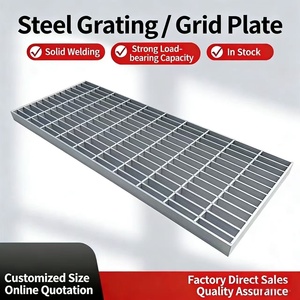
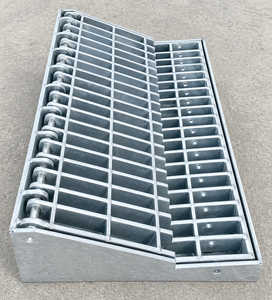
By leveraging PLC-controlled hydraulic pressure (>100 metric tonnes) combined with ~2200 A fusion currents, the bearing bars and twisted square cross bars merge without filler metals. This yields isotropic lateral stiffness, completely mitigating stress fractures caused by continuous pedestrian cadence and light vehicular overrun.

Passivation & Metallurgical Protection

Tree grates in urban bioretention trenches endure high moisture, de-icing salts, and dog urine nitrates. Utilizing hot-dip galvanization conforming to ASTM A123 / EN ISO 1461 (minimum 610 g/m² zinc coating) or electro-polished AISI 304/316 austenitic stainless steel guarantees 50+ years of maintenance-free service life without sacrificial coating degradation.

Root Aeration & Bioretention Drainage

Engineering urban root covers requires precise hydrological apertures. Apertures narrower than 8–10mm comply with the Americans with Disabilities Act (ADA) preventing heel entrapment and crutch slip, while maintaining a minimum 55% open surface area to maximize storm runoff infiltration and natural aerobic respiration of root zones.

Material Comparison

Material Performance Matrix: Tree Grates & Trench Covers

Evaluating mechanical thresholds, load classifications, and chemical resilience for global procurement decisions.

Material Class Yield Strength / Tensile Load Classification (EN 124) Surface Treatment Recommended Urban / Site Application
Electroforged Carbon Steel 235 – 355 MPa Class B 125 to C 250 (Light Vehicle / Delivery) Hot-Dip Galvanized (>85µm) Commercial plazas, streetscapes, pedestrian zones with occasional service truck loads.
Austenitic Stainless Steel (304/316) 205 – 520 MPa Class A 15 to B 125 (Pedestrian ADA Compliant) Acid Pickled & Electro-Polished Coastal walkways, luxury corporate campuses, public botanical installations requiring pristine aesthetics.
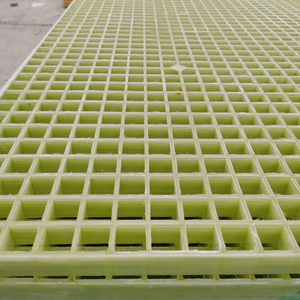
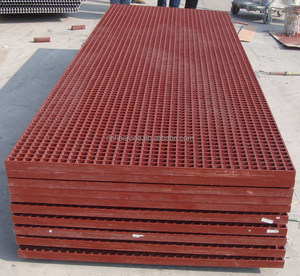
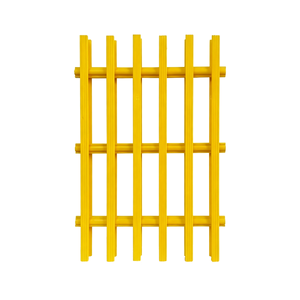
Molded / Pultruded FRP Composite 270 – 400 MPa (Flexural) Class A 15 to B 125 (Non-Conductive) Quartz Grit Top / UV Stabilized Resin Chemical industrial yards, power plants, corrosive soil zones where weight-saving installation is vital.
Heavy Duty Ductile Iron (500-7) 320 – 500 MPa Class C 250 to D 400 (High-Speed Traffic) Bituminous Dip / Epoxy Coating Heavy urban boulevards, loading terminals, emergency lane integration subject to continuous bus traffic.
Strategic Procurement Analysis

Emerging Trends in Architectural & Municipal Grate Procurement

How sustainable construction standards, circular economy protocols, and smart city infrastructure are reshaping international specifications.

1. Sponge City & SUDS Integration

Global procurement teams are mandating compliance with Sustainable Drainage Systems (SuDS). Tree pit grates are no longer passive rings; they act as primary retention filtration systems featuring integrated silt baffles and root irrigation ports that absorb flash rainfall events directly into urban groundwater reserves.

2. Expanding Root Collar Rings

Fixed-dimension openings are becoming obsolete due to root-choking risks. Progressive civil contracts favor modular concentric breakout rings. An initial 400mm aperture can be iteratively widened to 600mm and 800mm over a 30-year lifecycle without replacing the outer structural frame, substantially reducing long-term OPEX.

3. Digital BIM & CAD Standard Integration

OEM/ODM manufacturers must deliver native BIM (Revit, IFC) parametric families alongside shop drawings. Engineering teams demand precision digital collision analysis for sub-surface utilities, root zone irrigation conduits, and adjacent cable containment trays prior to production.

Factory Direct Manufacturing Superiority

Combining heavy electroforging technology, dedicated pultrusion lines, and full-spectrum custom metal fabrication. We serve municipal infrastructure developers and international heavy engineering firms with certified precision.

  • 100+ Ton Hydraulic Electroforging
  • In-House Hot-Dip Galvanizing (EN ISO 1461)
  • Complete Custom Laser Cutting & Banding
  • AISI 304, 316 & 309 Stainless Steel Pickling
  • Advanced FRP / GRP Pultrusion & Molded Mesh
  • Export-Ready Wooden Palletized Packing

Procuring for a Major Project?

Provide your drawing schedules, cut-out dimensions, and finish requirements for an expedited technical proposal.

Get Catalog
Knowledge Base

Frequently Asked Questions on Tree Grate Covers

Essential guidance on design loads, manufacturing tolerances, material selection, and site installation.

What is the fundamental difference between electroforged steel tree grates and cast ductile iron grates?
Electroforged gratings are engineered from rolled steel bearing bars and square twisted cross bars fused homogeneously under high hydraulic pressure (>100t) and ~2200A electrical current without filler material. This fabrication yields exceptional weight-to-strength ratios, easily accommodates bespoke circular, square, or irregular inner tree trunk openings, and eliminates structural porosity. Cast ductile iron grates are poured into molds, offering rigid mass for continuous highway wheel impacts, but are restricted to standard mold geometries and present significantly higher shipping tare weights for export consignments.
How do we ensure tree grate covers remain pedestrian-safe and ADA-compliant?
Compliance with the Americans with Disabilities Act (ADA) Section 302 dictates that surface openings in pedestrian pathways must not exceed 1/2 inch (12.7 mm) in the dominant direction of travel. In our OEM/ODM custom tree grate panels, we maintain slot apertures between 6mm and 10mm (Mini-Mesh or fine bar spacing). Furthermore, our cross bars and bearing bars feature serrated tops or grit surfaces, achieving high dynamic coefficient of friction (DCOF > 0.60) under both dry and wet atmospheric conditions.
Can OEM tree grates be fabricated with off-center cutouts or custom irrigation ports?
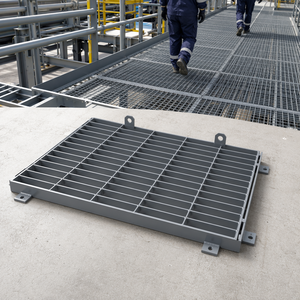
Yes. All custom welded and electroforged panels are fabricated panel-by-panel directly from approved engineering CAD drawings. Whether your tree planting alignment requires offset eccentric cut-outs, square-to-round geometric transitions, perimeter notch-outs for street lighting conduits, or lockable sub-surface irrigation ports, our fabrication facility incorporates fully banded flat-bar framing around every opening to ensure uninterrupted load transfer across the bearing grid.
What grade of stainless steel should be selected for high-traffic public squares?
For inland urban plazas, AISI 304 austenitic stainless steel, acid washed and electro-polished, provides high cosmetic durability and rust protection. However, for coastal esplanades or metropolitan environments where de-icing salts (calcium chloride) are heavily deployed during winter months, AISI 316 with 2-3% molybdenum content is mandatory to resist pitting corrosion and crevice staining over extended lifespans.
What critical data is required for our engineering team to quote custom grating covers?
To provide an exact structural quote, please furnish: (1) Total clear span opening and frame rebate dimensions; (2) Design loading criteria (e.g., pedestrian 5 kN/m², light maintenance vehicle, or H-20 wheel load); (3) Material grade (Mild Steel, 304/316 SS, or FRP); (4) Aperture style and trunk diameter requirement (including concentric expansion ring needs); (5) Surface treatment (Hot-Dip Galvanized per EN ISO 1461, Powder Coated, or Electro-Polished); and (6) Target destination sea port for containerized bundle dispatch.

Ready to Engineer Your Municipal or Industrial Grating Project?

Consult with our structural engineering team to get certified load calculations, detailed AutoCAD approval layouts, and comprehensive OEM production schedules tailored to your delivery timeline.
Get Catalog