ISO 9001:2015 & ASTM A123 Certified Fabrication

Top Trusted Galvanized Stair Treads Manufacturer & Supplier

Engineered industrial grating stair steps with heavy-duty anti-slip nosing, electroforged structural integrity, and ISO 1461 hot-dip galvanizing for petrochemical, industrial, and infrastructure developments.

Precision Structural Steps

Featured Industrial & Architectural Stair Treads

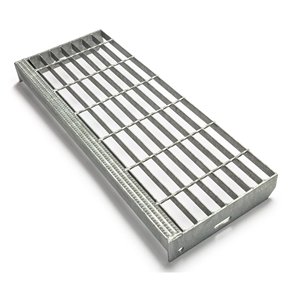
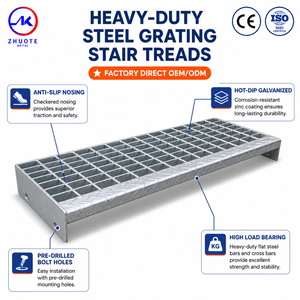
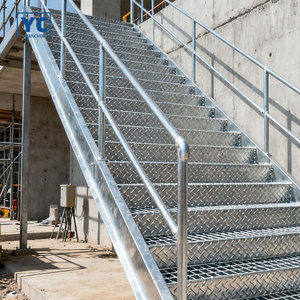
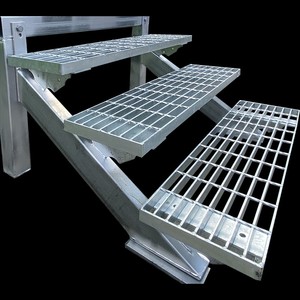
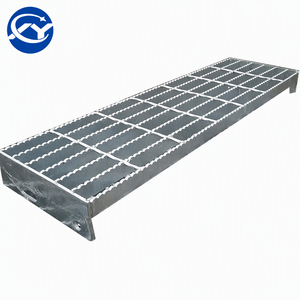
Fabricated with computer-controlled electroforging and customized welded architectures. Each tread assembly features standardized pre-punched bolt holes, end-carrier plates, and certified slip-resistant frontal nosing.

Industrial White Paper

The Engineering Science of Structural Safety: Load Distribution & Metallurgical Galvanization

Industrial stair treads form the most critical point of human interface within oil refineries, chemical processing plants, marine platforms, and high-density distribution centers. Unlike static flooring panels, stair treads are subjected to concentrated dynamic impact loads, intense directional shear, and localized fatigue stresses during high-frequency personnel transitions.

Under international occupational standards including OSHA 1910.24, BS EN ISO 14122-3, and AS 1657, stair treads must support an instantaneous point load of no less than 1.5 kN (337 lbf) applied over an area of 100mm x 100mm at the front nosing, with deflection not exceeding L/200 or 6mm. Fulfilling these rigorous thresholds requires deep metallurgical control, precise hydraulic fusion, and rigorous hot-dip zinc coatings.

>100 t Hydraulic forging pressure per structural joint eliminates weld fracture.
~2,200 A Electric current fusion seamlessly embeds twisted crossbars into bearing bars.
610 g/m² Minimum zinc coating weight adhering to ASTM A123 / ISO 1461.
50+ Yrs Service lifespan in atmospheric C3/C4 industrial operating environments.
Manufacturing Authority

Why Leading Global EPC Contractors Select Our Stair Solutions

Inheriting decades of heavy electroforging and automated fabrication engineering, we bridge the gap between design blueprints and long-term operating durability.

PLC-Controlled Electroforging

Our automated production combines over 100 metric tons of hydraulic clamp force with a 2,200-ampere electrical resistance pulse. This instantly fuses square-twisted crossbars into notched bearing bars at a molecular level, preventing crevices where moisture and corrosives collect.

In-House Deep-Kettle Galvanizing

Following rigorous caustic degreasing, acid pickling, and pre-fluxing, stair tread panels are immersed in molten 99.9% pure zinc kettles maintained at 450°C (842°F). This metallurgical process forms intermetallic iron-zinc layers (Gamma, Delta, and Zeta) harder than base steel.

Bespoke Structural Customization

From complex spiral radiuses to irregular cut-outs around pipe penetrations, our CNC plasma tables and certified robotic welders execute custom designs to precise millimeter tolerances. Every cut is banded with matching flat bar for continuous structural edge load transfer.

Engineering Load Matrices

Structural Load & Span Engineering Selection Matrix

Compare mechanical dimensions, recommended maximum spans, and anti-slip profiles across our standard carbon steel tread series.

Model Series Bearing Bar Dimension Pitch (Bearing / Cross) Recommended Max Span Concentrated Point Load (100x100mm) Nosing Configuration Standard Galvanizing
ST-255-S 25 mm x 5 mm Plain/Serrated 30 mm / 100 mm 750 mm (29.5 in) 1.5 kN (337 lbf) Checkered Plate Banded ASTM A123 / 65 μm
ST-325-S (Standard) 32 mm x 5 mm Serrated 30 mm / 100 mm 900 mm (35.4 in) 2.2 kN (495 lbf) Pyramid Abrasive Plate EN ISO 1461 / 85 μm
ST-405-HD (Heavy) 40 mm x 5 mm Serrated 30 mm / 50 mm 1,200 mm (47.2 in) 3.5 kN (786 lbf) Cast Iron/Grit Anti-Slip AS/NZS 4680 / 100 μm
ST-505-XHD (Mining) 50 mm x 5 mm Heavy Duty 30 mm / 50 mm 1,500 mm (59.0 in) 4.8 kN (1,079 lbf) Deep Serrated Solid Bar Double Dipped / 120 μm
ST-ADA-Close 32 mm x 5 mm Fine Mesh 15 mm / 100 mm 900 mm (35.4 in) 2.0 kN (450 lbf) Ribbed Extruded Yellow Bar ASTM A123 / 70 μm
Strategic Intelligence

Emerging Trends in Global Industrial Stair Tread Procurement

How ESG mandates, digital twins, and life-cycle cost analysis (LCCA) are revolutionizing structural access sourcing.

Shift from Initial CAPEX to 30-Year LCCA

Plant managers are increasingly moving away from cheap painted steel and lightweight cold-formed alternatives. Life-cycle assessments reveal that early paint failure, sandblasting down-time, and localized rust replacement cost up to 450% more over two decades than hot-dip galvanized electroforged stair steps.

Tekla & Revit BIM Integration

Modern engineering contracts require detailed IFC BIM models for every stair flight. Our engineering office translates complex structural models straight into automated bar-shearing, robotic punching, and computerized crossbar resistance welding schedules, minimizing on-site fit-up issues.

High-Visibility Photoluminescent Nosing

Global worker safety regulations are driving adoption of dual-technology nosing. In addition to R13 slip resistance, stair treads now frequently integrate durable photoluminescent strips along their outer edges to maintain clear step visibility during sudden power cuts or smoke-filled emergency evacuations.

Industry 4.0 Trajectory

Advanced Metallurgy: Micro-Alloyed Zinc & Automated Visual Surface Inspection

The manufacturing of industrial galvanized stair treads is undergoing a technical transition driven by strict zinc-bath chemistry control and automated quality control. Conventional galvanizing kettles often produced heavy zinc puddling or brittle dross inclusions that compromised bolt alignment on carrier plates.

By integrating automated dry-film eddy-current sensors, automated robot deburring of pre-punched carrier slots, and nickel-bismuth micro-alloyed galvanizing baths, modern production achieves uniform coating fluidity without edge clogging. This yields sharp serration peaks that deliver reliable slip resistance in greasy or offshore conditions.

Electroforged grating production floor
Technical Advisory

Frequently Asked Engineering & Procurement Questions

Expert answers addressing regulatory compliance, anti-slip standards, bolt carrier layouts, and field maintenance.

What is the primary technical advantage of electroforging versus hand-welded stair treads?

Manual stitch-welding can leave small undercut gaps and slag inclusions where crossbars intersect with bearing bars. Under cyclic pedestrian vibration and thermal expansion, these manual welds are vulnerable to micro-fissures, moisture retention, and localized crevice rust. In contrast, electroforged stair treads apply 100+ tons of hydraulic force combined with electrical resistance melting, embedding twisted square bars fully into bearing bars without filler wire. This creates a homogeneous, monolithic steel grid with uniform load distribution, superior torsional rigidity, and total zinc penetration during hot-dip galvanizing.

How do OSHA 1910 and BS EN ISO 14122-3 govern stair tread nosing requirements?

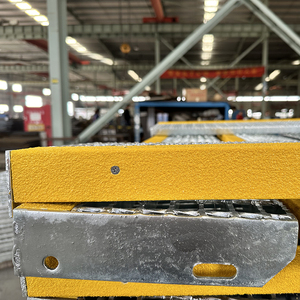
Both OSHA 1910.24/28 and BS EN ISO 14122-3 mandate that the leading edge (nosing) of any stair tread panel must be clearly distinguishable, slip-resistant, and capable of supporting focused foot impact without dangerous deflection. Our treads incorporate a specialized nosing (either a raised checkered pattern, extruded ribbed aluminum, or cast-iron silicon grit abrasive profile) that spans the entire front face. This design provides visual step clarity during descents while raising the dynamic coefficient of friction (DCOF) beyond 0.65 even when wet with industrial oils.

What coating thickness and galvanizing specifications are standard for harsh marine environments?

For standard inland applications, ASTM A123 / ISO 1461 requires an average zinc layer thickness of 65 to 85 microns (460 to 610 g/m²). However, for offshore platforms, desalination plants, and coastal refineries exposed to high salinity (ISO 12944 category C5-M), we specify controlled silicon-killed steel chemistry (Sandelin curve management) and extended kettle immersion to achieve a heavy-duty zinc coating of 100 to 120 microns (>850 g/m²). This sacrificial zinc barrier delivers up to 50 years of maintenance-free service life.

How are carrier end-plates configured to match structural steel stringers?

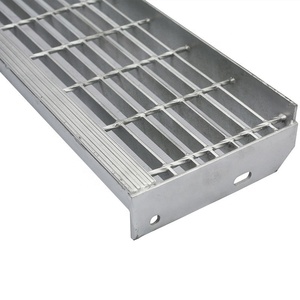
Our stair treads feature heavy-duty flat bar carrier end-plates (commonly 65x5mm or 75x6mm depending on span load). These end-plates are punched with standardized slotted and round bolt holes (typically 14mm x 24mm slots accepting M12 structural bolts) at industry-standard pitch centers (such as 45mm, 70mm, 100mm, or 125mm). This slotted design accommodates structural site tolerances and thermal movement without needing torch adjustments during assembly.

When should serrated bearing bars be specified over plain flat bars?

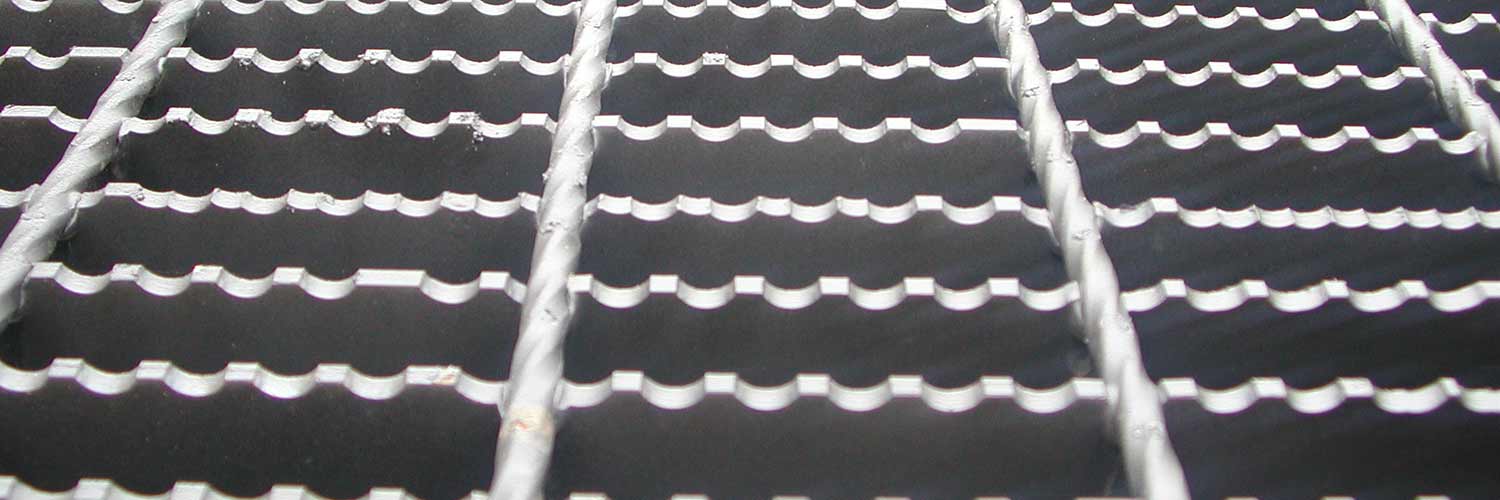
Plain flat bars are suitable for dry pedestrian access, municipal walkways, and dry distribution centers. Serrated bearing bars—featuring precision-notched upper teeth—should be specified wherever liquids, oils, chemicals, mud, snow, or ice accumulate on walking surfaces. Serrations cut through surface liquid tension to interlock with worker footwear treads, delivering reliable DIN 51130 R12 or R13 anti-slip protection.

What exact technical information is required to receive a firm export quotation?

To prepare an accurate engineering quotation and loading analysis, our team requires: (1) Bearing bar depth and thickness (e.g., 32x5mm); (2) Pitch spacing between bearing and crossbars (e.g., 30/100mm); (3) Total step length (span dimension) and step width/run; (4) Preferred nosing style (checkered plate, cast grit, or serrated); (5) End-plate bolt hole dimensions and center-to-center pitch; (6) Steel material grade (e.g., Q235B, S275JR, ASTM A36); and (7) Total piece count alongside destination port terms.

How can on-site cutting or zinc damage be repaired during field erection?

While factory-finished, made-to-drawing panels are strongly advised to eliminate on-site modifications, any emergency field penetrations, trims, or weld abrasions must be repaired in strict accordance with ASTM A780 (Standard Practice for Repair of Damaged and Uncoated Areas of Hot-Dip Galvanized Coatings). The affected area must be wire-brushed to bare metal (SSPC-SP 10) and coated with a high-purity zinc-rich primer containing at least 92-95% metallic zinc dust by dry weight, achieving a dry film thickness equivalent to the original factory dip.

Ready to Engineer Your Industrial Stairways with Proven Safety?

Share your architectural blueprints, structural drawings, or bill of quantities with our application engineers. We provide rapid technical reviews, custom load calculations, and global export logistics planning.

Inquire Now