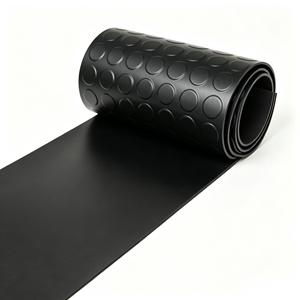

Explore our certified range of lightweight aluminum cable trays, heavy-duty industrial gratings, and mission-critical pathway systems engineered for zero electrolytic corrosion and maximum payload retention.
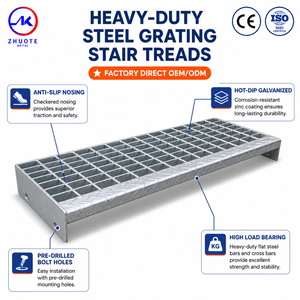
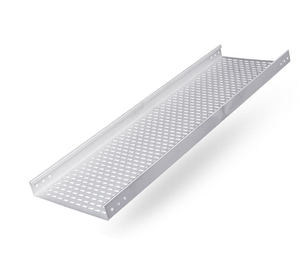
Combining heavy-tonnage hydraulic forging with high-grade architectural aluminium extrusions to deliver European-compliant pathway systems.
We provide full structural calculations, certified loading curves, and custom CAD BIM files for commercial and industrial contractors across Ireland.
Get CatalogThe transition toward sustainable, highly resilient infrastructure across the Republic of Ireland has repositioned extruded aluminum (predominantly 6063-T6 and 5052-H32 alloys) from an alternative cable management metal into a mandatory engineering standard. Across hyper-dense commercial data hubs in South Dublin (e.g., Grange Castle, Profile Park) and advanced biopharmaceutical processing corridors in Cork and Galway, electrical infrastructure faces stringent demands: high magnetic neutrality, zero lifecycle peeling, fire behavior compliance (IS EN 13501-1 Class A1), and total resistance to salt-laden Atlantic atmospheric corrosivity (ISO 12944 category C4 and C5-M).
Traditional hot-dip galvanized steel systems (HDG) impose severe structural weight penalties—frequently tripling dead-load forces across suspended mezzanine structures. When calculating load ratios over typical 3.0 m to 6.0 m beam spans, structural engineers encounter increased secondary steel requirements and significant handling overhead during high-elevation installations. Conversely, precision-extruded aluminum cable trays present an unparalleled strength-to-weight ratio: one-third the mass of structural steel with yield strengths exceeding 215 MPa. Their self-healing amorphous aluminum oxide passivation film ($\text{Al}_2\text{O}_3$) creates an impenetrable barrier against constant maritime humidity, trace sulfur dioxide, and cleanroom sanitizing aerosols, eliminating the zinc-flaking hazard inherent to galvanized steels in controlled air-handling zones.
Comparative structural, electrical, and life-cycle specifications relevant to Irish building codes.
| Performance Characteristic | Extruded Marine Aluminum (6063-T6) | Hot-Dip Galvanized Carbon Steel | Fiberglass Reinforced Plastic (FRP) | AISI 316L Stainless Steel |
|---|---|---|---|---|
| Weight Ratio (Density) | Approx. 2.70 g/cm³ (Ultra-Light) | 7.85 g/cm³ (High Weight Burden) | 1.80 g/cm³ (Lightweight) | 8.00 g/cm³ (Extremely Heavy) |
| Atmospheric Protection | Natural Self-Healing Passivation Film | Zinc Sacrificial Layer (Subject to Depletion) | High Chemical Inertness | Chrome Oxide Film (Passive) |
| Electromagnetic Losses (EMI) | Non-Magnetic (Shields Radio Interference) | Ferromagnetic (Eddy Current Losses) | Dielectric (No Shielding) | Minimal Shielding (Slightly Magnetic when Cold Worked) |
| Safe Working Load (SWL @ 3m Span) | 165 kg/m (Class 20C Equivalent) | 175 kg/m | 120 kg/m | 210 kg/m |
| Cleanroom Whiskering Risk | Absolute Zero Risk | High Risk (Zinc Whiskers Flaking) | Particulate Leaching Over Decades | Zero Risk |
| Carbon Footprint & Recyclability | 100% Infinitely Recyclable (High Scrappage Value) | High Re-melting Energy Required | Non-Recyclable (Landfill Predominant) | 100% Recyclable |
Engineered to resolve real-world electrical, structural, and regulatory obstacles across prominent Irish commercial corridors.
Deployments throughout South Dublin and Kildare require non-ferromagnetic cable pathway ladders. Aluminum eliminates inductive heating and micro-arcing from large single-conductor feeder cables running from medium-voltage substations to UPS arrays, simultaneously avoiding the catastrophic risk of conductive zinc whiskers in sub-floor plenums.
Ireland produces significant quantities of global biologic active ingredients. Chemical cleaning protocols involve aggressive steam and aerosolized biocides. Anodized 6063-T6 aluminum cable trays prevent biological biofilm adherence while withstanding frequent CIP/SIP washdowns without shedding particulate matter.
Substations along the Shannon Estuary, Galway Bay, and the Celtic Sea endure persistent salt fog (ISO 12944 C5 marine categories). Aluminum's passive oxide layer remains resilient where galvanized zinc wears away at rates exceeding 4 to 8 microns annually, preventing premature system replacement and costly shutdown cycles.
Dairy and brewing complexes throughout Munster and Leinster require sanitary cabling layouts. Smoothly radiused extruded rungs prevent cable jacket scuffing, eliminate food particulate accumulation pockets, and facilitate automated high-pressure spray cleaning.
As Iarnród Éireann expands rapid transit corridors and EirGrid upgrades transmission interconnectors, non-magnetic aluminum cable ladders offer robust short-circuit containment up to 100 kA without structural deformation or inductive heat buildup.
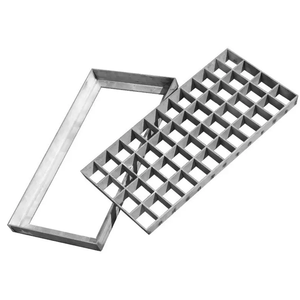
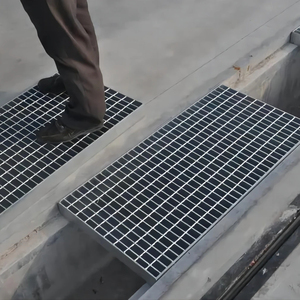
Pairing cable pathways with our high-traction serrated industrial gratings and electroforged catwalk systems ensures turn-key mechanical-electrical coordination, enabling contractors to procure primary containment, trench covers, and maintenance decks from a single audited manufacturer.
Three core macro dynamics are transforming cable pathway specifications across Ireland for the 2025–2030 cycle.
With Ireland's Climate Action Plan mandating stringent embodied carbon caps across major commercial developments, Tier 1 engineering consultants increasingly assess structural containment via comprehensive Environmental Product Declarations (EPD). Utilizing recycled, low-carbon billet extrusion drastically cuts initial project emissions compared to energy-intensive primary steel manufacture and hot-dip zinc galvanizing kettles.
Irish contractors are standardizing on prefabricated Electrical Equipment Rooms (EER) and containerized substation skids. Lightweight aluminum cable trays permit extensive off-site pre-cabling, simplifying transport weight considerations and significantly lowering on-site rigging times in dense metropolitan centers.
In accordance with updated NSAI standards and harmonized European specifications (EN 50085 and EN 61537), electrical engineers now require rigorous physical testing data confirming that cable pathways retain structural anchoring under elevated thermal exposure, preventing collapse during essential emergency evacuation windows.
Clear, definitive answers to technical queries, compliance factors, and supply chain timelines.
Combining heavy-industry electroforging capability, robotic welding, and precision CNC extrusion lines to ensure consistent dimensional accuracy on every project.
Every extrusion batch undergoes mechanical tensile, yield, and chemical composition analysis. Mill test certificates confirm strict compliance with structural alloy 6063-T6 or 5052-H32 requirements.
Our rungs are mechanically locked and robotic TIG welded on both exterior and interior rail profiles, delivering verified short-circuit resistance and torsional rigidity under maximum asymmetrical cable faults.
We provide full container load (FCL) packing, ocean freight customs documentation, and scheduled phased site deliveries direct to job sites across Dublin, Cork, Limerick, and Galway.
Send our applications engineering desk your schedule of rates, bill of materials (BOM), or project drawings for prompt technical review and cost estimation.
Get Catalog