Engineered to international specifications (BS 4592, ANSI/NAAMM MBG 531, ASTM A123, and DPWH Standards) with dedicated export freight logistics connecting Chinese manufacturing hubs to Manila, Batangas, Subic, and Cebu.
A comprehensive analysis of metallurgy, structural loading, and coastal corrosion mechanics for general contractors, structural engineers, and industrial procurement managers across Luzon, Visayas, and Mindanao.
The Philippine archipelago presents one of the world's most demanding physical operational environments for structural steel flooring, trench covers, and modular platforms. Situated within the Pacific Typhoon Belt and characterized by high ambient humidity, elevated saline aerosol concentrations, and severe monsoonal rainfall events, civil infrastructure and industrial facilities require uncompromising mechanical integrity and extreme metallurgical resilience. As China's premier manufacturer and direct exporter of industrial open-web bar gratings, our fabrication protocols are calibrated specifically to counter premature corrosion, heavy vehicular dynamic shock, and structural fatigue.
Standard manual tack-welding techniques common among lower-tier fabricators frequently leave microscopic slag inclusions, micro-voids, and severe heat-affected zone (HAZ) stress concentrations. Under dynamic cyclic loadings—such as 40-foot container chassis maneuvering at port container freight stations or heavy dump trucks trafficking over highway stormwater culverts—inferior manual welds fracture along the heat boundaries. Furthermore, inadequate galvanizing practices with zinc coating thicknesses below 50 microns inevitably succumb to the tropical marine atmosphere (C4/C5 corrosion categories according to ISO 12944) within 18 to 24 months, generating rapid oxidation, peeling, and catastrophic load-bearing failure.
Utilizing high-tonnage automated forge-welding presses delivering over 100 tonnes of hydraulic pressure and approximately 2200 amperes of electrical fusion, the twisted square cross bars are seamlessly embedded into pre-cut carbon steel load-bearing bars, establishing a homogeneous, crack-free metallurgical bond without molten filler metal.
Every fabricated steel grating panel undergoes a multi-stage caustic degreasing, hydrochloric acid pickling, fluxing in aqueous zinc ammonium chloride, and full immersion in a 450°C virgin zinc bath. This creates uniform intermetallic iron-zinc alloy layers providing cathodic barrier protection exceeding ASTM A123, ASTM A153, and ISO 1461 requirements.
Engineered to satisfy the load criteria of the Department of Public Works and Highways (DPWH) Standard Specifications for Highways, Bridges and Airports, and the National Structural Code of the Philippines (NSCP Section 208 load combinations), safeguarding platforms against destructive seismic and typhoon wind uplift actions.
Addressing typhoons, marine chloride attacks, sudden flash flooding, and abrasive industrial process loads in crucial Philippine industrial economic zones.
Metropolitan Manila, Bulacan, and Pampanga regularly cope with extreme monsoon rainwater discharges. Our high-flow drainage gratings feature optimized open areas ranging from 72% to 84%, providing massive hydraulic throughput while preventing structural hydraulic uplift. Heavy perimeter flat-bar banding and anchored lock-down clip systems resist displacement under severe urban surging.
From the Port of Manila (MICT/South Harbor) to the Batangas Container Terminal and Cebu International Port, seaside handling platforms are exposed to ocean spray and saltwater washdown. We supply heavy-duty serrated gratings fabricated from ASTM A36 / JIS G3101 SS400 structural steel with minimum zinc coating thickness of 85 to 100 microns (610 g/m²), backed by salt-spray testing exceeding 720 hours without red rust.
Coal-fired, combined-cycle gas, and geothermal stations in Batangas (Calaca), Limay Bataan, Sual Pangasinan, and Pagbilao demand high-elevation catwalks, boiler room flooring, and turbine inspection decks. We provide custom-notched panels fabricated with robotic precision to clear steam piping, conduit runs, and boiler columns without on-site flame cutting that impairs galvanization.
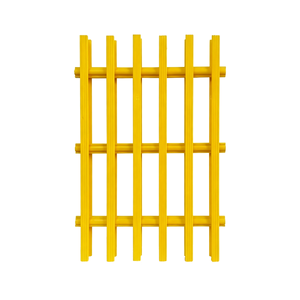
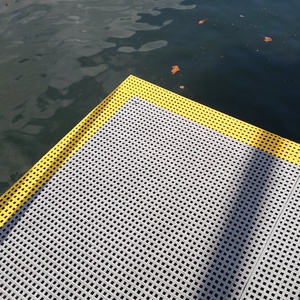
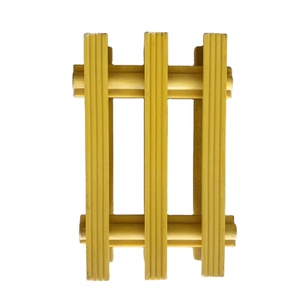
The mineral hubs of Surigao, Palawan, and Davao operate heavy crushing circuits, leaching vats, and slurry conveyor galleries. In acidic processing areas, heavy mechanical abrasive wear destroys mild steel coatings. For these aggressive environments, we engineer custom composite solutions combining extra-heavy steel structures with pultruded vinyl-ester FRP gratings resistant to continuous sulfuric acid and chemical splash.
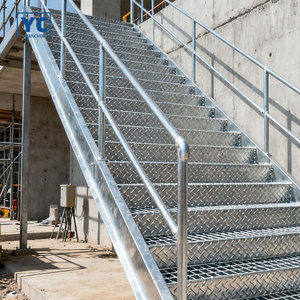
Across Laguna Technopark, Cavite Export Processing Zone, and Clark Freeport, advanced logistics hubs require structural mezzanine floors, pick-module decking, and safety stairways. Our serrated anti-skid stair treads with high-visibility yellow or checkered-plate nosing prevent worker slips under humid, condensate-prone factory conditions.
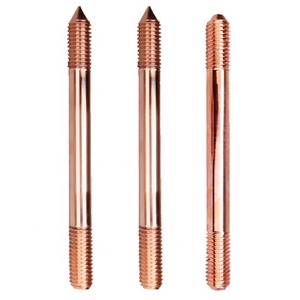
Lightning protection and fault current dissipation are life-safety requirements in typhoon-prone islands. Alongside our steel grating trench systems, our factory delivers molecularly bonded copper earthing rods and grounding conductors designed to resist galvanic cell degradation when embedded in saturated, highly electrolytic volcanic soils.
Cross-referencing bearing bar geometries, weight parameters, pitch dimensions, and typical target civil infrastructure applications.
| Grating Spec Code | Bearing Bar Dimensions (Height × Thk) | Bar Pitch (Bearing × Cross) | Surface Profile | Nominal Zinc Coating | Recommended Target Project (Philippines) |
|---|---|---|---|---|---|
| G253/30/100 | 25 mm × 3 mm | 30 mm × 100 mm | Plain / Serrated | ≥ 610 g/m² (ASTM A123) | Light pedestrian walkways, rooftop service platforms, PEZA factory catwalks |
| G325/30/100 | 32 mm × 5 mm | 30 mm × 100 mm | Serrated Anti-Slip | ≥ 610 g/m² (ASTM A123) | Heavy industrial walkways, oil refineries (Bataan), power plant boiler platforms |
| G405/30/100 | 40 mm × 5 mm | 30 mm × 100 mm | Serrated | ≥ 610 g/m² (ASTM A123) | DPWH roadside drainage culverts, light commercial vehicle driveway trenches |
| G505/30/50 | 50 mm × 5 mm | 30 mm × 50 mm | Serrated Heavy-Duty | ≥ 700 g/m² (Custom Spec) | High-traffic freight docks, forklift loading ramps, mining transfer chutes |
| G656/30/50 | 65 mm × 6 mm | 30 mm × 50 mm | Custom Serrated | ≥ 750 g/m² (ISO 1461) | Heavy container terminals (Port of Manila), airport apron drainage covers |
| AISI 316 Grating | 32 mm × 5 mm / Custom | 30 mm × 100 mm | Electro-Polished | Passivated Base Metal | Offshore oil platforms, food & beverage processing (San Miguel plants), pharma |
| FRP Pultruded | 38 mm × 38 mm mesh | Molded / Pultruded | Quartz Grit Top | Resin Composite | Acid leaching tanks, mining tailing catwalks (Surigao), wastewater clarifiers |
Three primary infrastructure catalysts are actively redefining how general contractors and consulting engineering firms in the Philippines procure structural bar gratings:
Mega-projects including the North-South Commuter Railway (NSCR), Metro Manila Subway, and nationwide bridge retrofitting require pre-engineered, modularized grating panels fabricated strictly to approved CAD submittals. Off-site precision profiling eliminates on-site torching, guaranteeing immediate structural compliance upon container discharge.
Forward-thinking project owners are phasing out cheap black steel with painted coatings. The elevated replacement labor and operational shutdown costs in high-salinity zones have shifted procurement toward heavy-duty hot-dip galvanizing (>85 μm) and vinyl-ester FRP grating, ensuring a 25+ year maintenance-free design lifespan.
Modern EPC contracts executed by major domestic developers (e.g., Megawide, EEI, DMCI) utilize 3D Building Information Modeling. We ingest detailed Revit and Tekla structural models to fabricate complete panel systems with toe plates, kick plates, round equipment cut-outs, and precise panel tag markers for direct crane-to-girder placement.
Combining heavy raw material volume procurement, state-of-the-art PLC electroforging lines, and sea-freight packaging designed for inter-island transshipment.
All load-bearing flat bars are rolled from prime structural carbon steel conforming to Q235B / ASTM A36 / JIS SS400, accompanied by complete EN 10204 3.1 Mill Test Certificates verifying tensile, yield, and chemical composition.
Complex structural cut-outs to accommodate steam pipes, valve assemblies, structural columns, and bracing are executed via precision plasma and laser profiling, completed with continuous flat-bar perimeter banding.
Operating dedicated galvanizing kettles adhering strictly to ASTM A123 / ISO 1461. Every batch undergoes rigorous Elcometer dry-film thickness inspection, surface adhesion scratch testing, and chromate passivating treatment.
Gratings are securely bundled with high-tensile steel strapping, timber dunnage separators, and waterproof marine-grade plastic wrapping. This completely avoids zinc hydroxide white rust formation during ocean freight transit.
Critical questions answered regarding DPWH compliance, maritime shipping transit, customs documentation, and anti-corrosion engineering.
Electroforged gratings are produced on PLC-controlled fully automated production lines. A high-voltage electric transformer applies approximately 2200 amperes of electrical current simultaneously with more than 100 tonnes of hydraulic pressure. This process fuses the twisted square cross bar deep into the bearing bar without filler metal, creating a monolithic, crack-free joint. In contrast, manual hand-welded gratings rely on intermittent manual fillet welds that generate residual internal thermal stresses, weld spatter, uneven joints, and micro-voids where corrosive marine salts pool and initiate catastrophic structural failure.
Yes. We regularly manufacture drainage trench covers, culvert inlet grates, and bridge maintenance walkways matching DPWH Standard Specifications for Highways, Bridges and Airports (Blue Book, Part G - Drainage and Slope Protection Structures). We supply full structural calculations confirming wheel load capacities under AASHTO HS-20 and HS-25 truck loading conditions, complemented by certified third-party metallurgical and coating thickness documentation.
White rust (wet storage stain) occurs when freshly galvanized surfaces are exposed to moisture without adequate air circulation, trapping water between tightly stacked panels. We prevent this through a two-fold engineering safeguard: first, all hot-dip galvanized panels undergo a chemical sodium dichromate passivation bath immediately following cooling. Second, bundles are packed with dry hardwood timber dunnage spacers ensuring consistent ventilation, bound with anti-corrosion poly-strapping, and shipped in sea-tight, moisture-controlled shipping containers with industrial desiccant bags.
Direct containerized shipments depart weekly from major Chinese international ports (Tianjin, Qingdao, Shanghai, and Ningbo). Port-to-port maritime transit time to Manila North/South Harbor is only 4 to 6 days; to Batangas Port is approximately 5 to 7 days; and to Cebu International Port or Cagayan de Oro is roughly 7 to 9 days. For standard catalog profiles, our production cycle is 10 to 14 days, enabling total order-to-site delivery within 3 to 4 weeks.
FRP (Fiberglass Reinforced Plastic) grating should be selected in environments with intense acidic or alkaline chemical exposure where zinc coatings quickly disintegrate, such as nickel acid-leaching circuits in Surigao mining plants, coastal chemical storage docks, seawater desalination intake channels, or electrical switchgear stations where non-sparking, non-magnetic, and dielectric insulation is essential. While galvanized steel remains superior for massive vehicular impact and heavy mechanical spans, FRP offers superior strength-to-weight ratios and zero corrosion maintenance in specialized corrosive sectors.
Connect with our senior structural grating engineers today. Submit your structural drawings, panel schedules, or DPWH project specifications for an immediate, comprehensive engineering review and export quote.