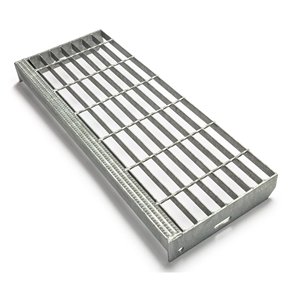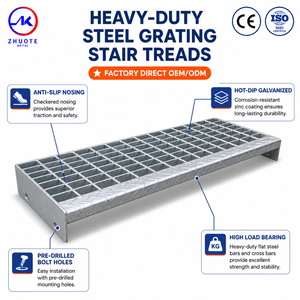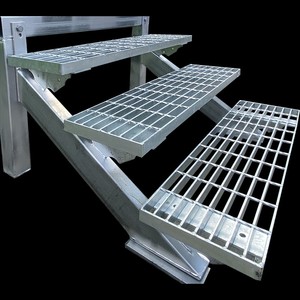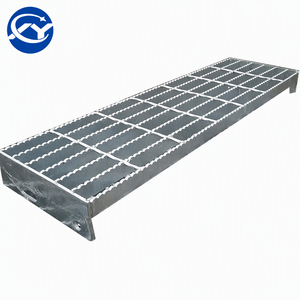
Manufactured under strict PLC electroforging and automated welding controls, fully customizable according to Danish structural drawings and European mechanical guidelines.
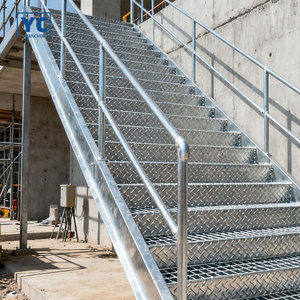
Infrastructure, renewable installations, and maritime logistics throughout Denmark—spanning ports like Aarhus and Copenhagen to inland distribution centers in Jutland—face severe atmospheric corrosion classifications (C4 to C5-M under ISO 9223). Industrial staircases, access gangways, and service platforms demand heavy-duty corrosion protection, precision fabrication, and uncompromising slip prevention.
As a leading Chinese industrial steel grating factory exporting across Scandinavia, our stair treads utilize high-grade carbon structural steel (equivalent to S235JR / S355JR under EN 10025). The panels undergo advanced electroforging, utilizing over 100 tonnes of hydraulic pressure combined with 2200 amperes of electrical fusion. This eliminates weld cracks, micro-voids, and filler metal degradation, providing an unyielding monolithic structure capable of handling concentrated cyclic foot traffic, high snow loads, and constant salt-laden mist.
| Specification Metric | Standard Danish / EU Requirement | Factory Technical Capability |
|---|---|---|
| Steel Grade Standards | EN 10025 (S235JR, S275JR, S355JR) | Mill Test Certified Q235B / Q355B with complete 3.1 chemical & mechanical traceability |
| Galvanizing Standard | EN ISO 1461 / DS/EN ISO 1461 | Hot-dip batch immersion; coating thickness options from 70 μm to >100 μm for saline zones |
| Slip Resistance Rating | DIN 51130 (R10 to R13), DS/EN ISO 14122-3 | Serrated bearing bar options + perforated high-grip safety nosing plates |
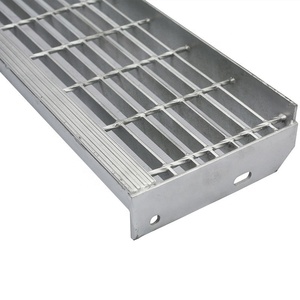
| End Fixing Mounting | Standardized bolted side-plates (DS standard spacing) | Precision punched bolt holes (70mm c/c or tailored to engineer's structural drawing) |
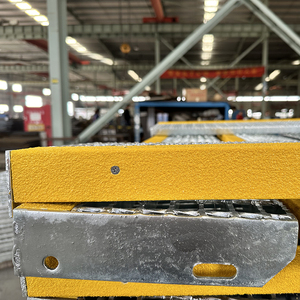
Our galvanized stair treads are fully integrated with perforated or checkered-plate safety nosings. This provides critical visual acuity at the step edge while delivering heightened anti-skid protection (reaching R11–R13 ratings under DIN 51130). Every batch destined for Denmark is packaged in seaworthy, steel-strapped bundles with moisture barrier wraps to prevent white rust formation during transit through deep-water maritime shipping routes.
Engineered to satisfy the architectural balance of functional durability, industrial safety, and minimalist Scandinavian structural design.
Offshore transition pieces, substations, and coastal wind farms in Esbjerg and the North Sea demand C5-M rated heavy galvanized stair treads resistant to constant salt spray and dynamic offshore platform vibrations.
Danish cogeneration facilities and biomass energy plants employ our electroforged serrated grating treads for interior boiler maintenance gangways and multi-level external observation towers requiring fire resistance and high drainage capacity.
Container terminals and roll-on/roll-off ports in Aarhus and Fredericia utilize our heavy-duty welded treads for stevedore access catwalks and crane access towers, providing high impact load resistance and self-cleaning open mesh.
Municipal wastewater and biological treatment facilities specify heavy-duty hot-dip galvanized or stainless steel treads equipped with serrated bars to prevent slip incidents in high-humidity, mist-prone processing channels.
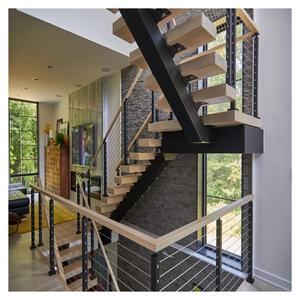
Modern commercial buildings and outdoor residential escapes across Copenhagen leverage our precision-cut, aesthetic metal stair steps and spiral staircase treads, blending industrial zinc finishes with contemporary Nordic timber and concrete designs.
The Danish architectural and infrastructure sectors are undergoing a significant shift toward Life Cycle Cost (LCC) optimization and structural decarbonization. Danish civil engineers and procurement specialists are no longer assessing stair treads solely on initial factory gate price, but on verified maintenance-free operational life.
Key sector trends shaping procurement include:
Our engineering department supports Danish customers with integrated CAD layout checks, automated bar pitch nesting, and pre-drilled side plate alignment, cutting installation time on Danish construction sites by over 30%.
Combining heavy-duty engineering capabilities, computerized electroforging lines, and comprehensive international export services.
Our computer-controlled production units apply over 100 tonnes of hydraulic pressure combined with 2200A electric fusion to fuse twisted cross bars and bearing bars without filler metal, guaranteeing structural consistency across every stair tread panel.
From complex spiral geometries to custom edge cut-outs, our engineers verify CNC cutting and banding specifications against client blueprints before steel processing begins, ensuring zero site adjustment upon arrival in Denmark.
We manufacture stair treads in mild carbon steel (Q235B/Q355B equivalent to S235JR/S355JR), austenitic stainless steels (AISI 304, AISI 316, AISI 309), non-ferrous aluminum alloys, and corrosion-proof fiberglass FRP materials.
Every bundle features protective dunnage, high-tensile steel strapping, and specialized water-shedding wrappings to shield zinc surfaces from atmospheric moisture during oceanic container shipments to Danish ports.
Complete traceability is maintained with EN 10204 3.1 Material Certificates, hot-dip galvanizing thickness inspection reports (ISO 1461), and weld penetration checks provided for every consignment.
Addressing engineering specifications, standards adherence, logistics, and supply configurations for Danish project procurements.
Yes. Our stair treads comply fully with DS/EN ISO 14122-3 (Permanent means of access to machinery - Part 3: Stairs, stepladders, and guardrails). We configure tread dimensions, bearing bar sizing, and nosing highlights to satisfy structural deflection limits (under concentrated loads of 1.5 kN applied over a 200 mm × 200 mm area) and adhere to standard rise/going ratios required across Denmark.
For Danish coastal and offshore projects (C4 to C5 corrosive environments), our hot-dip galvanizing process follows EN ISO 1461. Steel substrates undergo acid pickling and fluxing before immersion in high-purity molten zinc baths held at 450°C. We deliver coating thicknesses exceeding 85 μm to 100 μm upon customer request, providing decades of maintenance-free operational service even under continuous North Sea moisture exposure.
Yes. Our in-house fabrication facility builds stair treads to custom drawings. We fabricate custom widths (commonly 600 mm, 800 mm, 900 mm, 1000 mm, and 1200 mm), irregular lengths, and end-plate mounting patterns with either round or slotted bolt holes matching your stringer layout. Send your DWG, DXF, or PDF files to our engineering team for verification.
Electroforged stair treads are produced on automated PLC machinery where square twisted cross bars are fused directly into the load-bearing bars under 100 tonnes of hydraulic pressure and high electric current (≈2200 A). This creates a homogeneous, monolithic joint without weld craters or inclusions. Hand-welded alternatives are generally reserved for custom shapes, kick-plates, or cut-out fabrications.
Each delivery includes a complete documentation dossier: EN 10204 Type 3.1 Mill Test Certificates for base steel, hot-dip galvanizing coating thickness reports, dimensional tolerance verification sheets, commercial packing lists, commercial invoices, and Bill of Lading (B/L) documentation formatted for straightforward Danish customs clearance.
For outdoor Danish settings subject to frost, rain, and snow, we strongly recommend serrated bearing bars paired with high-visibility perforated safety nosings. The serrated teeth provide immediate grip under greasy or frozen conditions, while the perforated front nosing reinforces the leading step edge and ensures maximum pedestrian safety.
Contact our technical engineering team for load capacity calculations, standard-compliant profile suggestions, and direct factory pricing.