Sanitary & Drainage

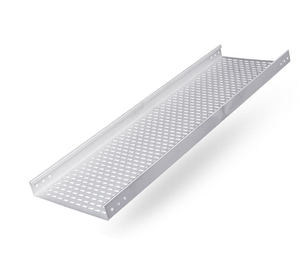
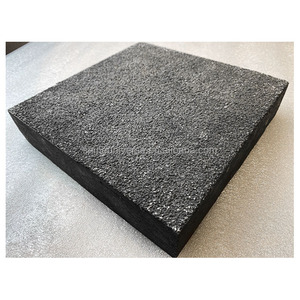
Precision-fabricated stair treads, molded composite panels, and protective cable channels designed to satisfy strict South Korean occupational safety standards (KOSHA) and industrial site blueprints.
South Korea’s modern industrial infrastructure demands unmatched structural discipline. As the country expands its advanced battery production corridors in Ochang and Pohang, scales cryogenic offshore developments across Geoje and Ulsan shipyards, and modernizes thermal/nuclear power complexes in Dangjin and Yeonggwang, procurement managers and structural engineering firms are shifting away from manual hand-welded treads. Instead, they require digitally controlled, fully automated electroforged assemblies capable of withstanding extreme cyclic stress, heavy vibration, and saline air attack.
Stair treads represent the single most critical touchpoint for personnel access safety within industrial complexes. According to structural guidelines outlined by both OSHA and the Korea Occupational Safety and Health Agency (KOSHA), stair treads deployed in maritime and process environments must guarantee uninterrupted slip resistance, high yield strength under uniform live loading (minimum 5.0 kN/m² or concentrated 1.5 kN live load), and zero delamination at junction welds. Inferior welded treads—where cross rods are joined by intermittent manual fillet welds—suffer micro-fracturing along HAZ (Heat Affected Zones), allowing corrosive chlorides to penetrate the base metal. This inevitably leads to premature nosing failure and catastrophic workplace accidents.
Our industrial production lines integrate PLC-driven electroforging technology that applies immense hydraulic force concurrent with high-amperage electrical current (~2,200 A). This fusion process liquifies contact interfaces between the twisted square cross rod and the vertical load-bearing bar, consolidating them into an isotropic, single-piece load-bearing matrix without adding filler wire. The resulting stair treads achieve near-zero dimensional deviation across batch runs of thousands of panels, guaranteeing prompt on-site bolt-up assembly to Korean fabricator stringers without the need for thermal field adjustments or re-drilling.
Tailoring steel and composite stair treads to the specific chemical, marine, and high-purity operating requirements of Korea's Tier-1 industrial regions.
Continuous exposure to aromatic hydrocarbons, sulfur compounds, and high humidity demands heavy-duty serrated electroforged steel treads. Coated with heavy zinc (minimum 610 g/m²) in compliance with KS D 8308 standards, these treads resist blistering and provide superior traction even when oily fluids wash over the stairway during turnaround operations.
Korean mega-shipyards require stair treads certified for severe marine salinity and deck flexing. We manufacture custom-notched AISI 316 stainless and high-depth carbon steel treads fitted with cast abrasive or checkered plate nosings that endure Atlantic and Pacific transit conditions without stress-corrosion cracking.
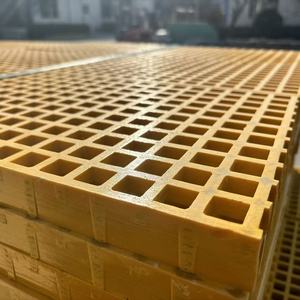
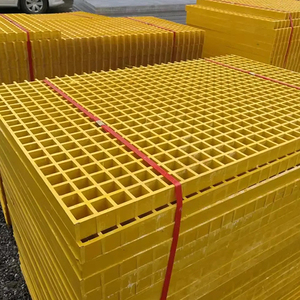
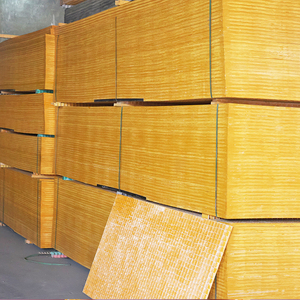
Cleanroom-adjacent utility mezzanine access and electrolyte mixing plants mandate chemically inert, non-conductive floor structures. Our molded and pultruded FRP/GRP stair treads with fire-retardant vinyl ester resins eliminate sparking hazards, withstand aggressive acid vapors, and offer lightweight assembly inside tight modular spaces.
Precision engineering specifications benchmarked against Korean Industrial Standards (KS) and international building safety protocols.
| Stair Tread Class | Material Alloy / Composite | Fabrication Technique | Surface Treatment | Recommended Nosing Style | Korean Industrial Metric |
|---|---|---|---|---|---|
| Electroforged Carbon Tread | SS400 / Q235B / ASTM A36 | PLC Hydraulic Electric Fusion (>100t) | Hot-Dip Galvanizing (KS D 8308) | Checkered Plate / Serrated Bar | Heavy Traffic Platform |
| Sanitary Stainless Tread | STS304 / STS316L / AISI 309 | High-Amperage Pressure Welding | Pickled & Electro-Polished Passivation | Pyramid Embossed Stainless Sheet | Pharma & Battery R&D |
| Composite FRP/GRP Tread | Isophthalic / Vinyl Ester Resin | Monolithic High-Density Molded Grating | Quartz Grit Top Bonded Solid Cover | Integrated High-Vis Glow Stripe Nosing | Acid & Marine Immersion |
| Heavy-Duty Vehicle Tread | High Tensile Structural Carbon Steel | Robot-Assisted CO2 Deep Penetration | Heavy Zinc Layer >85 Microns | Solid Anti-Slip Cast Strip | Docks & Rail Terminals |
The South Korean steel grating landscape is witnessing decisive structural transformations driven by regulatory shifts, cost rationalization, and modernized building safety audits. Analyzing recent commercial inquiries reveals three dominant industry trends:
1. Strict Compliance with the Severe Accident Punishment Act (SAPA): Following the implementation of SAPA, Korean general contractors (Hyundai E&C, Samsung C&T, GS E&C) have raised their slip-resistance standards for walkway steps. Plain-surfaced bearing bars are being rapidly substituted with dual-direction serrated treads featuring integrated high-contrast nosing profiles. Visual definition at the leading step edge directly reduces tripping incidents under low-light and adverse weather conditions.
2. Adoption of Pre-Engineered Modular Stair Systems: Rapid delivery expectations on overseas battery and chip plant constructions have reduced traditional stick-built stair fabrication on site. Korean EPCs now order bolt-ready treads pre-punched with exact end-plate slot centers (45 mm, 70 mm, or 100 mm matching Korean standard stringers). Each stair piece arrives tagged with laser-etched zone identification codes, allowing direct offloading from container vessels into assembly bays without staging delays.
3. Accelerated Decarbonization & Low-Carbon Steel Tracing: In accordance with Korean ESG and carbon accounting mandates, procurement boards systematically verify the carbon pedigree of steel inputs. Our factory provides detailed Material Test Reports (MTR) tracing billet melt chemistry, tensile yields, and environmental production records, ensuring full compliance with both local Korean import documentation and overarching global sustainability frameworks.
Combining vast forging scale, deep understanding of Korean trade requirements, and rigorous automated quality assurance from billet inspection to container stowing.
Equipped with computerized high-tonnage electroforge machines, we fuse cross rods into load bars under 100+ tonnes of force without open gaps or slag inclusions. This monolithic weld provides superior fatigue resistance under constant foot and trolley traffic.
Every stair tread matches client design requirements. We manufacture custom widths (from 200 mm to 1,200 mm), varied pitches, precision side end-plate holes, and specific nosings (serrated, checkered, cast abrasive) designed to align precisely with your structural stringers.
Benefiting from close coastal access to major sea transport routes into Busan, Incheon, and Gwangyang ports, we ensure rapid dispatch times. Products are packed with heavy-duty steel banding, corner protectors, and moisture-proof wrap to prevent transit oxidation.
Clear technical answers addressing mill test certificates, galvanizing tolerances, bolt hole layouts, and shipping timelines.