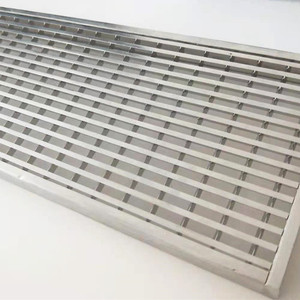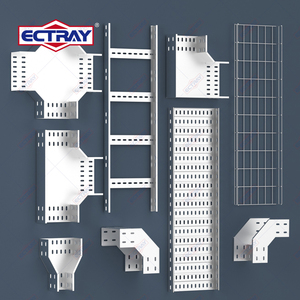
Direct OEM manufacturing capabilities across pultruded composites, stainless containment, drainage assemblies, and industrial access systems engineered for American plant builds.
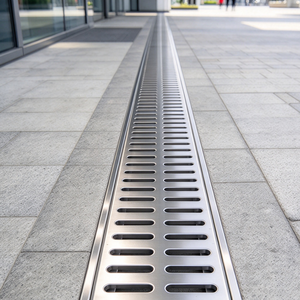
Evaluating structural integrity, thermal elongation, dialectric performance, and resin selection criteria under NEMA FG-1 and NEC Article 392 guidelines.
In severe industrial operating environments across the United States—ranging from saline Gulf Coast petrochemical corridors to aggressive wastewater treatment plants—traditional metallic cable containment systems (hot-dip galvanized steel, 304/316 stainless, and extruded aluminum) encounter rapid electrochemical corrosion, pitting, galvanic failure, and prohibitive maintenance costs. Custom OEM Fiber-Reinforced Polymer (FRP/GRP) cable trays provide structural resilience, complete dialectric isolation, non-magnetic properties, and superior strength-to-weight ratios that eliminate corrosion lifecycle debt.
As a specialized OEM manufacturing partner catering to EPC firms, electrical contractors, and heavy industrial plant builders, our pultruded composite assemblies are formulated with continuous E-glass fibers, woven rovings, and synthetic surfacing veils consolidated through automated high-pressure thermosetting resin dies. Depending on project specifications, resin matrices are custom blended to withstand distinct atmospheric hazards:
| Resin Matrix System | ASTM E84 Flame Rating | Chemical & Environmental Exposure | Standard Wall Thickness | Recommended US Application |
|---|---|---|---|---|
| Vinylester (Premium Grade) | Class 1 (≤25 FSI) | Extreme acidic, caustics, organic solvents, chlorine gas | 3.2 mm – 6.0 mm (OEM Custom) | Chemical Processing, Offshore O&G, Bleach Plants |
| Isophthalic Polyester (FR) | Class 1 (≤25 FSI) | Industrial washdowns, marine salt air, moderate acids | 3.0 mm – 5.0 mm standard | Wastewater (WWTP), Pulp & Paper, Marine Ports |
| Zero-Halogen Modar / Phenolic | Class 1 / Low Smoke (NFPA 130) | High-density transit tunnels, confined electrical vaults | 3.5 mm – 6.0 mm tailored | Subway Stations, Rail Transit, Data Center Cores |
| Pultruded Structural Polyurethane | Class 2 / High Impact | Extreme physical shock, Arctic low temperatures (−50°F) | 2.8 mm – 4.5 mm high-yield | High-Span Utility Bridges, Mining Concentrators |
Every custom profile incorporates an organic synthetic surfacing veil that draws a 90% resin-rich outer layer to the exterior skin. This engineering barrier shields internal structural glass fibers from ultraviolet (UV) degradation, chemical wicking, and fiber bloom under the intense solar indexes typical of southern and western US states.
How pultruded non-metallic cable containment solves acute structural corrosion and compliance problems across specific American industrial topologies.
Refineries and ethylene crackers along coastal Texas and Louisiana demand containment impervious to hydrogen sulfide (H2S), sulfuric acid vapors, and hyper-saline oceanic humidity. Our Class 1 vinylester pultruded ladder trays eliminate the structural degradation typical of galvanized steel within 36 months, delivering 30+ year maintenance-free operation.
NEMA FG-1 Class 20C / UL 568 ListedMunicipal WWTP headworks, aeration basins, and dewatering facilities encounter dense concentrations of caustic soda, chlorine, and damp methane. FRP trays offer zero electrolytic reactivity, eradicating galvanic corrosion when mounting proximate to dissimilar metals, and comply strictly with EPA wastewater ventilation equipment guidelines.
ASTM E84 Flame Retardant ≤ 25With the AI expansion in Northern Virginia, Ohio, and Phoenix, modern hyperscale server halls install massive medium-voltage power runs. FRP solid-bottom and perforated trays provide dialectric insulation that prevents eddy-current heating and induced circulating currents in single-conductor feeder cables, reducing overall facility thermal loads.
Zero EMI / Non-Magnetic PerformanceThe confluence of federal infrastructure spending, decarbonization mandates, and total cost of ownership (TCO) prioritization across North American engineering procurement.
The Infrastructure Investment and Jobs Act (IIJA) and Inflation Reduction Act (IRA) prioritize sustainable, resilient materials in port modernization, clean water treatment, and green hydrogen hubs. FRP's 40-year lifecycle eliminates the periodic re-coating and replacement cycles mandated by steel, aligning with federal resilience mandates.
40-Year Extended Capital HorizonWith the expansion of East Coast offshore wind interconnections and coastal HVDC conversion yards, high C5-M atmospheric exposure creates unsustainable corrosion for zinc coatings. Pultruded GRP containment with stainless 316 hardware has emerged as the baseline standard for utility subsea cable riser and shore-end routing.
ISO 12944 C5-M Equivalent ResilienceUS electrical construction faces severe journeyman electrician shortages. Weighing approximately one-third the mass of structural steel, FRP cable trays can be elevated, positioned, and supported without heavy crane rigging. On-site modifications require only standard carbide saw blades—eliminating hot work permits.
60% Reduction in Field Labor HoursDeep industrial manufacturing roots spanning high-pressure electroforging, robotic pultrusion lines, comprehensive metallics fabrication, and strict international export logistics.
We manufacture custom radii, horizontal elbows, vertical risers, cross tees, and complex wall cut-outs engineered to approved CAD/BIM submittals, ensuring zero site improvisation.
Operating advanced PLC-controlled continuous pultrusion machinery and 100+ ton hydraulic pressure forging units for consistent fiber tension and void-free laminate density.
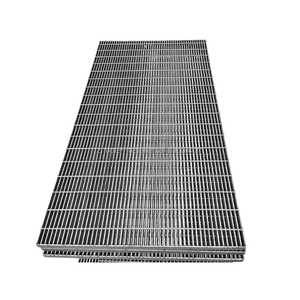
Single-source synergy across FRP, electroforged steel, 304/316 stainless steel, heavy-duty vehicle bar gratings, industrial stair treads, and custom cable trunking.
Robust wooden crating, moisture-barrier wrapping, barcoded piece identification, and sea-freight packing compliant with US port customs and job-site staging protocols.
Clear, technically verifiable answers regarding electrical code compliance, structural spans, grounding, and thermal dynamics.
Submit your engineering drawings, bill of materials (BOM), or project specifications to our technical application engineers. Receive full load calculations, submittal packages, and competitive factory-direct pricing for your next US capital build.