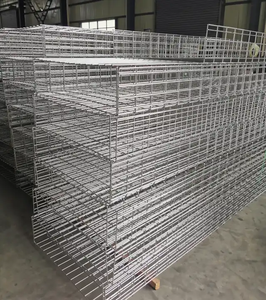

Explore our core product lines manufactured to withstand high wheel loads, intense chemical washdowns, and extreme thermal cycling across central Eurasian industrial facilities.
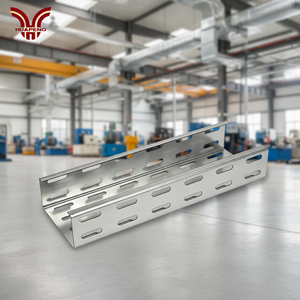
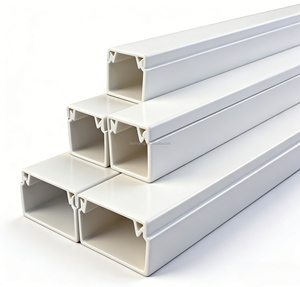
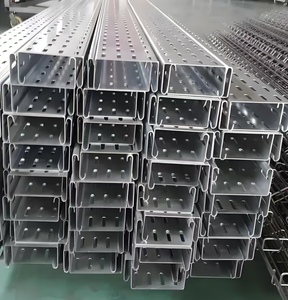
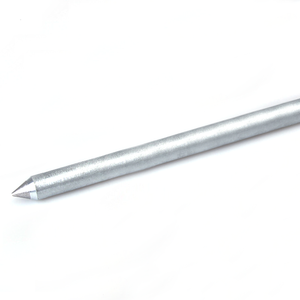
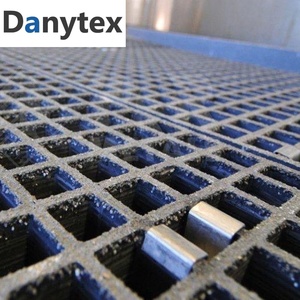
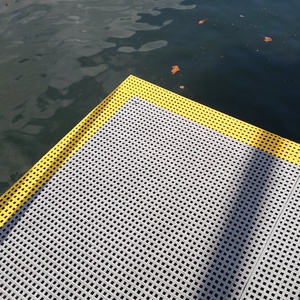
Navigating structural procurement for Central Asian capital projects demands an uncompromising commitment to metallurgic durability, precision mechanical tolerances, and reliable thermal endurance. As a premier international exporter serving the Republic of Kazakhstan, Omkar Gratings Pvt Ltd (Omkareshwar Engineering) manufactures heavy-duty electroforged bar gratings, stainless steel walkways, chequered plates, access systems, and cable containment infrastructure designed specifically for rigorous operating environments.
From the massive hydrocarbon refining facilities flanking the Caspian shelf to deep open-pit polymetallic mining operations in the Karaganda and Pavlodar regions, our electroforged metal gratings satisfy both strict Western EPC guidelines (such as ASTM A1011, ANSI/NAAMM MBG 531, and BS EN ISO 1461) and regional regulatory mandates aligned with interstate GOST standards. By integrating computer-controlled forging processes, automated plasma bevelling, and heavy hot-dip galvanization kettles, our plant outputs structural panels that resist embrittlement down to -45°C while retaining complete mechanical stability under dynamic wheel loads.
A deep engineering overview of why forge-welded steel gratings eliminate micro-fractures, provide unyielding torsional stiffness, and prevent cold-weather weld failures in Central Asian applications.
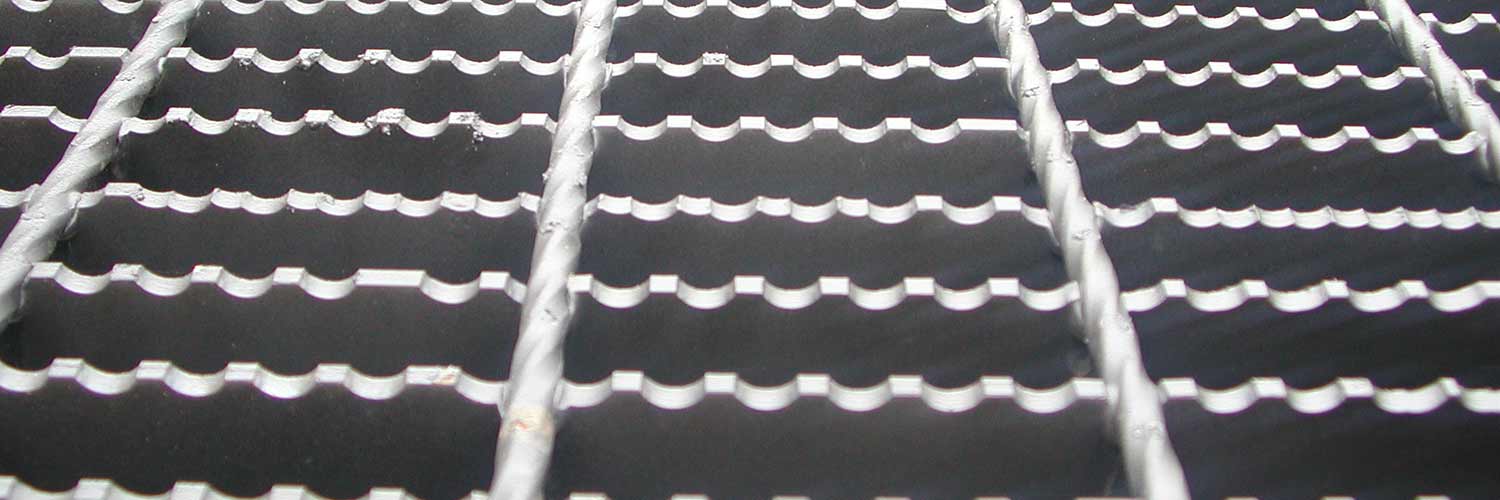
Unlike conventional hand-welded or press-locked grating produced via localized arc deposits, electroforged grating relies on high-energy resistance welding synchronized with extreme hydraulic pressure. Bearing flat bars and high-torque square-twisted cross bars are placed in an automated jig where a continuous current of approximately 2,200 Amperes momentarily heats contact points to plastic state temperatures.
Simultaneously, PLC-driven hydraulic rams force the cross rods deeply into the bearing bars under more than 100 tonnes of pressure. This instantaneous union produces a metallurgical solid-state joint devoid of filler metal, air pockets, internal voids, or micro-cracks. The result is a monolithic lattice with exceptional planar rigidity, preventing the structural unraveling common to hand-welded panels when subjected to repeated thermal shock.
Atmospheric corrosion across Kazakhstan presents two divergent challenges: severe saline-marine moisture near the Caspian basin and corrosive sulfur/particulate exposure around mining smelters and coal-fired plants. Our steel grating components undergo an automated multi-stage pre-treatment cycle comprising chemical degreasing, acid pickling to remove mill scale, water rinsing, and pre-fluxing in zinc ammonium chloride baths.
Panels are submerged in molten zinc heated to 450°C (conforming to ASTM A123 and ISO 1461), facilitating the growth of an iron-zinc alloy metallurgical bond capped by a pure zinc exterior layer with minimum coating thicknesses exceeding 85 μm (610 g/m²). For highly acidic processing plants or hygienic applications, we supply surgical-grade AISI 304, AISI 316, and high-temperature AISI 309 stainless steel gratings, electropolished and passivated to eradicate localized pitting corrosion.
Engineered to satisfy specific mechanical, hydraulic, and thermal challenges found across key economic corridors of Kazakhstan.
Deployed in Tengiz, Kashagan, and Karachaganak development zones. Grating panels serve as elevated walkways, manifold access platforms, and drill-floor mezzanine decks where exposure to sour gas (H2S), crude hydrocarbons, and saline maritime atmosphere demands thick hot-dip galvanizing or pultruded phenolic FRP panels with high fire-retardancy ratings.
In the copper, zinc, and coal mining hubs of Zhezkazgan, Balkhash, and Ust-Kamenogorsk, grating must survive rock drop impacts, heavy conveyor vibration, and abrasive ore dust slurry. Electroforged heavy-duty gratings with 50x5 mm to 75x8 mm bars prevent fatigue fracturing in crusher towers, flotation cells, and leach circuit catwalks.
As vital terminals of the Middle Corridor (TITR), Caspian sea docks handle constant container forklift traffic, gantry cranes, and rolling Ro-Ro trailers. Our heavy-wheel load trench grates prevent ponding water, clear ice accumulation, and resist marine chloride vapor attacks on open container storage terminals.
Kazakhstan's Combined Heat and Power (CHP/TETS) installations require vast multi-tier internal flooring structures capable of enduring thermal radiation from boilers, turbines, and steam lines. Forge-welded steel open grid panels allow natural air convection, smoke evacuation, and unhindered light transmission throughout turbine halls.
Processing ammonium nitrate, phosphoric acid, and refined hydrocarbons generates aggressive corrosive vapors. We supply molded and pultruded FRP gratings alongside AISI 316 stainless steel electro-polished grates to eliminate rust-induced structural failures in chemical pump houses and scrubbing columns.
High-volume railway bogie maintenance pits, elevated car inspection walkways, and drainage canal crossings require precision fabricated panels with pre-cut openings for hydraulic lines, pneumatic feeds, and structural columns without diminishing load capacities.
Key economic and regulatory developments guiding steel structure procurement across Central Asia's largest industrial market.
Procurement teams across Kazakhstan are managing dual engineering compliance: legacy GOST 23120-78 / SNiP norms and modernized Eurocode-aligned Kazakh Building Codes (SP RK). Our engineering department assists contractors by supplying verified calculation dossiers, mill test certificates (EN 10204 3.1), and CAD layout drawings reconciling ASTM A1011/A123 with GOST 535-2005 steel designations.
Winter conditions dropping below -40°C cause common carbon structural steels to cross their Ductile-to-Brittle Transition Temperature (DBTT). EPC specifications in Kazakhstan increasingly mandate low-silicon, fine-grain structural steels that pass Charpy V-notch impact testing at -40°C. Serrated bearing bars are now standard to prevent dangerous ice sheets from locking onto elevated pedestrian decks.
Contractors operating in Kazakhstan prioritize suppliers who can bypass traditional northern transit bottlenecks. Utilizing established freight corridors via Bandar Abbas (INSTC) or direct rail-sea multimodal shipments into Aktau and Kuryk ports reduces transit lead times down to 18-24 days, with full containerization and weather-proof fumigated timber palletization.
Engineered to standard 30 mm and 34 mm bearing bar pitches for pedestrian walkways, vehicle ramps, and plant maintenance platforms.
| Bearing Bar Size (mm) | Bar Pitch / Cross Pitch (mm) | Material Standard | Galvanizing Spec | Max Clear Span (mm) @ 5.0 kN/m² | Ultimate Wheel Load (kN) | Primary Industrial Use |
|---|---|---|---|---|---|---|
| 25 × 3 | 30 × 100 / 34 × 38 | IS 2062 / ASTM A36 | ISO 1461 (>75 μm) | 1,150 mm | — | Light Pedestrian Walkways, Catwalks |
| 32 × 5 | 30 × 100 / 30 × 50 | S275JR / ASTM A1011 | ISO 1461 (>85 μm) | 1,650 mm | 18.5 kN | Boiler Platforms, Conveyor Decks, TETS |
| 40 × 5 | 30 × 100 / 34 × 38 | IS 2062 / EN 10025 | ASTM A123 / GOST 9.307 | 2,100 mm | 32.0 kN | Offshore Oil Platforms, Smelting Plants |
| 50 × 5 | 30 × 100 / 30 × 50 | S355JR / ASTM A572 | Heavy Zinc (>100 μm) | 2,650 mm | 54.0 kN | Refinery Maintenance Floors, Pump Bays |
| 65 × 6 | 37.5 × 100 / 41 × 50 | IS 2062 E350 / Low Temp | ASTM A123 (>100 μm) | 3,200 mm | 90.0 kN | Forklift Corridors, Mining Sump Covers |
| 75 × 8 | 45 × 100 / 50 × 50 | Q345D / Low Temp Grade | Heavy Galvanized | 3,800 mm | 150.0 kN | Heavy Truck Docks, Port Quayside Trenches |
| 38 mm (FRP) | 38 × 38 (Square Mesh) | Isophthalic / Phenolic | N/A (Resin Matrix) | 1,200 mm | 25.0 kN | Chemical Pickling, Battery Rooms, Desal |
Note: Maximum deflections calculated under L/200 criteria for elastic deformation limits. Custom load tables and seismic calculations available on submission of project GA drawings.
Built upon robust heavy manufacturing infrastructure, Omkar Gratings Pvt Ltd provides comprehensive turnkey grating solutions for tier-one EPC contractors.
High-tonnage automated forge-welding presses deliver dimensional stability with diagonal tolerance deviations under ±1.5 mm, accelerating on-site installation speeds.
Pre-formed circular, rectangular, and pipe penetrations engineered directly from client BIM/CAD models, fully perimeter-welded with kick plates to maintain 100% integrity.
Every fabrication batch undergoes stringent non-destructive testing, zinc coating thickness measurement (Elcometer), ultrasonic weld checks, and 3.1 Material Test Reports.
Bundled on heavy steel runners with sea-worthy protective banding, anti-corrosion VCI covers, and color-coded mark numbers corresponding to site assembly drawings.
Detailed engineering and logistical answers resolving primary technical queries raised by Central Asian procurement authorities.
For projects situated in regions such as Astana, Karaganda, or Pavlodar where severe winters prevail, we utilize steel grades with verified chemical compositions featuring low carbon equivalents and micro-alloyed manganese. These plates undergo Charpy V-notch testing at -20°C or -40°C in compliance with EN 10025 (grades S275J2 or S355K2) or GOST standard steel equivalents (09G2S). This prevents low-temperature brittle cleavage during sudden dynamic impact loading.
Every commercial consignment arrives with full customs-cleared documentation designed for prompt Eurasian Customs Union (EAC) transit. This includes EN 10204 Type 3.1 Mill Test Certificates specifying chemical analysis and mechanical tensile testing, Hot-Dip Galvanization Coating Thickness Reports, Factory Pre-Shipment Inspection (PSI) reports, Certificate of Origin (Form A / COO), Packing Lists with distinct mark numbers, and commercial invoices matching contract line items.
Depending on panel order volume and degree of custom fabrication (cut-outs, toe plates, curved banding), manufacturing cycles range from 2 to 4 weeks. Ocean and multimodal transit from our western ports through the International North-South Transport Corridor (INSTC) via Bandar Abbas or rail-sea transshipment into Aktau Port averages 18 to 25 days. Containerized cargo is systematically monitored with daily transit milestones.
While galvanized steel delivers the highest mechanical modulus for extreme spans and heavy vehicular wheel loads, fiberglass reinforced polymer (FRP) gratings are recommended in areas with continuous acid splash, chemical brine washdown, or high electrical conductivity. In sulfur recovery units in Atyrau or chemical leaching sumps in mining plants, fire-retardant vinyl ester or phenolic FRP provides superior lifecycle economy without rust degradation.
Yes. Over 65% of our export output involves bespoke engineering to client fabrication drawings. We execute radius perimeter trims, column penetrations, pipe cluster cut-outs, and sloping access ramp panels. Every cut edge is mechanically sealed with matching flat bar banding welded under strict quality protocols, ensuring that bearing capacity is never compromised by field torch cutting.
We provide full structural fastening packages including M-clips, saddle clamps, G-clamps, and bottom j-hook fasteners in hot-dip galvanized carbon steel or grade AISI 316 stainless steel. These clamp kits secure panels to supporting I-beams and channel steel without requiring on-site drilling or welding, preserving the integrity of protective zinc coatings on structural steel beams.
Connect directly with our senior grating application engineers. Submit your General Arrangement (GA) drawings, load criteria, and project delivery schedules to receive a comprehensive technical proposal, weight schedule, and CIF Aktau/Atyrau price quotation within 24 hours.