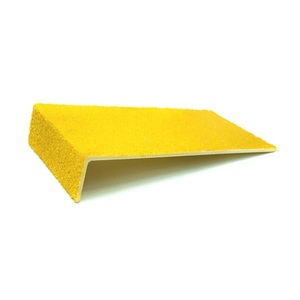
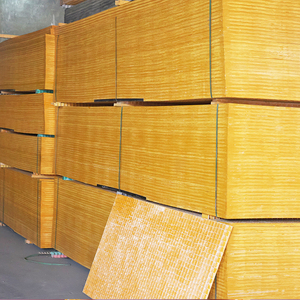
Tailored structural floor panels, custom molded resin meshes, nosing profiles, and cable raceways designed to withstand Greece's aggressive marine and hyper-saline chemical environments.
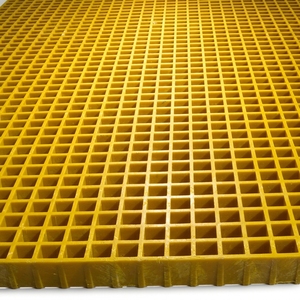
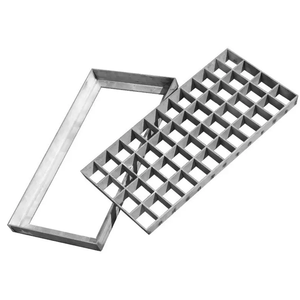
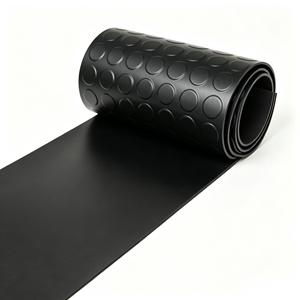
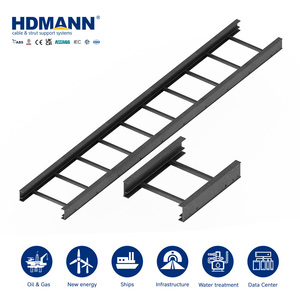
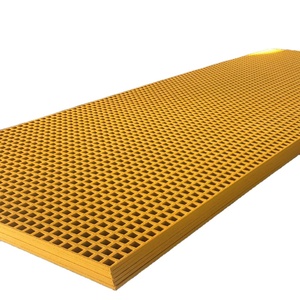
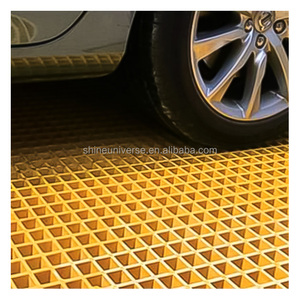
In Mediterranean maritime infrastructure, specifying structural flooring demands an exacting equilibrium between tensile capability, structural modulus, and thermodynamic passivity against saline degradation. In contrast to carbon steel or standard galvanization—which succumbs to pitting and galvanic oxidation accelerated by Greece’s high-ambient UV radiation and micro-saline aerosol conditions—Fiberglass Reinforced Plastic (FRP) and Molded Fiberglass Mesh Gratings provide comprehensive chemical and environmental immunity.
Engineered through the systematic consolidation of high-purity continuous E-glass roving woven into multidirectional orthogonal layers and saturated with thermosetting resins (Orthophthalic, Isophthalic, or Vinyl Ester), our molded fiberglass gratings deliver bidirectional flexural load bearing with high resin-to-glass volumetric ratios (approx. 65:35). This formulation forms a monolithic structural element with non-conductive properties, superior impact damping, and virtually zero maintenance lifecycles across Hellenic industrial complexes, oil terminals, and maritime facilities.
| Performance Characteristic | Molded FRP Grating (Vinyl Ester) | Molded FRP Grating (Isophthalic) | Hot-Dip Galvanized Carbon Steel | Electro-Polished AISI 316 Stainless |
|---|---|---|---|---|
| Corrosion Resistance (Marine/C-5M) | Superior (Immune to Chlorides) | Excellent (General Marine) | Moderate (Sacrificial Zinc Degradation) | High (Susceptible to Crevice Pitting) |
| Strength-to-Weight Ratio | Very High (~12.3 kg/m² for 38mm) | Very High (~12.3 kg/m² for 38mm) | Low (~38.5 kg/m² for equivalent) | Low (~39.0 kg/m² for equivalent) |
| Electrical Conductivity | Dielectric Insulator (>25 kV/mm) | Dielectric Insulator (>25 kV/mm) | High Conductive (Grounding Required) | High Conductive (Grounding Required) |
| UV Degradation Resistance | Engineered UV Inhibitors + Veil | Engineered UV Inhibitors + Veil | Uncompromised by UV Exposure | Uncompromised by UV Exposure |
| Lifecycle Cost in Mediterranean | Lowest (30+ Year Maintenance-Free) | Low (25+ Year Service Life) | High (Re-galvanization / Touch-up) | High Initial Capital Outlay |
Targeted composite installations solving logistical, geological, and climatic engineering challenges across key Hellenic economic zones.
Continuous exposure to ionic spray in major commercial hubs requires non-corrosive catwalks, floating pontoon docks, and drainage trench covers that endure commercial stevedoring traffic without structural flaking.
Crucial for municipal reverse-osmosis facilities on the Aegean and Ionian islands (Crete, Rhodes, Cyclades), where hyper-concentrated brine discharges degrade traditional alloy flooring within months.
Corinth and Elefsina petrochemical complexes mandate Class 1 flame-retardant (ASTM E84) vinyl ester formulations with integrated silica quartz grit surfaces for volatile, spark-sensitive hazardous locations.
The Greek construction and engineering landscape is experiencing a paradigm shift driven by EU green transition initiatives, port decarbonization, and private infrastructure modernization under National Recovery and Resilience Plans (Greece 2.0).
Historically reliant on electroforged mild steel due to legacy tender specifications, engineering procurement managers in Athens, Patras, and Heraklion are systematically transitioning to advanced fiberglass composites. This migration is fueled by three core imperatives:
Drawing upon extensive industrial manufacturing experience encompassing electroforging machinery (>100-tonne hydraulic forging pressure at ~2200 A current fusing), high-precision CNC composite mold tooling, and robotic pultrusion lines, our facilities supply industrial infrastructure worldwide according to drawing.
Full CAD/BIM drawing integration for prefabricated cut-outs, pipe clearances, and banded edges. Every panel arrives pre-notched and marked for immediate modular installation at Greek job sites.
Certified mechanical load deflection according to EN ISO 14122-2 and BS 4592 standards. Class 1 Flame Retardance verified via ASTM E84 tunnels with low smoke toxicity indices.
Expert export bundling, moisture-barrier wrapping, and palletization designed for container shipping directly to major Hellenic entry ports, complete with full mill test certificates (MTC).
Crucial technical and procurement details regarding specification, installation, and delivery to Greece.
For standard marine docks, walkways, and splash zones, Isophthalic Polyester resin provides exceptional resistance to salt-fog and chemical cleaning. For high-temperature zones or chemical dosing adjacent to desalination and refinery units, Vinyl Ester is required for supreme acid-alkali resilience.
Our raw resin formulations integrate UV-inhibitor compounds alongside a synthetic surface veil. This molecular configuration blocks ultraviolet degradation, prevents fiber bloom, and preserves resin structural matrix elasticity under intense Southern Greek sunlight.
Yes. Panels can be pre-cut at our factory to accommodate equipment footprints, pipeline penetrations, and curved curbs. All cut edges are coated with a matching protective catalyzed resin seal to ensure core fibers remain shielded from moisture ingress.
For wet industrial and marine walkways, an embedded quartz grit anti-slip surface provides the highest coefficient of friction (R13 slip resistance rating). Alternatively, a concave meniscus top surface is suitable for general footing and easier cleaning.
We supply AISI 316 (A4-grade) stainless steel M-clips, C-clips, and G-clamps. AISI 316 hardware ensures that the mechanical hold-down assemblies provide anti-corrosive lifecycles equal to the composite panels themselves.
Standard panel configurations are kept in export inventory, with bespoke fabricated panels produced quickly based on drawing approval. Shipments are consolidated and dispatched via standard ocean freight directly to the ports of Piraeus or Thessaloniki under CIF or FOB terms.
Submit your drawings, intended clear spans, loading requirements, and chemical environment profiles. Our engineering group will deliver full panel take-offs, deflection calculations, and delivered cost proposals for your Greek project.