
Explore our certified range of molded FRP grating panels, structural drainage channels, non-slip treads, and specialized anti-static surfaces specified for European mechanical and civil projects.
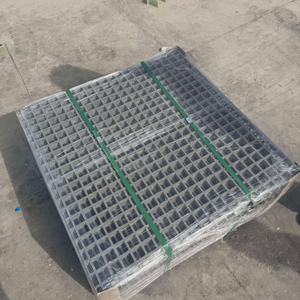
Engineered for extreme offshore and rail environments with USCG Level 2 flame resistance, ultra-low smoke toxicity, and concave anti-skid mesh design.
Product Details →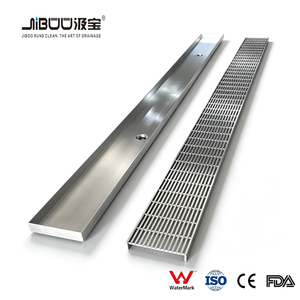
Heavy-duty heel-proof drainage cover featuring electro-polished surface, anti-jam bar geometry, and high dynamic wheel capacity for Polish commercial transport hubs.
Product Details →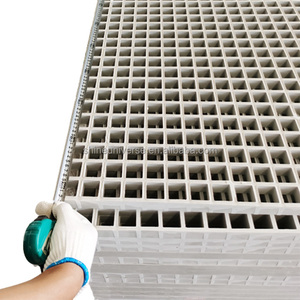
Composed of 70% glass fibers by weight using I-bar and T-bar profiles for exceptional span-to-depth deflection control under chemical trench operations.
Product Details →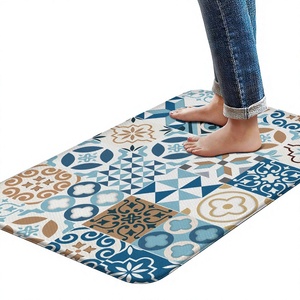
Cushioned ergonomic barrier matting for meat packing lines, commercial kitchens, and assembly corridors requiring thermal decoupling from concrete slabs.
Product Details →
Heavy-tensile ground anchoring mechanisms designed for rapid securing of exterior fiberglass walkway towers, pipeline supports, and substation perimeter framing.
Product Details →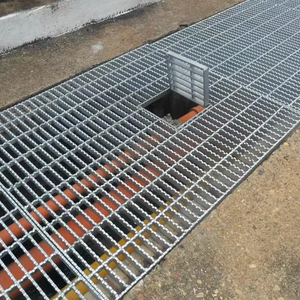
Modular linear resin drainage assemblies with stainless and ductile grates engineered for warehouse logistic docks, gas stations, and municipal road shoulders.
Product Details →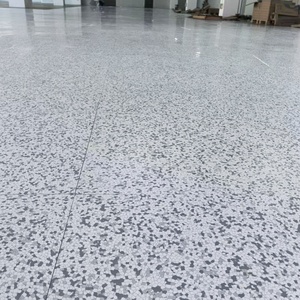
Static-dissipative flooring system with permanent conductive carbon veins suited for electronics assembly, battery gigafactories, and cleanroom environments.
Product Details →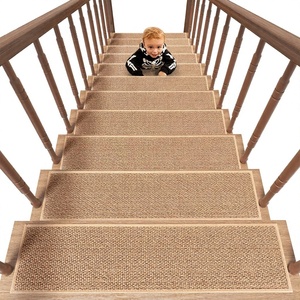
Heavy-wear backing system providing localized acoustic damping, rapid retrofitting, and high friction for industrial office access stairs and mezzanine exits.
Product Details →As Poland cements its position as one of Europe's premier industrial and manufacturing epicenters, the choice of materials specified for load-bearing walkways, operating mezzanines, trench covers, and structural access platforms has transitioned rapidly. Historically dominated by traditional hot-dip galvanized (HDG) carbon steel, modern Polish capital expenditure (CAPEX) engineering is increasingly standardizing on Fiberglass Reinforced Polymer (FRP/GRP) gratings. This fundamental technological transition is catalyzed by severe cyclic environmental stressors unique to the Baltic sea coast, stringent European Union chemical containment directives, high electrical insulation requisites, and the life-cycle cost (LCC) realities of facility operations in regions such as Silesia, Masovia, Pomerania, and Lower Silesia.
Poland's diverse industrial landscape requires specific engineering formulations of resin and glass reinforcers rather than a generic one-size-fits-all approach. By partnering directly with our manufacturing facilities, Polish EPC contractors, plant operators, and municipal utilities deploy application-targeted composite structures:
Installed at port facilities in Gdańsk, Gdynia, and Szczecin, and substations serving the Baltic Sea offshore wind farms (Baltic Power, Baltica). Isophthalic and vinyl ester resin systems withstand persistent saltwater mist, splash-zone chloride intrusion, and sub-zero freeze-thaw cycles without surface spalling.
Operating across major complexes in Płock, Police, and Kędzierzyn-Koźle. FRP gratings provide continuous resistance against aggressive inorganic acids (sulfuric, hydrochloric, nitric), caustic soda, and hydrocarbon splashes where galvanized steel experiences catastrophic passivation layer loss within 24–36 months.
Specified for modern treatment plants in Warsaw (Czajka), Kraków, and Poznań. Biogenic hydrogen sulfide (H₂S) gas rapidly degrades traditional concrete channel edges and steel walkways. Molded vinyl ester FRP panels eliminate biogenic acid decay while ensuring certified R13 anti-skid protection for operators.
Supporting the growing EV battery manufacturing cluster around Wrocław and Katowice. FRP provides zero electrical conductivity (dielectric safety), mitigating short-circuit risk around cathode/anode preparation lines and automated high-voltage formation and aging chambers.
Integrated within PKP PLK traction power infrastructure, third-rail safety paths, and depot maintenance pits. High dielectric strength insulates personnel from stray traction currents and magnetic interference, meeting stringent railway trackside electrical isolation codes.
Widespread across dairy, meat packing, and cold chain distribution hubs in Greater Poland and Podlaskie. Molded FRP mesh resists aggressive washdown agents, lactic acid, peracetic sanitizers, and thermal shock from 85°C CIP sanitation water without polymer softening.
The modernization of the Polish industrial sector is moving according to several macroeconomic and regulatory dynamics that favor structural composites:
1. EU Green Deal & Embodied Carbon Metrics: European contractors working on Polish infrastructure projects funded by the EU Cohesion Fund and National Recovery Plan (KPO) are under mandate to report lifecycle carbon (LCA). Transporting lightweight FRP composite panels drastically lowers shipping emissions, while their 30+ year maintenance-free lifecycle eliminates ongoing repaint and replacement cycles.
2. Extreme Winter Road & Industrial Salt Exposure: Poland's severe continental winters necessitate heavy use of chemical de-icing agents and road salts (sodium chloride, calcium chloride). Walkway installations, drainage gutters, and parking structures fabricated from galvanized steel experience premature galvanic oxidation at welds and cutouts. FRP materials are inert to chloride degradation.
3. Logistics Corridor & Heavy Transit Modernization: The continuous expansion of central European logistics corridors (such as the Central Communication Port / CPK feeder projects) has driven continuous demand for modular drainage trench covers, vehicle-bearing composite systems, and maintenance mezzanines that can be installed rapidly without on-site hot work permits.
| Evaluation Parameter | Molded FRP Grating (Isophthalic) | Pultruded FRP Grating (Vinyl Ester) | Hot-Dip Galvanized Steel (EN ISO 1461) | Stainless Steel (AISI 316) |
|---|---|---|---|---|
| Corrosion Resistance (Chloride/Acids) | Exceptional (pH 2–12 stability) | Maximum Chemical Barrier (pH 1–14) | Poor in acidic/saline splash zones | High, but vulnerable to pitting in high Cl⁻ |
| Strength-to-Weight Ratio | High (Bi-directional load sharing) | Extremely High (Unidirectional span) | Moderate (High self-weight) | Moderate (High dead weight load) |
| Electrical Conductivity | Non-conductive (Dielectric breakdown >25kV/mm) | Non-conductive (Safety insulated) | High Electrical Conductivity | High Electrical Conductivity |
| Thermal Expansion & Freeze Resistance | -40°C to +80°C (No brittle transition) | -50°C to +105°C (Stable thermal range) | Ductile, zero expansion issues | Ductile, thermal expansion stresses |
| Installation Complexity & Hot Work | Simple hand cutting, no welding required | Standard diamond blade, light framing | Heavy hoisting gear, fire watch required | Specialized TIG welding, heavy weight |
| Slip Resistance Classification | DIN 51130 R13 (Quartz grit or concave) | DIN 51130 R13 (Coarse grit surface) | Serrated (Typically R10–R11) | Serrated or embossed (R10) |
Building on decades of heavy industrial grating manufacturing—spanning PLC-controlled electroforging, high-pressure welding, precision metal stamping, and specialized composite compression moulding—our export infrastructure delivers turn-key precision to Polish partners:
We fabricate directly from customer architectural drawings. Panels arrive pre-cut for piping penetrations, structural column penetrations, and pump bases, sealed with chemical edge coats and banded with perimeter reinforcement plates.
Every production batch undergoes tensile, flexural, and Barcol hardness testing. Raw roving and chemical resin formulations (orthophthalic, isophthalic, vinyl ester, phenolic) are tracked with batch traceability documentation for Polish building inspections.
Panels are securely bundled with heavy-duty corner guards, anti-scratch moisture barriers, and reinforced steel banding on export-compliant fumigated heat-treated pallets, prepared for rapid multimodal rail forwarding across Poland.
Critical answers addressing technical standards, logistics, chemical specifications, and site installation for procurement teams in Poland.
Yes. Our pultruded structural profiles are manufactured in strict compliance with EN 13706 (Parts 1, 2, and 3), guaranteeing grade E23 mechanical performance. For industrial platforms and working walkways, our molded mesh panels satisfy EN ISO 14122-2 for permanent means of access to machines. Fire-retardant resins meet Euroclass classifications and ASTM E-84 Class 1 flame spread (rating ≤25).
Our molded gratings feature an integrated quartz crystal grit surface chemically bonded during curing (or an ergonomic concave top surface) certified to DIN 51130 R13 and V10 displacement space standards. This provides exceptional foot traction even under heavy oil contamination, slush, and frozen conditions. Unlike steel, composites are completely inert to road salt de-icers (NaCl, CaCl₂).
Standard ocean freight routes to major Polish marine terminals (such as Baltic Hub / DCT Gdańsk or the Port of Gdynia) typically range from 21 to 28 days on the water. For urgent engineering contracts, expedited intermodal rail logistics via the New Silk Road connecting to Małaszewicze and Warsaw can be arranged. We provide complete EU export documentation, including EUR.1, Certificate of Origin, and detailed packing manifests for seamless Polish customs clearance.
For municipal and industrial wastewater facilities, we recommend our Isophthalic Polyester Resin (ISO) or Vinyl Ester Resin (VE) systems. These offer long-term resistance to biogenic sulfuric acid formed by hydrogen sulfide (H₂S) gas, secondary aeration scum, coagulants (ferric chloride), and sodium hypochlorite disinfection agents that quickly corrode zinc coatings on carbon steel.
Absolutely. We fabricate directly against approved engineering drawings (DWG/DXF/PDF). Panels can be CNC cut to complex geometries, circular column openings, and trench angles. All cut edges are sealed in our factory using specialized polyurethane resin sealers to prevent fiber wick exposure, and matching 316 stainless steel installation clips (M-Clips, C-Clips, G-Clips) are supplied in exact quantities.
Submit your project drawings, deflection load requirements, and environmental specifications. Our senior engineering team provides detailed load calculations, 3D cutting nesting plans, and competitive CIF/DDP quotes to any destination in Poland.
Contact Us