
1. Executive Technical Summary: Heavy-Duty Load Dynamics in Moroccan Logistics
Modern infrastructure across the Kingdom of Morocco is entering an accelerated expansion phase. As the industrial axis expands from the Atlantic trade gateways like Tanger Med and the new Nador West Med to the phosphate processing operations in Jorf Lasfar and Safi, heavy floor engineering demands have shifted dramatically. Ordinary steel decking and light-duty press-locked gratings often fall prey to wheel fatigue, weld joint fracturing, and chloride-accelerated corrosion under severe load conditions.
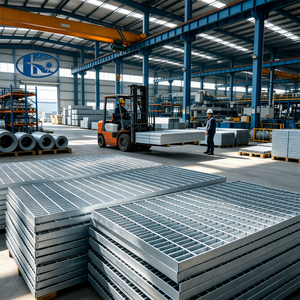
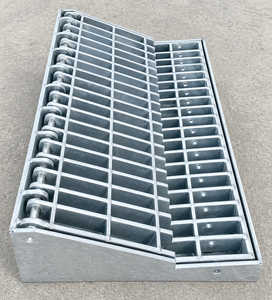
Our heavy-duty welded gratings resolve these structural failure modes by pairing primary load-bearing flat bars (ranging from 50×5 mm up to 100×10 mm) with twisted square cross bars or thick round pins. The assembly is integrated through high-tonnage automated forge-welding, which merges the intersecting metals into an indivisible monolithic unit without weld spatter, gas cavities, or filler metal weakness.
2. Structural Dynamics: Electroforged vs. Hand-Welded Bar Gratings
In standard workshop welding, intermittent fillet welds create focal zones of residual thermal stress, causing micro-fissures when subjected to the high rolling wheel concentrations typical of heavy reach stackers, rough-terrain forklifts, and mining dump trucks. By applying 100+ tonnes of hydraulic pressure while introducing a low-voltage, high-amperage (~2,200 A) current, our automated PLC electro-forging process plasticizes the contact junction between the bearing bar and cross bar instantaneously.
This technique preserves the metallurgical grain structure of the steel, eliminating notch stress concentrations. Consequently, the load transfer along the plane of the panel is strictly uniform. Deflection ratings comfortably comply with international structural parameters including ANSI/NAAMM MBG 532 (Heavy Duty Metal Bar Grating Manual), BS 4592-1, and DIN 24537-1.
3. Strategic Localization Analysis: Moroccan Industrial Corridors
Procurement teams operating in Morocco face three primary mechanical and environmental stress profiles:
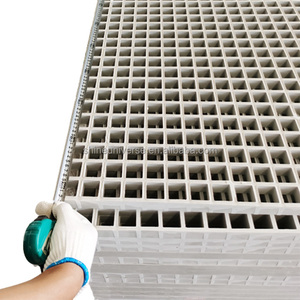
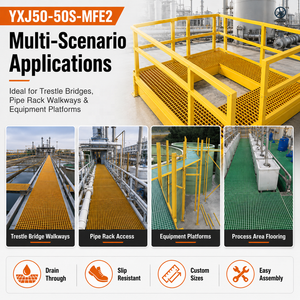
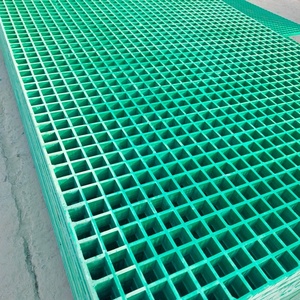
A. Phosphate Extraction & Phosphoric Acid Concentration (OCP Corridors - Khouribga, Jorf Lasfar): In this sector, flooring is exposed to constant vibrations, sulfur emissions, acidic dust, and coarse slurry washdowns. Heavy-duty galvanized steel panels with deep sections, or specialized molded vinyl ester FRP grating systems, prevent catastrophic joint erosion and chemical degradation.
B. Marine Container Depots & Free Trade Corridors (Tanger Automotive City & Port Terminals): Heavy axle wheel loads (AASHTO H-20, HS-20, and HS-25 standards) dictate that bearing bars maintain continuous cross-banding. To counteract atmospheric chloride concentrations from the Mediterranean and Atlantic winds, all panels undergo hot-dip galvanization conforming rigorously to EN ISO 1461, achieving minimum coating thicknesses well over 85 microns.
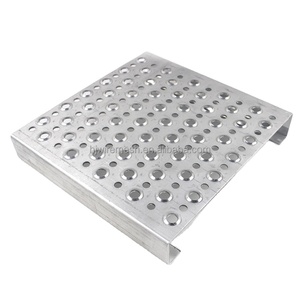
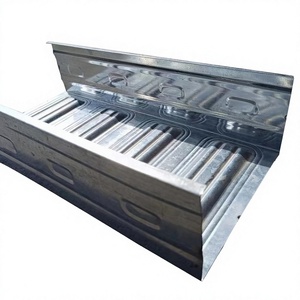
C. Green Energy Transformation & Desalination Megaprojects: Moroccan solar power complexes (such as Noor Ouarzazate) and coastal reverse osmosis plants encounter extreme day-to-night thermal cycling alongside high brine exposure. Our stainless steel gratings (AISI 316L) and fire-resistant SS316 perforated cable trays offer stable thermal expansion properties, anti-pitting resistance, and structural reliability for these critical operations.