
In high-density industrial and public transit frameworks across Greater London, slip incidents account for a major fraction of workplace downtime and public liability exposures. Our high-tensile serrated steel grating solutions offer structural load distribution coupled with self-draining traction, exceeding the exacting slip resistance metrics demanded by UK safety auditors.
Selecting industrial flooring within metropolitan infrastructure—spanning the dockside moisture of the Thames Tideway tunnel facilities to dense maintenance access decks across Crossrail/Elizabeth Line underground shafts—requires rigorous adherence to structural and metallurgic criteria. Standard smooth flat-bar gratings fail to deliver reliable traction under oily grease, wet leaves, or intermittent moisture. Serrated steel grating addresses this challenge via precision-notched bearing bars that mechanically pierce through lubricant films to engage footwear directly.
Manufactured using computer-synchronized PLC-controlled electroforging under 100+ tonnes of hydraulic force and ~2200 amperes of electrical fusion, our grating panels ensure that cross twisted bars are embedded homogenously into upright load-bearing bars. The omission of filler rod or manual stitch welding eliminates interstitial micro-cavities where water and de-icing road salts can trigger localized crevices or accelerated galvanic oxidation.
Our engineered product catalog provides verified mechanical data sheets, traceable raw material heats, and complete ISO/CE certifications designed to streamline compliance checks by UK structural engineers.
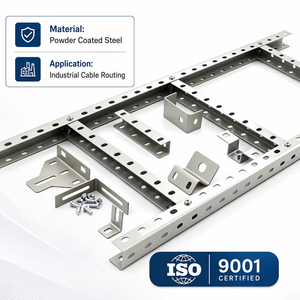
Engineered for London telecom data hubs and sub-stations, providing high loading capacity and hot-dip zinc protection.
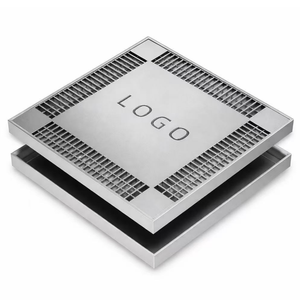
Architectural grade, flush recessed floor access units blending seamlessly with London municipal paving and public squares.
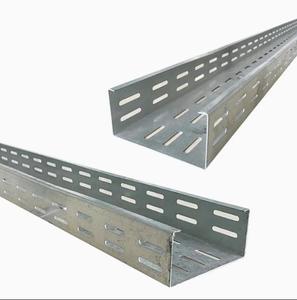
Continuous ventilation profile rated for high dynamic vibration along industrial corridors and urban rail spans.
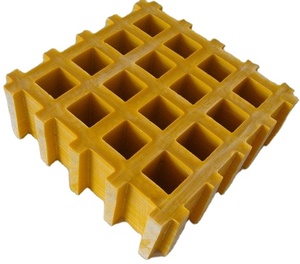
Zero halogen, low-smoke flammability rating designed for subsurface railway stations, passenger tunnels, and chemical vaults.
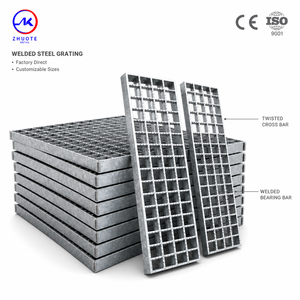
Heavy-duty serrated bearing bars engineered specifically for maritime jetties along the River Thames and exposed refinery assets.
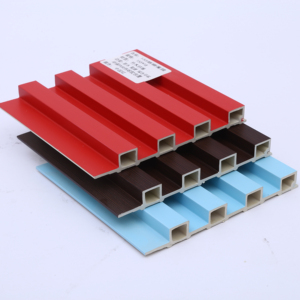
Multifunctional architectural screening featuring superior thermal stability for building service risers and louvers.
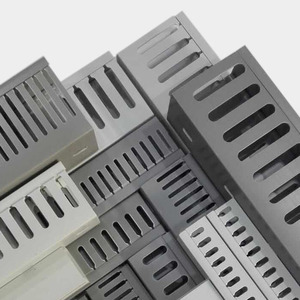
Rigid impact PVC channels accommodating low-voltage distribution alongside steel structural mezzanine walkways.
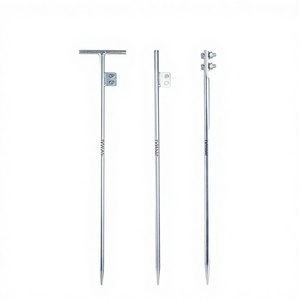
Essential lightning protection and electrical grounding components designed to integrate directly with steel grating structural frameworks.
From dockland moisture exposure to subterranean transport galleries, specific geotechnical and environmental factors dictate steel grating specifications across the capital.
Marine atmospheric salinity demands a minimum galvanizing thickness of 85–100 μm according to BS EN ISO 1461. Our serrated gratings prevent grease and moisture slip incidents along shipping terminals, Barking Riverside berths, and Thames Water pumping assets.
London Underground and rail infrastructure prioritize 35mm ball proof safety criteria (BS 4592-0) to stop loose fasteners from falling into tunnels, accompanied by serrated non-slip walking surfaces on elevated service platforms.
The tech corridors of Slough and East London Docklands require modular floor framing capable of handling massive localized equipment rolling loads (P-loads), accommodating intensive subfloor cooling systems with 68%+ unobstructed free airflow.
All grating configurations are certified to conform to rigorous UK deflections limits (≤ L/200, max 10 mm deflection under operational payload).
| Profile Specification | Bearing Bar (mm) | Pitch (Load / Cross mm) | Permissible Uniform Load (UDL) | Concentrated Point Load | Primary London Application |
|---|---|---|---|---|---|
| SG-SER-303/30 | 30 × 3 Serrated | 30 × 100 | 5.85 kN/m² @ 1000mm span | 1.5 kN on 200×200mm | Pedestrian catwalks & stair treads |
| SG-SER-325/30 | 32 × 5 Serrated | 30 × 100 | 11.42 kN/m² @ 1200mm span | 3.0 kN on 200×200mm | Utility plants & mechanical rooms |
| SG-SER-405/30 | 40 × 5 Serrated | 30 × 50 | 18.20 kN/m² @ 1400mm span | 4.5 kN on 200×200mm | Heavy commercial plant decks |
| SG-SER-505/41 | 50 × 5 Serrated | 41 × 100 | 22.15 kN/m² @ 1500mm span | 7.5 kN on 200×200mm | Logistics dock trench covers |
| SG-HD-658/30 | 65 × 8 Serrated | 30 × 50 | 48.60 kN/m² @ 1500mm span | 20.0 kN (Heavy Truck Wheel) | Freight access & heavy vehicle sumps |
*Note: Raw material chemistries strictly adhere to BS EN 10025 Grade S275JR or S355JR structural carbon steels, as well as marine-grade 1.4404 (AISI 316L) stainless steel. Complete 3.1 Mill Test Certificates are systematically provided with every export container.
Rooted in decades of advanced metallurgy and PLC-controlled production, we bring massive capacity, millimeter accuracy, and dependable international delivery schedules to London's built environment.
By coordinating 100+ tonnes of hydraulic down-pressure with 2200 amperes of localized electrical resistance, the twisted transverse cross bars are fused directly into the notched bearing bars. This eliminates micro-cracks, incomplete weld penetration, and residual porosity.
Pipe penetrations, column wraps, and angled structural clearances are prefabricated directly to approved CAD/BIM drawing schedules. Every cut bearing bar is banded with a continuous flat bar weld to preserve design capacity and eliminate field modifications on London construction sites.
Fabricated grating packages are labeled with distinct panel identification marks matching your erection key layouts. Timber-crated and strapped with seaworthy weather protection, panels transfer smoothly from London Thames gateway container yards directly to the site hoist.
Our estimating engineers calculate exact bar configurations, structural deflections, and zinc coating specifications within 24 hours of receiving your drawing take-offs.
Modern commercial and municipal developments in London demand smarter lifecycle costing, heightened fire resistance, and sustainable circular manufacturing credentials.
London Borough planning policies are increasingly targeting lower whole-life carbon profiles. Our scrap-optimized manufacturing process and high-grade steel sourcing ensure complete recyclability at the end of building life, aligning with BREEAM requirements for major developments.
From the King's Cross redevelopments to Canary Wharf commercial extensions, designers are specifying serrated grating profiles as architectural solar shading louvers and perimeter visual screening, delivering passive solar deflection combined with self-clearing wind permeability.
With possession windows on major transport arteries strictly limited to overnight weekend engineering hours, contractors avoid on-site cutting. Our precision-banded, pre-notched grating packs are slotted directly onto existing steel frames without hot-work permits or torch-cutting risks.
Addressing structural tolerances, compliance guidelines, British Standards, and export logistics for UK contractors.
Under the UK Slip Resistance Group (UKSRG) guidelines and BS 7976 Pendulum Test Values (PTV), smooth flat bar steel frequently registers marginal or low slip traction when contaminated with oily films or wet grime. Serrated steel grating introduces trapezoidal or serrated notches along the primary bearing surface that displace surface tension and fluids, yielding a certified wet PTV exceeding 45, well beyond the high-risk threshold.
Yes. BS 4592-0:2006+A1:2012 specifies that for platforms regularly accessed by personnel, grating openings must prevent the passage of a 35mm diameter sphere. Where workspaces or walkways exist directly below the platform, this criteria tightens to a 20mm sphere. We calibrate bearing bar pitch and cross-rod spacing to guarantee non-negotiable compliance with either mandate.
Absolutely. We incorporate circular, square, and edge cut-outs during primary fabrication to clear pipelines, column flutes, and electrical risers. Every opening is bound with structural flat bar banding and minimum 100mm kick plates (toe plates) conforming to BS EN ISO 14122-3, preserving structural rigidity and eliminating the need for hazardous hot-work adjustments on site.
Every commercial consignment includes comprehensive 3.1 Material Test Certificates confirming chemical composition and tensile strength (BS EN 10025), Hot-Dip Galvanizing Inspection Certificates (BS EN ISO 1461), Certificate of Origin, dimension control sheets, and panel tagging registers cross-referenced to your structural engineering drawings.
Standard fabrication run times range between 2 to 3 weeks depending on project tonnage and cut-out density. Ocean transit to the Port of London / London Gateway / Felixstowe typically requires 20 to 25 days, allowing predictable delivery schedules directly to consolidators or your job site marshaling yard.
Connect directly with our international technical sales team for comprehensive structural calculations, load-span tables, custom layout estimates, or immediate quotation reviews.