Data Center / High Speed
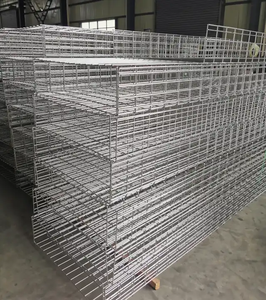

Standardized to IEC 61537, NEMA VE 1, and BS EN 60439 standards. High-strength containment fabricated with continuous automated welding, precision die-perforation, and passivated marine finish.
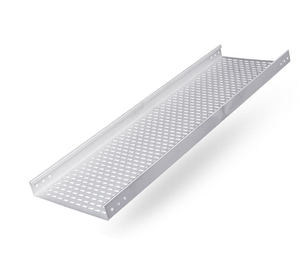
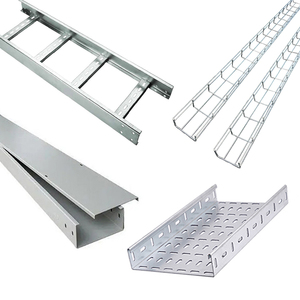
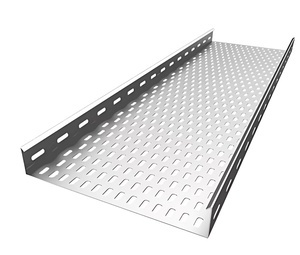
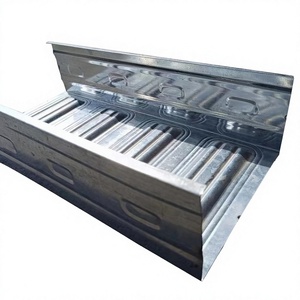
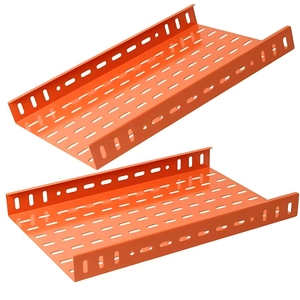
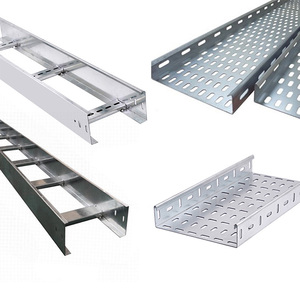
Singapore sits precisely 1.35° north of the equator, characterized by continuous ambient humidity (averaging 80% to 90% year-round), high diurnal temperatures, and heavy marine-borne chloride aerosol. In key infrastructure hubs—ranging from the high-density semiconductor fabrication corridors in Woodlands and Tampines to the marine and petrochemical refining complexes on Jurong Island—electrical cable containment systems face brutal galvanic and pitting corrosion mechanisms that rapidly degrade standard carbon or light zinc-electroplated materials.
Our industrial stainless steel cable trays, wire mesh trays, and heavy-duty cable ladders are specifically designed to address these distinct microclimates. By employing low-carbon molybdenum-bearing austenitic alloys (SS316/SS316L) alongside rigorous mechanical fabrication, our systems prevent Pitting Resistance Equivalent Number (PREN) depletion. Every welded cross joint, side-rail junction, and stamped perforation undergoes precision post-fabrication pickling and electro-polishing. This crucial chemical passivation removes free iron and heat tint from welding heat-affected zones (HAZ), restoring a uniform chromium oxide protective film that resists localized crevice corrosion in stagnant humid air.
| Material / Technical Metric | AISI 304 (Grade 1.4301) | AISI 316L (Grade 1.4404) | Comparative HDG Mild Steel |
|---|---|---|---|
| Pitting Resistance (PREN) | 18.0 - 20.0 | 23.0 - 25.0 | N/A (Relies on Sacrificial Zinc) |
| Chloride Resistance in Marine Air | Moderate (Inland commercial, clean rooms) | Superior (Coastal, Jurong Island, Tuas Shipyards) | Zinc consumed within 5-8 years in C5 coastal zones |
| Thermal Dissipation Factor | Optimal for multi-tier LV/HV trunking | Optimal; preserves tensile yield under thermal spikes | Acceptable; bulkier gauge creates heat trap pockets |
| Standard Singapore Approvals | SS CP5, BCA Green Mark, IDA Telecom | EMA, Tuas Power, JTC Industrial Standards | Standard commercial sub-mains only |
Custom-engineered tray designs matching rigorous BCA, EMA, and JTC compliance frameworks across mission-critical facilities.
Refineries and offshore storage facilities require unyielding protection against sulfur compounds and airborne salts. Our electro-polished SS316 cable ladders carry heavy 66kV and 22kV power distribution cabling with perforated venting that prevents explosive hydrocarbon gas collection.
Singapore's Data Center-Tropical Climate Facility guidelines require exceptional thermal control. Our SS304/SS316 wire mesh baskets maximize 360-degree free air circulation, reducing cooling fan energy use while supporting intensive Cat6A, Cat8, and high-density MPO fiber bundles without electromagnetic noise.
Pharmaceutical clean manufacturing demands containment with zero particulates and high chemical washdown endurance. Our acid-washed, smooth-edge SS304 perforated trays eliminate dust harboring while resisting aggressive IPA sanitizers and continuous enzymatic washdowns.
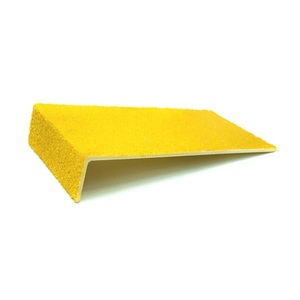
Water processing introduces continuous exposure to high sodium concentrations and hypochlorite chemicals. Combining SS316L cable ladders with our reinforced anti-slip GRP/FRP stair treads ensures non-conductive, non-sparking, rust-free service across dosing basins and intake trenches.
Automated port cranes, ship-to-shore gantry cranes, and vessel drydocks in Tuas demand high-load stainless trays capable of resisting marine wave spray and constant dynamic vibrations. Our heavy-duty ladders deliver superior deflection performance under maximum cable pack loads.
Land Transport Authority infrastructure mandates halogen-free, non-toxic fire-rated performance. Our heavy-gauge stainless steel tray systems comply with rigorous structural load tests and fire resistance requirements (maintaining mechanical stability at 950°C during emergency evacuations).
Singapore's construction and electrical engineering sectors are undergoing a significant structural shift fueled by the Building and Construction Authority's (BCA) push for Design for Manufacture and Assembly (DfMA) and the Singapore Green Plan 2030. These strategic movements directly influence how electrical contractors and mechanical engineers select and install cable tray systems.
1. Prefabricated MEP Modules & Direct-to-Site Pre-Assembly: Main contractors working on Integrated Construction and Prefabrication Hubs (ICPH) across Singapore now demand cable trays delivered in exact custom lengths with pre-engineered cut-outs, factory-fitted risers, and branded identification tags. Standard site-cutting with reciprocating saws creates raw, unpassivated carbon contamination edges that rust prematurely. Our in-house automated shearing, laser notching, and robotic welding ensure ready-to-mount trays that plug directly into prefabricated multi-service MEP racks.
2. Thermal Optimization in Tropical Hyperscale Data Centers: With the lifting of the data center moratorium under the new Green Data Center standard (SS 697:2023), facilities in Singapore must achieve stringent Power Usage Effectiveness (PUE) targets under elevated operating temperatures. High-capacity wire mesh stainless trays and continuous ventilated perforated trays allow maximum convective air cooling across electrical busway drops and structured copper cables, eliminating thermal choking and saving chiller kWh.
3. Low Embedded Carbon & Life Cycle Costing (LCC): While initial procurement costs for hot-dip galvanized steel may appear attractive on standard bills of quantities (BOQ), asset owners on Jurong Island and in Changi are increasingly relying on 30-year Life Cycle Costing calculations. When factoring in the prohibitive labor costs of hot-work permits, downtime penalties, and periodic re-coating in Singapore, high-tensile austenitic stainless steel (SS316/304) provides an undeniably lower Total Cost of Ownership (TCO) with 100% material recyclability.
Clear, technical clarity for QS teams, project directors, and lead electrical engineers specifying cable containment.
Our stainless steel cable trays and ladder systems strictly satisfy Singapore Standard SS 638 (formerly CP 5) regarding the continuous mechanical protection and earthing bonding of insulated cables. We supply engineered stainless steel bonding jumpers and provide continuity test verification according to IEC 61537, ensuring earth-fault loop impedance parameters remain fully compliant throughout the tray line.
SS304 is ideal for commercial buildings, indoor data center white spaces, clean rooms, and inland infrastructure (e.g., Woodlands, Ang Mo Kio). SS316/SS316L must be specified for any installation within 5 km of the coastline, on Jurong Island, Tuas Shipyards, or inside chemical processing facilities where ambient airborne salinity and acid gases cause severe pitting corrosion on 304 grades.
Yes. We routinely fabricate directly from contractor BIM models and CAD shop drawings. We incorporate factory-punched square, round, and edge cut-outs—complete with fully welded and banded edge stiffeners—allowing rapid on-site placement into prefabricated MEP modules without on-site grinding or hot work.
Every shipment is accompanied by complete EN 10204 3.1 Mill Test Certificates (MTC) stating the exact chemical composition and mechanical properties of the stainless alloy, Safe Working Load (SWL) deflection test reports conforming to NEMA VE 1 / IEC 61537, passivation verification certificates, and customized export packing lists.
Trays are interleaved with non-chlorinated protective films to prevent metal-to-metal rubbing. Bundles are secured with non-metallic strapping or lined timber battens in fumigated, seaworthy steel-reinforced crates, preventing atmospheric moisture trapping and carbon cross-contamination during transit to the Port of Singapore (PSA).
Our structural and MEP engineering specialists are ready to calculate load-deflection profiles, recommend the optimal alloy grades, and prepare comprehensive tender packages for your Singapore infrastructure projects.