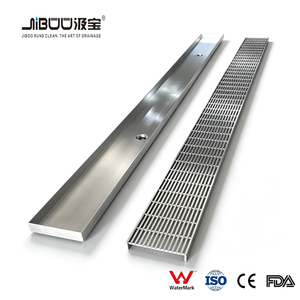
High-integrity industrial containment, heavy-load floor decking, and trench safety solutions manufactured to drawing for Dutch utilities, petrochemical terminals, and modern greenhouse automation.
Addressing stringent Eurocode structural tolerances, Dutch NEN 1010 regulatory compliances, and maritime C4/C5-M atmospheric corrosive environments.
The continuous modernization of the Dutch industrial, digital, and infrastructural landscapes has driven an unprecedented demand for high-integrity electrical containment solutions. As Europe's gateway for maritime logistics and data transmission, the Netherlands places rigorous mechanical and environmental constraints on power routing. The specification of steel cable trunking and raceway systems is governed by a dual requirement: extreme mechanical endurance to withstand dynamic mechanical loading without deflection under Eurocode 3 (EN 1993), and long-term corrosion prevention capable of surviving the coastal atmospheric severity classified under ISO 12944-2 as C4 (Industrial/Coastal) and C5-M (Marine).
As an established heavy-duty steel containment and grating manufacturer, our facility delivers end-to-end engineered cable trunking assemblies designed specifically for Dutch EPC contractors, mechanical-electrical consultants, and facility developers. Integrating PLC-controlled automated punching, roll-forming, and high-current fusion welding alongside comprehensive hot-dip galvanization facilities, our manufacturing processes eliminate structural micro-fractures and seam weaknesses. This ensures absolute containment continuity for high-voltage power conduits, industrial busbars, control cables, and low-voltage optical networks.
Unlike light commercial sheet metal conduits that succumb to sag and localized pitting when exposed to North Sea salinity, our heavy-duty steel cable trunking is fabricated from structural carbon steel grades (S235JR, S275JR, S355JR) or austenitic stainless steel alloys (AISI 304, AISI 316L, and heat-resistant AISI 309). Each trunking run integrates precision cover clashing, mechanically fastened quick-turn lid clamps, return-flange edge profiles for superior cable pull-through protection, and integrated bonding studs that guarantee seamless equipotential bonding as dictated by the NEN 1010 low-voltage electrical installation code.
From the saline port terminals of Rotterdam to the cleanroom server corridors of the Amsterdam Internet Exchange zone.
Continuous exposure to saltwater aerosol, high airborne sulfur dioxide, and heavy vibration requires trunking with certified hot-dip galvanization (minimum 85 µm to 120 µm local coating thickness per EN ISO 1461) or acid-pickled and electro-polished AISI 316L stainless steel. Used extensively along oil bunkering piers, LNG gasification platforms, and automated container handling gantries.
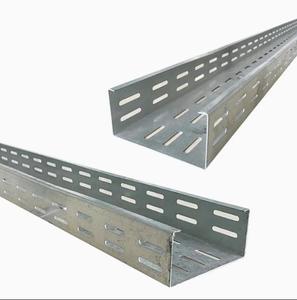
Within hyperscale cloud facilities in the Amsterdam metropolitan zone, electro-magnetic compatibility (EMC) and heat dispersion are mission-critical. Our heavy-gauge perforated steel cable trays and solid cable trunking provide full Class 1 screening attenuation against EMI/RFI, preventing cross-talk between multi-megawatt busbars and high-density fiber-optic pathways while supporting immense dead loads.
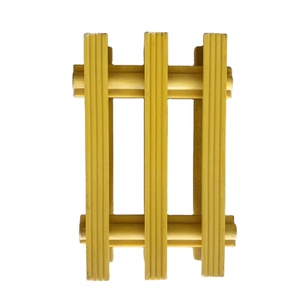
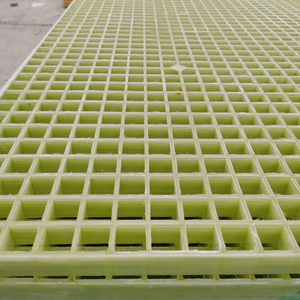
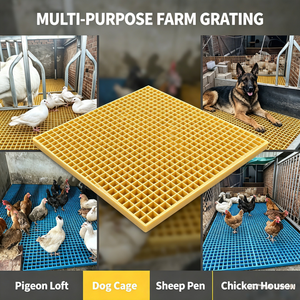
Modern Dutch horticultural operations feature intense microclimates with up to 95% relative humidity, elevated CO2 enrichment, and constant automated fertilization misting. Here, our hybrid containment lineups—incorporating zinc-flame-sprayed steel trunking alongside chemical-resistant pultruded FRP/GRP walkaways and mini-mesh gratings—ensure zero oxidation and 25+ years of maintenance-free service.
As the automated logistics crossroads of Western Europe, Brabant distribution centers deploy high-speed automated guided vehicles (AGVs) and dense automated storage and retrieval systems (ASRS). Heavy-duty flush floor steel trunking and vehicle-bearing chequered cover plates support concentrated wheel loads up to 40 kN, ensuring subterranean power conduits remain undamaged.
The Netherlands' aggressive offshore wind targets (IJmuiden Ver, Hollandse Kust) demand topside cable trunking designed for extreme splash zones. Fabricated from certified austenitic stainless steel or electroforged hot-dip steel with full EN 10204 3.1 material traceability, our containment systems maintain structural integrity under severe hydrodynamic and cyclonic wind shear forces.
In critical Dutch flood protection assets, including polder pumping stations and storm surge barriers (Delta Works, Afsluitdijk), power reliability cannot be compromised. Our heavy industrial trunking delivers verified IP54/IP65 ingress sealing options with flame-retardant neoprene gaskets, ensuring total protection during high-water occurrences and high-humidity subterranean operations.
Comprehensive comparative performance metrics evaluating cable containment solutions against European and Dutch engineering standards.
| Containment Parameter | Solid Steel Cable Trunking | Heavy Perforated Steel Tray | Pultruded FRP/GRP Channel | Wire Mesh Basket Tray |
|---|---|---|---|---|
| Primary Standards Compliance | NEN-EN-IEC 61537 / NEN 1010 | NEN-EN-IEC 61537 / DIN 4102-12 | EN 13706 / ASTM E84 Class 1 | IEC 61537 / EN 50174-2 |
| Safe Working Load (2.0m Span) | 240 kg/m (Heavy Duty Industrial) | 190 kg/m (Structural Class B/C) | 160 kg/m (Composite Profile) | 75 kg/m (Light/Medium Duty) |
| Corrosion Class (ISO 12944) | C4 to C5-M (Hot-Dip Galvanized / 316L) | C3 to C5-I (Pre-Galv or HDG) | C5-M (Maximum Chemical Inertia) | C1 to C3 (Electro-Zinc or Pre-Galv) |
| EMC Shielding Efficiency | High (>50 dB Attenuation at 100MHz) | Moderate to High (Perforation Dependent) | Zero (Transparent to RF / Non-Conductive) | Low to Moderate (<20 dB Attenuation) |
| Fire Integrity Rating | E30 - E90 (Functional Durability) | E30 - E90 Tested Assemblies | Self-extinguishing (UL94 V-0) | E30 - E60 Functional (Deflection Prone) |
| Typical Netherlands Applications | Refineries, Basements, Rail Tunnels | Factory Floors, Data Centers, Power Plants | Chemical Dosing, Greenhouses, Offshore | Suspended Office Ceilings, Telecom Rooms |
| Grounding Continuity | Integrated Ground Studs / Direct Bond | Integral Coupler Plate Bonding | Requires Dedicated Copper Conductor | External Clamping Lug Required |
Combining heavy electroforging technology, robotic automated punching, and fully integrated metallurgical processing under certified ISO 9001:2015 controls.
Our structural grating lines leverage over 100 tonnes of hydraulic pressing synchronized with ~2200 amperes of electrical fusion. This welds twisted crossbars directly into solid bearing bars with zero micro-cavities, ensuring that joint strength matches parent metal integrity.
We eliminate expensive site rework for mechanical installers. From complex 45°/90° gusseted bends, tee junctions, step-down reducers, to intricate floor cut-outs banded with perimeter flat bars, each trunking section and grating module is precision fabricated to client CAD/BIM specifications.
Complete control over surface chemistry: our automated hot-dip galvanizing kettles achieve heavy zinc coatings compliant with EN ISO 1461. For hygienic and aggressive chemical exposure, stainless steel lines undergo multi-stage acid pickling followed by electro-polishing for passive film restoration.
Exporting to European ports requires disciplined logistics. Every production batch is bundle-strapped with heavy timber battens, corner edge-protectors, water-repellent vapor wrap, and clear piece-marking tags corresponding with erection drawing schematics for rapid customs intake.
Full metallurgical accountability. Each shipment is supported by inspection certificates outlining ladle chemical analysis, tensile yield strength, elongation limits, and zinc bath composition, providing Tier-1 documentation demanded by engineering inspectors across the Netherlands.
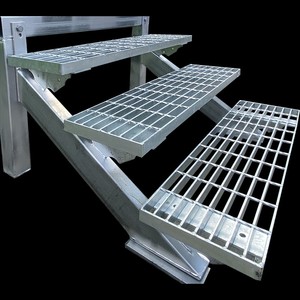
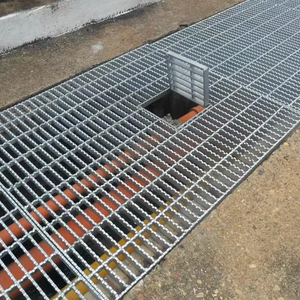
Beyond cable trunking, our consolidated capability includes heavy duty welded floor gratings, expanded metal walkway screens, industrial anti-skid chequered plates, and certified stair treads with integrated safety nosing—enabling complete mechanical-electrical structural packages.
How statutory decarbonization targets, circular building criteria, and multi-gigawatt grid expansions are dictating engineering choices.
Procurement teams operating in the Netherlands must navigate the strictest environmental building codes in the European Union. Under the Dutch Besluit bouwwerken leefomgeving (BBL) and the mandatory calculation of the Environmental Performance of Buildings (Milieuprestatie Gebouwen - MPG), electrical contractors can no longer assess containment systems on initial purchase price alone. Instead, whole-life carbon auditing, embodied carbon calculations, and verified Environmental Product Declarations (EPDs) are becoming standard prerequisites for tendering on state-sponsored utilities, civil projects, and commercial complexes seeking BREEAM-NL or LEED Platinum certification.
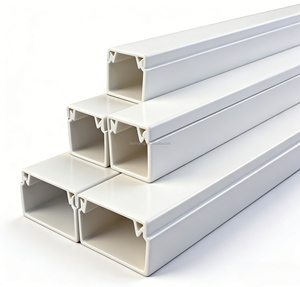
Our manufacturing strategy aligns directly with these circularity mandates. By optimizing the cross-sectional geometry of our steel cable trunking using cold-rolled high-yield-strength alloys, we achieve superior structural stiffness while reducing raw steel mass by up to 14% compared to legacy gauge specifications. This mass reduction yields direct carbon emission reductions across international transport channels without sacrificing the deflection thresholds established by NEN-EN-IEC 61537. Furthermore, steel's 100% circular recyclability gives it a decisive lifecycle sustainability advantage over polymer-based PVC ducts, supporting the Netherlands' national goal of achieving a fully circular economy by 2050.
Simultaneously, the Netherlands' unprecedented national electrification program—driven by high-voltage grid upgrades (TenneT), grid-scale energy storage systems (BESS), and green hydrogen pilot facilities along the North Sea Canal—is requiring cable containment infrastructure capable of carrying significantly higher thermal dissipation demands. High amperages generate inductive heating within enclosed raceways; our perforated and vented steel trunking designs are hydro-dynamically modeled to create internal convective chimney effects, actively preventing thermal derating of heavy power cables and mitigating electrical transmission losses.
Practical guidance addressing logistics, technical standards compliance, material selection, and site delivery across the Netherlands.
Consult with our structural containment and grating engineering specialists. Submit your engineering drawings, bill of quantities, or specifications for rapid review, load calculations, and competitive factory-direct supply arrangements.
Contact Us