
Direct Mill Production
High-Performance Grating Portfolios for Hamburg Industrial Applications
Engineered to withstand saline coastal moisture, petrochemical washdowns, and high dynamic wheel traffic across Northern Germany's port corridors.
Industry Technical Whitepaper
Engineering Walkway Steel Gratings for the Free and Hanseatic City of Hamburg
A rigorous examination of metallurgy, weld seam integrity, load distributions, and coastal European weathering thresholds.
Electroforge Fusion Integrity vs. Conventional Hand-Welded Grids
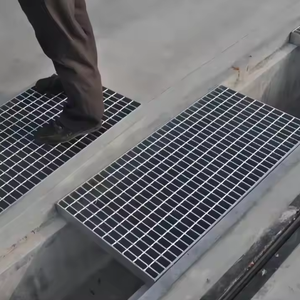
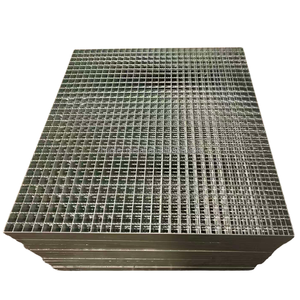
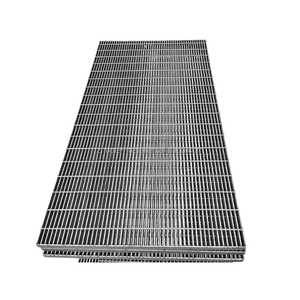
Procuring industrial flooring systems for Northern Germany’s critical infrastructure requires deep adherence to mechanical predictability. While conventional manual welding introduces micro-voids, heat-affected zone (HAZ) embrittlement, and discontinuous cross-bar adhesion, PLC-controlled electroforged manufacturing fuses twisted square cross bars into solid, load-bearing flat bars under >100 tonnes of hydraulic pressure and ≈2200 Amperes of simultaneous current. This metallurgical process results in zero material addition, absolute homogeneous molecular cohesion, and continuous lateral torsional stability under intense cyclical loading.
In contrast to conventional notched press-locked assemblies where cross bars merely seat mechanically into slots—creating capillary crevices prone to rapid salt deposition—our fully sealed, forge-welded intersection prevents inner corrosion tracking. For industrial asset operators across Waltershof, Altenwerder, and Peute, this structural continuity translates directly into extended operational lifespans without structural deflection or seam delamination under concentrated wheel rolling stresses.
Technical Specification Matrix: Grating Profiles for Northern German Marine Corridors
| Profile & Material Class | Standard Pitch (Bearing x Cross) | Yield / Ultimate Strength | Anti-Corrosion Surface Standard | Structural Domain Suitability |
|---|---|---|---|---|
| Heavy-Duty S235JR Electroforged | 34.3 x 38.1 mm / 30 x 100 mm | ReH ≥ 235 MPa / Rm 360-510 MPa | Hot-Dip Galvanized to EN ISO 1461 (>85 μm) | Forklift access corridors, multi-modal container hubs |
| Marine Grade Austenitic AISI 316L | 33.3 x 33.3 mm / 25 x 76 mm | Rp0.2 ≥ 220 MPa / Rm 520-670 MPa | Acid-Pickled, Passivated & Electro-Polished | Elbe estuarine berths, salt fog exposure, chemical sumps |
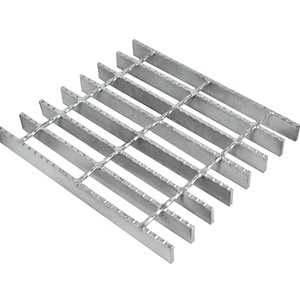
| Serration Type S1 / S2 Anti-Slip | 30 x 30 mm / 34 x 50 mm | DIN 51130 Slip Rating R11 - R13 | Batch Hot-Dip Galvanized / Zn-Al Duplex | Offshore maintenance catwalks, wet tallow & oily platforms |
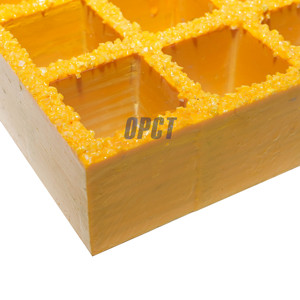
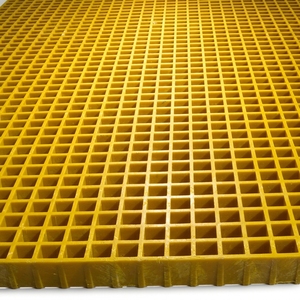
| Isophthalic Molded FRP / GRP | 38 x 38 mm Square Mesh (38mm Depth) | Tensile 310 MPa / Flexural 440 MPa | Quartz Grit Integral Quartz Surface Top | Sulfate handling facilities, non-conductive substations |
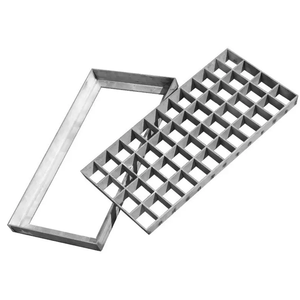
| Pressed Modular Architectural | 33.3 x 11.1 mm / 22.2 x 22.2 mm | Compliant with DIN 24537-1 Pedestrian | Galvanized or Architectural Powder-Coated | HafenCity urban pedestrian bridges, ventilation façades |
Localized Implementation
High-Stress Application Domains Across the Hamburg Metropolitan Region
Engineered to resolve real-world mechanical, chemical, and pedestrian challenges across distinct local maritime and urban landscapes.
Port of Hamburg (HHLA) Terminals
Continuous quay crane transfer platforms, intermodal rail car maintenance catwalks, and automated container handling staging require gratings capable of sustaining dynamic impact vibrations and high point loads up to 50 kN without buckling under harsh tidal shifts.
Harburg Refineries & Peute Processing
Petrochemical refineries and copper processing complexes encounter aggressive sulfurous vapors, sulfuric acids, and saline mist. We deploy hot-dip galvanized and electro-polished AISI 316 stainless grating panels that mitigate pitting corrosion and chloride stress crack formation.
HafenCity Civil & Flood-Control Assets
Architectural boardwalks, public canal bridges, and storm surge barrier service decks require heel-proof, narrow-mesh gratings (DIN 24537 compliant) featuring certified R12 serration to guarantee barrier-free accessibility and zero pedestrian hazard during damp Hamburg drizzle.
Future-Proof Engineering
Emerging Trends Shaping Industrial Grating Procurement in Hamburg (2025–2030)
Aligning structural steel fabrication with Germany's "Energiewende", EU carbon border tariffs, and modular lifecycle modeling.
1. Decarbonization and Low-Embodied-Carbon (Green Steel) Procurement Mandates
As major EPC conglomerates operating in the Hamburg harbour district realign with EU Green Deal directives, structural components face stringent Life Cycle Assessment (LCA) scrutiny. German general contractors increasingly demand verified Environmental Product Declarations (EPDs) demonstrating low embodied carbon within structural steel fabrication. Our production integration utilizes high scrap-ratio electric arc furnace (EAF) feedstocks and closed-loop pickling lines, allowing Hamburg asset developers to meet DGNB and BREEAM Gold certifications seamlessly.
2. Hydrogen Logistics and Offshore Wind Energy Infrastructure
With Hamburg positioning itself as Europe’s central hydrogen hub through large-scale electrolyzer developments at the former Moorburg power station site, walkway grating materials face newly defined exposure hazards. Hydrogen embrittlement risks necessitate specialized metallurgical certifications for carbon steels, while non-sparking, dielectric FRP composite gratings are rapidly supplanting metallic floors in ATEX Zone 0 and Zone 1 explosion-proof chemical environments. Our production lines supply certified fire-retardant (ASTM E-84 Class 1) vinyl-ester FRP solutions tailored to North Sea offshore transformer platforms and municipal gas conversion corridors.
3. BIM (Building Information Modeling) and Off-Site Modular Prefabrication
Site labor costs in Germany make manual on-site trimming, cutting, and welding of grating panels economically unviable. Modern projects demand automated CAD-to-CNC grating production where all cut-outs for structural pipe penetrations, vessel columns, and electrical risers are banded with flat bars and galvanized pre-dispatch. We deliver pre-coded, sequentially palletized panels directly integrated into BIM workflows, significantly shortening erection timetables across logistics hubs along the A7 and A1 motorway transit arteries.
Manufacturing Authority
Why German Engineering Contractors Rely on Our Manufacturing Plants
Combining heavy-duty PLC electroforging machinery, certified metallurgical grades, and meticulous sea-freight packing protocols.
PLC Electroforged Quality (100t / 2200A)
Our automated forging platforms employ over 100 tonnes of hydraulic pressure combined with 2,200 Amperes of fusion current, completely eliminating internal voids and establishing uniform load capacity across every square meter without brittle joint failure.
Custom Laser Fabrication & Banding
Whether executing complex radial configurations, penetration notches for process piping, or welded kick plates (toe boards), all bespoke fabricated units are mechanically perimeter-banded, deburred, and zinc-sealed to assure turnkey site integration.
Stringent Marine Sea-Freight Logistics
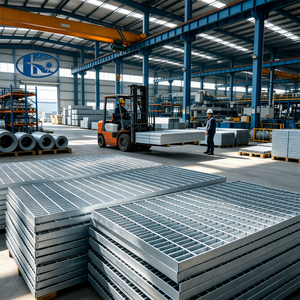
Our dedicated export division prepares heavy steel bundles utilizing robust steel strapping, treated timber dunnage, edge-protection angles, and vapor corrosion inhibiting (VCI) shrink coatings, ensuring direct arrival at Hamburg quaysides zero-defect and ready for crane hoisting.
German Buyer FAQs
Frequently Asked Questions by Hamburg Structural Engineers & Buyers
Clear, definitive answers addressing statutory conformity, anti-skid certifications, customs handling, and load bearing calculations.
Are your steel gratings fully compliant with German DIN 24537-1 and EN ISO 1461 standards?
Yes. All walkway panels destined for the German market are manufactured in full dimensional and tolerance compliance with DIN 24537-1 (Steel bar gratings for use as floor coverings). Hot-dip galvanization is conducted under strict supervision in accordance with EN ISO 1461, ensuring minimum zinc coating thicknesses of 85 μm (or higher upon technical requisition) to achieve C4/C5-M atmospheric corrosion resistance ratings essential for maritime installations along the River Elbe.
What anti-slip classification (R-Rating) do your gratings achieve according to DIN 51130?
We provide plain and serrated bearing bars. For oil, grease, or continuous rain environments prevalent across Hamburg port terminals, our serrated profiles (Types S1, S2, and diamond cut) are certified to DIN 51130 and ASR A1.5 occupational safety thresholds, offering slip resistance ratings from R10 up to R13. Additionally, for stair treads, we integrate integral perforated anti-slip nosing bars ensuring superior foot security.
Can you provide custom cut-outs and toe-plates directly from CAD/Tekla structural models?
Absolutely. Our engineering drafting office works directly from DWG, DXF, IFC, and Tekla BIM files. Every penetrative cut-out (square, circular, or diagonal) for pipelines, columns, and structural bracing is reinforced with full-depth flat-bar perimeter banding welded to the bearing bars. Integrated kick plates (toe plates) conforming to EN ISO 14122-2 (minimum 100mm height) can be factory-welded to prevent falling objects on elevated catwalks.
What are the transit lead times and shipping documentation for ocean freight to Hamburg?
We regularly handle Full Container Load (FCL) consignments through direct ocean carrier sailings to the Port of Hamburg (Waltershof / CTA / CTB terminals) with typical maritime transit cycles between 22 and 28 days. Every shipment is accompanied by complete inspection documentation, including EN 10204 3.1 Mill Test Certificates, Galvanizing Layer Thickness Protocols, Dimensional Inspection Reports, and Bill of Lading with full customs clearance support.
When is Molded FRP Grating technically preferable over Galvanized Steel in Hamburg?
Molded Fiberglass Reinforced Plastic (FRP) is heavily recommended over galvanized steel in environments characterized by chemical immersion, harsh acid or alkaline sumps, high electromagnetic fields requiring dielectric insulation, or weight-restricted elevated catwalks. Furthermore, FRP requires virtually zero maintenance in brackish water splash zones, eliminating the recurring maintenance recoating cycles that steel components require in aggressive North Sea environments.
Require Custom Grating Load Calculations or Drawing Quotations?
Our sales engineers and structural technical draftsmen are available to review your bills of materials, load tables, and project specifications for prompt execution.
Send an Inquiry