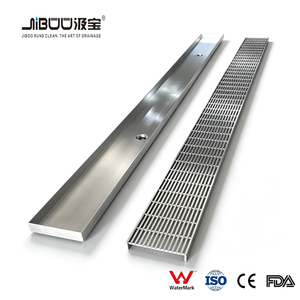

Comprehensive architectural and structural profile portfolio engineered for high strength-to-weight efficiency, maximum slip resistance, and extreme atmospheric durability.
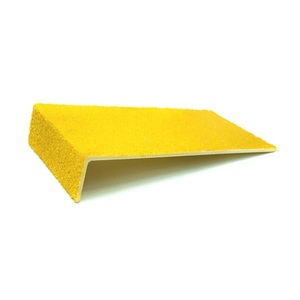
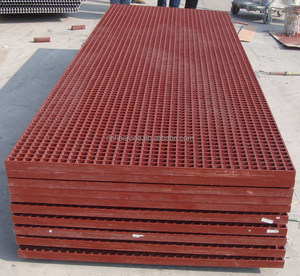
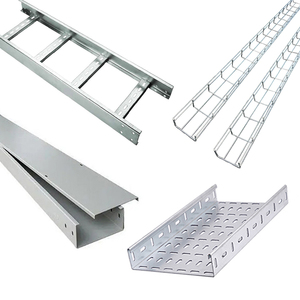
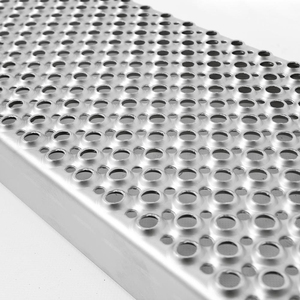
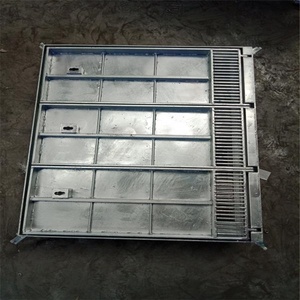
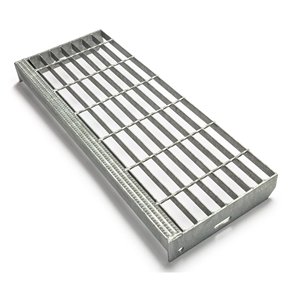
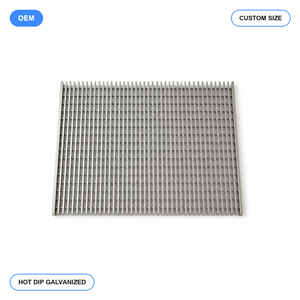
A technical whitepaper overviewing material metallurgy, mechanical integrity, and design considerations across critical industrial environments.
Aluminum bar grating serves as the paramount architectural and industrial choice when deadweight mitigation, anti-spark safety, and superior corrosion resistance are critical engineering requirements. Unlike carbon steel or electroforged iron variants, aluminum gratings leverage a naturally regenerating passive oxide film (Al2O3) that resists corrosive attack from moisture, salts, and industrial emissions without requiring secondary zinc hot-dip coatings.
In modern industrial fabrication, ASTM B221 extruded alloys dominate manufacturing. Aluminum alloy 6063-T6 provides a smooth surface, superior anodizing responsiveness, and balanced yield strength, making it ideal for pedestrian footbridges, architectural sunshades, louvers, and HVAC enclosures. For high-impact industrial loading, offshore chemical plants, and heavy marine catwalks, alloy 6061-T6 is specified due to its higher tensile strength (minimum 260 MPa) and superior shear resistance under rolling concentrated loads.
Fabricated through mechanical deformation under immense hydraulic swaging forces. Cross bars are pressed into pre-punched bearing bars and permanently locked inside pre-drilled holes, creating an extraordinarily rigid, flush-top walking profile.
Utilizes extruded I-shaped bearing bars. The I-profile concentrates structural mass at the top and bottom flanges where tensile and compressive stresses peak, shedding 20-30% of total product weight while maintaining identical section moduli and allowable load limits.
Bearing bars are precision slotted, and cross bars are hydraulically pressed directly under extreme pressure into mating slots. This clean architectural joint delivers a seamless bi-directional aesthetic, favored in high-profile building facades and ceiling systems.
Quantitative comparison across mechanical loading, environmental resilience, and logistical properties according to NAAMM MBG 531 standards.
| Evaluation Parameter | Aluminum Bar Grating (6063/6061) | Electroforged Carbon Steel (Q235/Mild) | Molded GRP/FRP Fiberglass |
|---|---|---|---|
| Weight Density | Approx. 2.70 g/cm³ Lightweight | Approx. 7.85 g/cm³ (3x heavier) | Approx. 1.80 - 1.95 g/cm³ |
| Corrosion Resistance | Passivated Al₂O₃ oxide layer; marine & wastewater immune | Requires Galvanizing; rusts if zinc layer is pierced | Resin-bound chemical inertness; resists acids |
| Spark Hazard | Non-Sparking (Explosion-proof safe) | Prone to friction sparks on tool drop | Non-Sparking & Electrically Non-Conductive |
| Scaffold & Structural Load | High strength-to-weight; minimal substructure required | Highest absolute elastic modulus (200 GPa) | Deflection-governed; demands tighter support spans |
| Recyclability & Scrap Value | 100% Recyclable; high residual scrap value | Recyclable as ferrous scrap | Non-recyclable thermoset composite (landfill) |
| Temperature Tolerance | -80°C to +150°C continuous structural performance | Up to 450°C without significant structural softening | Resin softens above 65°C - 90°C depending on polymer |
Key supply-chain shifts, architectural innovations, and decarbonization mandates reshaping how EPC contractors specify aluminum grating systems globally.
Global procurement teams operating within EU CBAM and US LEED certification scopes now demand Environmental Product Declarations (EPD). Leading Chinese manufacturers are rapidly shifting billet sourcing toward hydro-powered smelters in Yunnan and Sichuan, delivering aluminum grating panels with certified cradle-to-gate carbon footprints under 4.0 kg CO₂e per kg of finished metal.
Field-cutting aluminum grating impairs panel edge stability and escalates labor costs. The market is pivoting entirely toward BIM (Building Information Modeling) interoperability. Direct Tekla and Revit IFC export allows our automated multi-axis CNC machines to cut, notch, and band complex equipment cut-outs and penetrations in the factory, achieving sub-millimeter on-site tolerances.
Modern civic platforms, airport transit bridges, and urban rainwater sumps require compliance with strict ADA guidelines. The design trend favors 7/16-inch (11 mm) and 1/4-inch bearing bar spacing. This prevents cane entry and footwear entrapment while maintaining adequate open-area hydraulics for storm runoff drainage.
Combining heavy-tonnage hydraulic forging, precision CNC fabrication, and strict international quality assurance under ISO 9001:2015 execution.
Operating high-capacity PLC-controlled presses applying over 100 tonnes of hydraulic pressure to lock cross bars into primary bearing profiles, completely eliminating joint looseness and vibration fatigue.
Complete custom fabrication capability from detailed user layouts. Edge-banding, radial trimming, rectangular equipment penetrations, and integrated toe plates are pre-welded before shipment.
In-house anodizing lines (Clear, Bronze, Black Architectural finishes), chemical etching, and electrochemical polishing alongside hot-dip galvanizing lines to satisfy extreme marine durability specifications.
Palletized packaging engineered to prevent transit surface abrasion. Bundles are protected with heavy polymer wrap, edge guards, and steel strapping, and marked by area zone for rapid jobsite erection.
Authoritative technical answers to common questions encountered by structural engineers, estimators, and project procurement managers.
Aluminum's modulus of elasticity (approx. 69 GPa) is roughly one-third that of carbon steel (approx. 200 GPa). To achieve identical deflection performance over an equivalent clear span, an aluminum bearing bar must have a greater depth or thickness compared to steel. However, because aluminum weighs only one-third as much as steel, the finished aluminum structure remains roughly 50% lighter even after sizing up the bar profile to satisfy L/200 or L/240 deflection criteria.
To provide a precise technical proposal and structural validation, our engineering team requires: (1) Bearing bar depth, thickness, and profile shape (Rectangular Flat Bar or I-Bar); (2) Bearing bar center-to-center pitch and cross bar pitch (e.g., 19-S-4, 15-SG-4); (3) Alloy selection (6063-T6 or 6061-T6); (4) Surface texture (Plain smooth or Serrated anti-slip); (5) Surface treatment (Mill finish, clear anodized, or powder coated); and (6) Accurate dimensional panels with marked cut-outs, banding instructions, and design load conditions (Uniform pedestrian load in kN/m² or concentrated vehicle wheel footprint).
Yes. Aluminum is strictly non-sparking, rendering it significantly safer than ferrous carbon steel in environments with flammable gases, volatile vapors, or combustible airborne dusts, including battery energy storage facilities, paint spray booths, and ammunition depot catwalks. When dropped metal tools strike an aluminum grating floor, frictional spark hazards are eliminated.
Direct contact between aluminum grating and dissimilar structural metals (such as mild steel or copper) in the presence of an electrolyte causes galvanic corrosion of the aluminum. Prevention requires structural isolation: use elastomeric neoprene isolator pads, heavy polyurethane tape, or nylon-coated fastening clips (such as Type M saddle clips equipped with stainless steel fasteners and EPDM rubber washers) to maintain complete electrical separation.
Yes. Factory-manufactured circular, square, and diagonal cut-outs are executed using multi-axis CNC routers. Following cutting, full-depth aluminum banding bars are welded to all exposed bearing bar ends. This retains the structural load path across severed bars, complies with OSHA fall-protection perimeter mandates, and provides smooth, burr-free edge margins.
Collaborate with our structural engineering team. We provide certified load calculations, BIM model coordination, custom extrusion tooling, and competitive direct-from-mill pricing for your project.