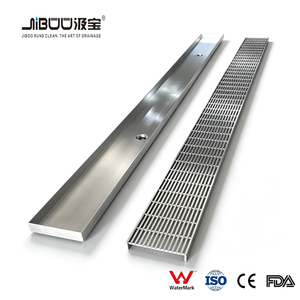
Precision-manufactured electrical pathway supports, heavy-duty drainage, and platform systems engineered to complement mission-critical substation and industrial plant facilities.
In high-voltage electrical installations, earthing conductors are the ultimate failsafe against dielectric breakdown, lightning surges, and earth fault loops. Specifying the correct copper earthing strip configuration requires balancing ampacity dissipation capacity, mechanical soil-abrasion resistance, chemical soil corrosion parameters, and electrochemical galvanic potentials.
Fabricated from C11000 Electrolytic Tough Pitch copper with minimal 100% IACS conductivity. Suited for perimeter subsoil earthing grids, buried direct in neutral-to-basic soils (pH 6.5 to 8.5). Chamfered edges ensure ease of subterranean uncoiling and eliminate stress-concentration fractures.
Engineered for high-sulfur petrochemical refineries, coastal desalination plants, and industrial water treatment installations. Finished with a uniform 3–15 μm electroplated tin layer to prevent atmospheric oxidation, sacrificial copper degradation, and galvanic mismatch at bimetallic junctions.
Designed for internal power distribution stations, switchgear assemblies, and server hall common bonding networks (CBN). Available with precision CNC pre-punched mounting holes, chamfered edge radii, and mirror-bright electro-polishing for low contact resistance.
Tier-1 manufacturing operations in China implement continuous conform extrusion coupled with multi-die drawing to achieve structural grain consolidation. The table below illustrates the standard dimensional, electrical, and thermal parameters benchmarked against international standards:
| Dimensional Profile (mm) | Copper Grade & Temper | Cross-Section (mm²) | Conductivity (% IACS) | Short-Circuit Rating (1s, kA) | Governing Standard |
|---|---|---|---|---|---|
| 25 × 3.0 mm | Cu-ETP (CW004A / C11000) Annealed | 75.0 | ≥ 100.5% | 14.25 kA | BS EN 13601 / IEC 62561-2 |
| 25 × 6.0 mm | Cu-ETP / Cu-OF Half-Hard | 150.0 | ≥ 100.0% | 28.50 kA | BS EN 13601 / DIN 48801 |
| 31 × 3.0 mm | Cu-ETP (C11000) Annealed | 93.0 | ≥ 100.5% | 17.67 kA | BS EN 13601 / UL 467 |
| 40 × 4.0 mm | Cu-ETP Annealed / Half-Hard | 160.0 | ≥ 100.0% | 30.40 kA | IEC 62561-2 / IEEE 80 |
| 50 × 5.0 mm | Cu-ETP (CW004A) Hard-Drawn | 250.0 | ≥ 100.0% | 47.50 kA | BS EN 13601 / ASTM B187 |
| 50 × 6.0 mm | Cu-OF (CW008A / C10200) Oxygen-Free | 300.0 | ≥ 101.0% | 57.00 kA | IEEE 80 / IEC 62561-2 |
The procurement ecosystem for electrical earthing is experiencing systemic transformation driven by three macroeconomic imperatives: renewable energy integration, extreme power density in hyperscale cloud computation, and copper material commodity hedging.
With high-voltage direct current (HVDC) converter substations and battery energy storage systems (BESS) scaling rapidly, traditional Cu-ETP is increasingly being substituted with Cu-OF (CW008A, <10 ppm O&sub2;). Under continuous high-current DC bias and cyclic thermal stress, oxygen-free copper prevents hydrogen embrittlement during brazing or exothermic field welding, guaranteeing multi-decade connection integrity.
Global EPC contractors are transitioning away from fixed-price forward spot contracts toward transparent London Metal Exchange (LME) + Conversion Premium procurement models. Leading Chinese manufacturers now integrate raw-material batch QR tracking, connecting physical coils directly to spectroscopic mill certificates and eddy-current conductivity logs.
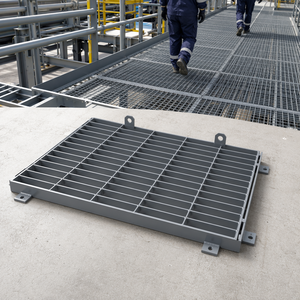
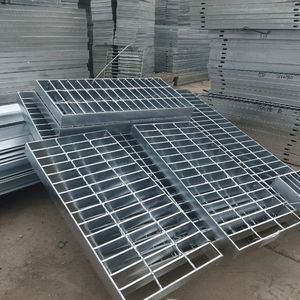
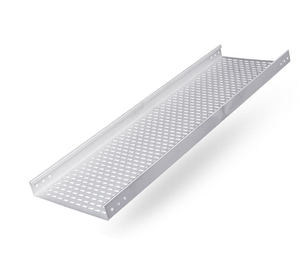
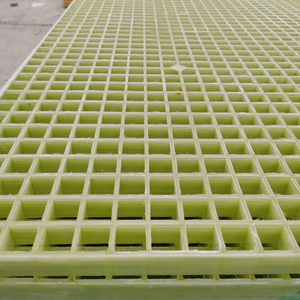
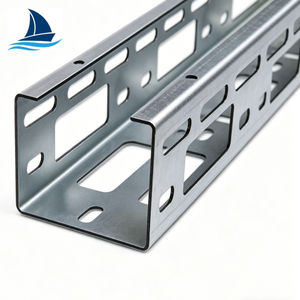
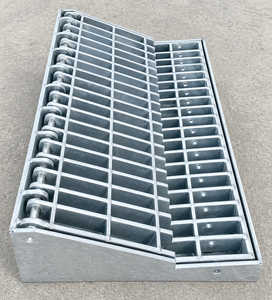
Modern job-sites require plug-and-play assembly. Earthing strip orders are increasingly bundled with hot-dip galvanized structural gratings, stainless steel perforated cable management trays, and FRP anti-static access walkways. Sourcing an integrated infrastructure package dramatically streamlines vendor audits, guarantees mechanical fit-up, and minimizes maritime logistics overhead.
Identifying a verified, tier-one manufacturing partner in China goes beyond unit price per kilogram. Sourcing directors must assess manufacturing capacity, hydraulic forming precision, metal finishing consistency, and comprehensive quality management systems.
Operating dedicated upward continuous casting lines and multi-pass draw benches allows direct control over copper crystallographic grain structures, eliminating internal inclusions and porosity.
Every export shipment is verified with optical emission spectrometers (OES), Kelvin double-bridge electrical resistance testers, micro-hardness vickers testers, and bend-testing rigs according to IEC 62561-2 and BS EN 13601.
Beyond copper grounding conductors, our extensive industrial facilities house robotic electroforging machines applying over 100 tonnes of hydraulic pressure, automated CNC punching, and dedicated hot-dip galvanizing kettles.
All copper flat tapes can be provided with full round edges (radius = 0.5 × thickness) or deburred rounded square corners, preventing flashover ionization along strip edges and preserving protective coatings.
Tapes are coiled on robust heat-treated wooden drums or bundled in heavy waterproof VCI (Vapor Corrosion Inhibitor) film with desiccants, ensuring pristine, oxidation-free delivery across trans-oceanic freight routes.
Our bilingual sales engineering staff reviews structural drawings, computes short-circuit thermal capacity based on IEEE 80 Oderkirk formulas, and optimizes layout cut-outs before production commencement.
Essential technical, testing, and commercial guidance for international project engineers and supply chain directors.
S = (I × √t) / k
Connect with our senior metallurgical and electrical sales engineers to receive comprehensive product data sheets, project-specific custom draw dimensions, and verified LME-linked pricing proposals.
Contact Us