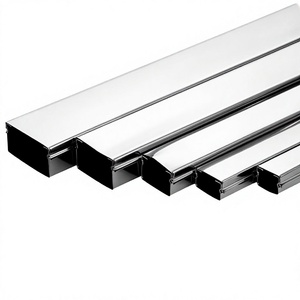
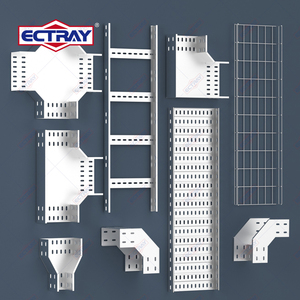
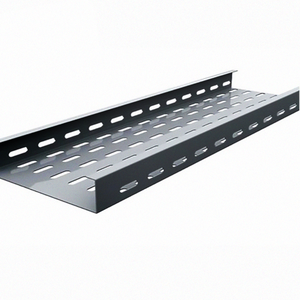
Explore our high-performance metallic and non-metallic cable routing channels engineered for commercial infrastructure, energy sectors, and industrial facilities.
In modern megawatt-scale industrial projects—ranging from greenfield chemical processing plants and offshore oil platforms to hyperscale data centers—cable containment design directly dictates operational longevity, electrical safety, and maintenance costs. As a premier China Wholesale Channel Cable Tray Manufacturer and Direct Factory Exporter, our engineering division integrates automated cold-roll forming, high-amperage pressure resistance welding, and state-of-the-art anti-corrosion chemistry to engineer containment systems built for the most punishing operational environments.
Information Gain Insight: Selecting cable trays based solely on initial purchasing cost frequently leads to catastrophic early corrosion and structural sagging under thermal stress. Standardized testing shows that utilizing advanced Zinc-Aluminum-Magnesium (ZAM) structural alloys extends containment lifespan by up to 300% in C4/C5 marine atmospheric environments compared to conventional post-galvanized carbon steel, eliminating costly downtime.
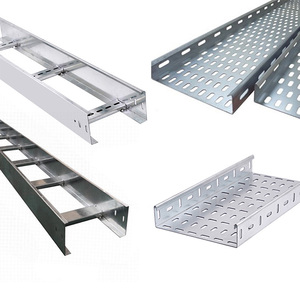
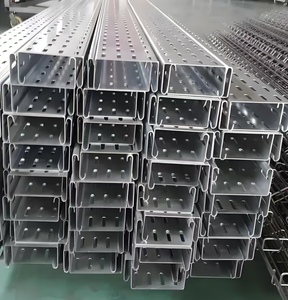
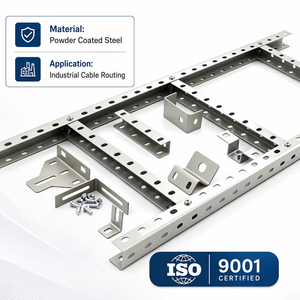
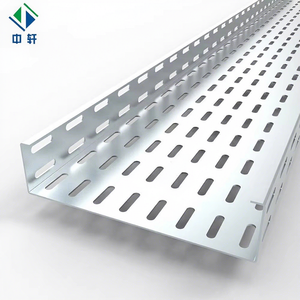
Our manufacturing facilities operate PLC-controlled continuous roll-forming lines capable of producing solid bottom channel trunking, perforated ventilated channels, and heavy-duty ladder trays with dimensional precision under ±0.5mm. We strictly adhere to global structural and electrical compliance standards, including NEMA VE 1 (Metal Cable Tray Systems), IEC 61537 (Cable Management Systems), and ASTM A123/A123M for hot-dip galvanizing specifications.
Utilizing Q235B, Q355B, and high-strength cold-rolled steel coils ensuring superior load-bearing capacity and deflection resistance under heavy power cable densities.
Fabricated from AISI 304, 316, and 316L stainless steel, complete with full pickling and electro-polishing treatments to maximize intergranular corrosion resistance.
Next-generation Zinc-Aluminum-Magnesium alloy coatings that form a dense, protective micro-crystalline film over cut edges and punched perforations.
| Material / Finish Type | Applicable Standards | Corrosion Class (ISO 12944) | Typical Mechanical Yield | Recommended Project Applications |
|---|---|---|---|---|
| Pre-Galvanized Steel (PG) | ASTM A653 / EN 10346 | C1 – C2 (Indoor Clean) | ≥ 235 MPa | Commercial office wiring, indoor data centers, retail infrastructure. |
| Hot-Dip Galvanized (HDG) | ASTM A123 / ISO 1461 | C3 – C4 (Industrial Outdoor) | ≥ 245 MPa | Power transmission stations, petrochemical plants, outdoor bridges. |
| Zinc-Aluminum-Magnesium (ZAM) | GB/T 43284 / EN 10346 | C4 – C5 (Severe Marine/Coastal) | ≥ 350 MPa | Solar photovoltaic farms, coastal wind farms, marine ports. |
| Austenitic Stainless Steel (304/316L) | ASTM A240 / EN 10088 | C5-M / CX (Extreme Offshore) | ≥ 205 – 290 MPa | Pharmaceutical cleanrooms, food processing, offshore platforms. |
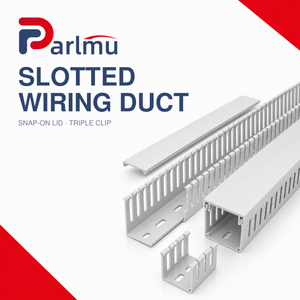
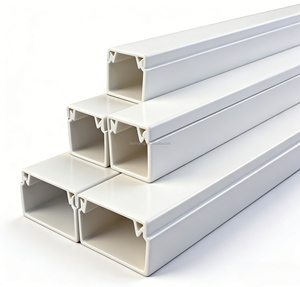
| Extruded Rigid PVC / FRP | IEC 61537 / UL 94 V-0 | Chemical Resistant (Non-Metallic) | Tensile ≥ 40 MPa | Acid mist environments, battery storage rooms, electrical isolation zones. |
As global engineering procurement construction (EPC) firms pivot toward decarbonization, fast-track modular assembly, and digital asset management, cable containment procurement is undergoing structural shifts. Understanding these dynamic trends enables procurement officers to optimize total cost of ownership (TCO) while securing compliance with stringent building codes.
Traditionally, Hot-Dip Galvanizing (HDG) after fabrication was the undisputed industry benchmark for outdoor corrosion resistance. However, environmental regulations surrounding heavy zinc sludge and high thermal energy usage have accelerated the adoption of ZAM mill-coated steel. ZAM provides superior scratch resistance, self-healing cut edges via chemical zinc hydroxide flow, and significantly lower embodied carbon, making it the preferred specification for global solar PV projects and infrastructure gigafactories.
With skilled job-site electrical labor costs escalating across Europe, North America, and Australia, contractor preference has shifted decisively toward toolless joiners, click-fit trunking covers, and pre-punched universal mounting channels. Modular U-channel systems allow field technicians to connect tray lengths and fit accessories up to 45% faster than traditional nut-and-bolt splice plate configurations, substantially reducing project installation budgets.
Modern EPC procurement teams require channel cable tray manufacturers to supply fully digitized 3D BIM object libraries (compatible with Autodesk Revit, Aveva PDMS, and Bentley Systems) at Level of Development 400 (LOD 400). Providing accurate geometric dimensions, load ratings, and exact fitting radiuses enables virtual clash detection during the design phase, drastically minimizing field rework and scrap generation on job sites.
In high-density commercial spaces and underground transit networks, fire endurance (such as E90 thermal integrity compliance under DIN 4102-12) has become non-negotiable. Concurrently, non-metallic trunking must meet strict UL94 V-0 flame retardancy and LSZH emission criteria. Furthermore, structural engineers now mandate seismic-restrained channel tray brackets compliant with ASCE 7 load combinations for earthquake-prone regions.
Navigating international supply chains requires a manufacturing partner with deep metallurgical capability, rigorous quality control systems, and scale to ensure on-time job-site delivery without cost overruns.
Unlike secondary assembly workshops, our primary production campus integrates raw steel coil slitting, high-speed stamping, automated cold-roll forming, pressure spot welding, and in-house galvanizing lines. This vertical integration allows complete oversight over raw material chemistry, mechanical yield strength, and coating thickness uniformity.
Every production lot is issued an authentic Mill Test Certificate (MTC) conforming to EN 10204 3.1 detailing chemical composition and mechanical strain testing.
Direct answers to structural engineering, material selection, and commercial order inquiries.
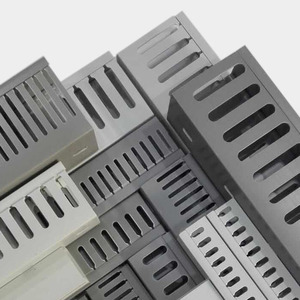
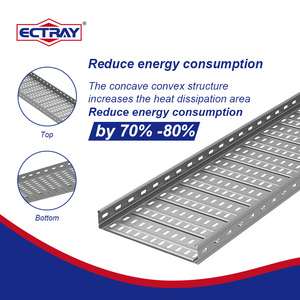
Solid Channel Trunking provides complete 360-degree physical isolation, acoustic shielding, and electromagnetic interference (EMI/RFI) protection for sensitive data or control cables, preventing airborne dust and moisture ingress. Perforated Cable Trays feature precision-stamped ventilation slots along the bottom and side walls, facilitating heat dissipation for high-ampacity power cables while providing continuous tie-down slots for cable cleat anchoring.
NEMA VE 1 classifies cable trays based on their working load capacity (lbs/ft) across specific support spans (e.g., 8A, 12C, 20B). Steel sheet thickness typically ranges from 1.0mm (light duty commercial) to 1.5mm, 2.0mm, and 2.5mm (heavy industrial). Choosing the correct gauge ensures the assembly maintains allowable deflection criteria (typically limited to span/200) under full cable weight, thermal expansion, and wind/ice loading.
ZAM coatings provide up to 3 to 5 times greater corrosion resistance than standard galvanized steel of equivalent thickness due to the formation of a tight Simonkolleite protective layer. Unlike post-galvanized items, ZAM coils are pre-coated at the mill, providing pristine surface smoothness, zero thermal warping of light-gauge channels, and self-healing corrosion protection at cut edges and hole punches.
Yes. We offer complete OEM/ODM customization. We can engineer custom channel widths (50mm to 1200mm), side rail depths (25mm to 200mm), specialized 30°/45°/90° horizontal elbows, vertical risers, cross tees, and reducers. Additionally, thermoplastic or epoxy powder coating (RAL colors) can be applied over galvanized steel for enhanced chemical resistance or color-coded circuit identification.
To prepare an accurate engineering quote, please provide: 1) Cable tray design type (Solid Channel, Perforated, or Ladder); 2) Material grade & surface finish (e.g., Pre-galvanized Q235B, Hot-Dip Galvanized, Stainless Steel 316); 3) Dimensions (Width x Height x Sheet Thickness x Length); 4) Quantity of straight lengths and required fittings/accessories; and 5) Destination seaport or project delivery location.
Contact our senior technical sales engineers today for structural load calculations, custom drawing reviews, complimentary sample kits, and factory-direct wholesale pricing.