Explore our certified wire mesh basket solutions, high-load galvanized cable raceways, and non-corrosive industrial platforms purpose-built for Austrian infrastructure and processing plants.
A rigorous examination of basket cable trays engineered for Central European thermal gradients, seismic load margins, and stringent functional endurance mandates.
Industrial electrification in the Republic of Austria requires strict adherence to harmonized European Union technical criteria and national safety frameworks. In industrial electrical installations across Upper Austria (Oberösterreich), Styria (Steiermark), and the Greater Vienna metropolitan area, wire mesh cable trays—widely recognized as Gitterkabelrinnen—must fulfill the exacting requirements established under EN 61537:2007 (Cable management – Cable tray systems and cable ladder systems). This international benchmark dictates mechanical load capacity (Safe Working Load / SWL), electrical continuity for equipotential bonding, and resistance against environmental degradation.
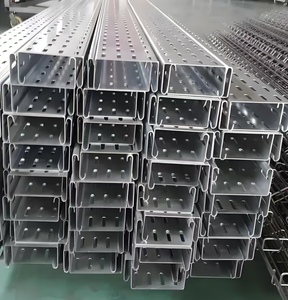
Austrian electrical codes, regulated under the supervision of the Austrian Electrotechnical Association (ÖVE - Österreichischer Verband für Elektrotechnik), demand high criteria regarding system grounding and thermal dissipation. Wire mesh basket cable trays manufactured by Omkar Gratings are designed with welded round steel cross-wires that present an open-profile matrix exceeding 85% surface ventilation. This open architecture eliminates the derating factors typically imposed on bundled power cables in closed raceways under ÖVE E 8001 / ÖVE/ÖNORM E 8101 standards. By facilitating unimpeded convection, joule heating within high-voltage feeder cables is dissipated into the ambient environment, lowering dielectric stress, preventing insulation breakdown, and curtailing overall plant energy loss.
In Austrian civil engineering, public transportation infrastructure (such as ÖBB railway transit lines and ASFINAG road tunnels), and chemical processing centers, cable containment is subject to structural performance under thermal shock. Wire mesh basket trays engineered for Austrian commercial and industrial projects must comply with fire survivability standards known across the DACH zone as Funktionserhalt according to DIN 4102-12 (categorized across classes E30, E60, and E90).
Under flash-fire conditions or sustained structural combustions reaching 1000°C, a basket tray fabricated from sub-optimal cold-drawn steel can suffer significant tensile relaxation, resulting in sag that severs emergency circuits powering smoke extraction fans, emergency exit illumination, and fire suppression pumps. Our CE-certified basket cable trays are crafted from low-carbon alloy steel rods, resistance welded via automated, PLC-directed multi-point mesh welding machines. The junction welds exhibit high shear-resistant cohesion capable of bearing structural cable masses even when structural deflection occurs under thermal loads, guaranteeing compliance with Austrian workplace fire safety protocols (Arbeitsstättenverordnung - AStV).
| Material / Coating System | Normative Standard | Corrosion Category (ISO 12944) | Optimal Austrian Application |
|---|---|---|---|
| Electro-Zinc Plated (EZ) | EN ISO 2081 (12–15 µm) | C1 – C2 (Low Dry Indoor) | Commercial Server Rooms, Office Switchboards, Telecommunications in Vienna |
| Hot-Dip Galvanized (HDG) | EN ISO 1461 (60–85 µm) | C3 – C4 (Industrial & Alpine Exterior) | Renewable Hydroelectric Facilities, Alpine Railway Infrastructure, Heavy Manufacturing in Linz |
| Stainless Steel (AISI 304 / 1.4301) | EN 10088-2 / Acid Pickled | C3 – C4 (Hygienic Cleanroom) | Food and Beverage Processing Plants, Breweries in Salzburg and Graz |
| Stainless Steel (AISI 316L / 1.4404) | EN 10088-2 / Electro-Polished | C5-M / C5-I (Aggressive Chemical) | Pharmaceutical Cleanrooms, Tunnel Infrastructure, Acid Dosing Platforms in Chemical Parks |
From the industrial heavy manufacturing corridors along the Danube to high-altitude Alpine hydro plants and biopharma hubs, containment systems must match specific operating environments.
Austria generates over 60% of its electrical energy via run-of-river and pumped-storage hydroelectric plants located in Tyrol, Carinthia, and Vorarlberg. These subterranean rock caverns present chronic relative humidity (RH > 90%) and pervasive condensation. Our Hot-Dip Galvanized (HDG) basket trays, hot-dip coated strictly to EN ISO 1461 with minimum 65–85 µm zinc thicknesses, resist micro-galvanic corrosion and maintain electrical earth continuity without premature zinc depletion.
Concentrated around Vienna's biotech clusters and Styrian processing hubs, the beverage, dairy, and biotechnology sectors require sanitary containment infrastructure. Our AISI 304 and AISI 316L stainless steel wire mesh trays undergo complete chemical de-scaling and acid passivation followed by electro-polishing. The resulting mirror-smooth, crevice-free surface prevents bacterial colonization and tolerates intense CIP (Clean-In-Place) washdown cycles utilizing nitric acid and caustic sanitizers.
With Vienna operating as a primary digital gateway to Central and Eastern Europe (CEE), hyper-scale data centers rely heavily on overhead wire mesh cable systems. The open design facilitates thermal management, eliminating hot air damming. Furthermore, our round wire design prevents bend radius degradation under ISO/IEC 11801 and EN 50173 standards, safeguarding Category 6A, 7A, and fragile fiber-optic multi-strand trunks from physical micro-fractures.
Operating across the automotive supply corridors of Graz and Upper Austria, high-speed robotic assembly plants require cable routing configurations that handle quick modification during retooling. Wire basket trays can be configured using handheld wire-cutters directly on the factory floor without prefabricated elbows, tees, or reducers. This agility reduces planning overhead, fits dynamic factory envelopes, and integrates with overhead crane and manufacturing machinery runs.
Subterranean railway passes and alpine road systems encounter cyclic air piston pressures driven by high-speed trains, alongside winter road salts containing heavy calcium chloride (CaCl2). For these critical installations, we supply custom duplex-coated trays (hot-dip galvanization supplemented by structural epoxy powder coat) or premium grade 1.4404 (316L) stainless steel systems tested for aerodynamic fatigue and salt spray resistance exceeding 1,500 hours under ASTM B117 / EN ISO 9227.
How the green transition, European ESG supply-chain directives, and BIM digital twins are redefining Austrian industrial purchasing specifications.
Austria's statutory commitment to achieving 100% renewable electricity consumption (under the Erneuerbaren-Ausbau-Gesetz - EAG) has catalyzed large-scale utility solar installations, industrial rooftop arrays, and biomass plants. In solar PV installations, DC cabling operates at elevated potentials up to 1,500 Volts under constant exposure to ultraviolet radiation and weather extremes. Austrian engineers increasingly prefer basket trays over closed conduits because the continuous open wire structure allows natural water runoff, preventing cable submersion in ice dams during alpine winters.
Furthermore, our electro-galvanized and powder-coated trays are specified for direct deployment across smart energy storage hubs, inverter stations, and localized electrical grids, where the speed of installation directly influences capital deployment efficiencies.
General contractors and architectural engineering firms across Austria (such as Strabag, Porr, and ATP Architekten Ingenieure) have integrated Building Information Modeling (BIM) across the entire project lifecycle. Modern Austrian tenders demand certified 3D CAD and Revit-compatible parametric objects for every mechanical, electrical, and plumbing (MEP) component.
Omkar Gratings supports Austrian planners by providing digital design models for our complete basket tray portfolio, including precise weight tolerances, allowable load deflection data curves under EN 61537, and parametric coupling configurations. This ensures zero clash-detection errors during structural digital simulation phases, substantially lowering the volume of change orders on site.
The implementation of the European Union's Carbon Border Adjustment Mechanism (CBAM) along with the Corporate Sustainability Due Diligence Directive (CSDDD) requires Austrian engineering firms to demand complete transparency regarding the embedded carbon footprint of all metallurgical imports.
Our manufacturing processes rely on primary steel drawn from electric arc furnaces (EAF) utilizing high scrap-to-billet ratios, significantly lowering Scope 1 and Scope 2 greenhouse emissions compared to traditional blast-furnace operations. Every consignment shipped to Austria is accompanied by mill test certificates (MTC) conforming to EN 10204 Type 3.1, detailing precise chemical compositions, tensile testing data, and verified carbon equivalent ratings.
Combining heavy-duty engineering capacity with rigorous precision fabrication, certified by international quality bodies and customized for European distribution.
Operating automated resistance and forge-welding platforms, our production incorporates hydraulic pressing forces exceeding 100 tonnes synchronized with 2200-Ampere electrical impulses. This creates fused structural intersections free from thermal cracking, internal cavities, or structural inclusions, yielding consistent dimensional tolerances across long containment runs.
Unlike trading houses, we maintain fully integrated in-house surface treatment operations: heavy-duty hot-dip galvanizing baths operating per EN ISO 1461, continuous automated powder-coating lines, and acid-wash pickling and electro-polishing plants for surgical-grade austenitic stainless steels (AISI 304, 316, 309).
We manage consolidated maritime and inland multi-modal logistics serving primary Austrian industrial zones, delivering directly to logistics hubs in Linz, Vienna, Enns Port, and Graz. Every bundle is packed in ocean-worthy, steel-strapped crating with waterproof wrapping, anti-vibration timber dunnage, and barcode labeling.
We manufacture directly from client engineering schematics. Whether your run requires integrated side cut-outs, dropouts, elevated divider barriers, cantilever wall brackets, or quick-splice coupling clamps, our engineering department ensures accessory compatibility with central European electrical installation systems.
Certified under ISO 9001, ISO 14001, and ISO 45001, our production lines follow stringent continuous quality monitoring. From raw rod tensile evaluation and weld cross-tension shear tests to dry film thickness (DFT) magnetic gauging and salt spray corrosion chambers, every batch is certified before dispatch.
Comprehensive technical and commercial insights addressing local compliance, structural properties, import customs clearance, and site fabrication.
Connect directly with our engineering sales desk for full technical catalogs, 3D CAD library files, EN 61537 test certifications, and project-specific price quotations tailored for Austrian industrial infrastructure.