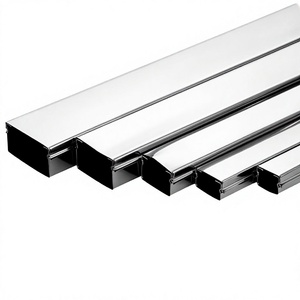

Engineered to Japanese Industrial Standards with automated cold-roll forming, uniform micro-burr elimination, and superior galvanic passivation.
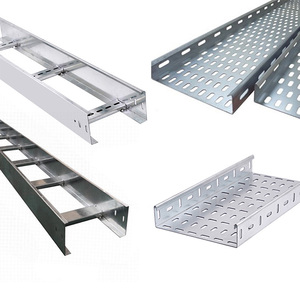
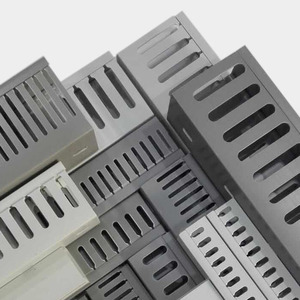
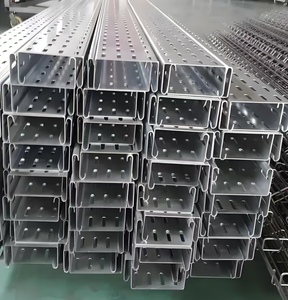
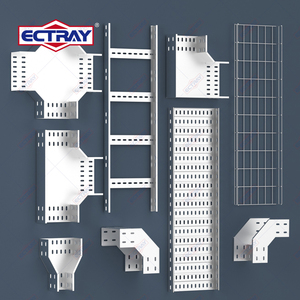
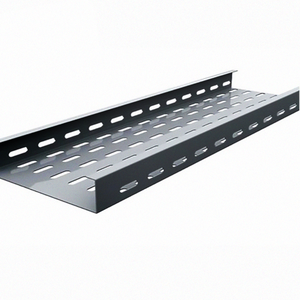
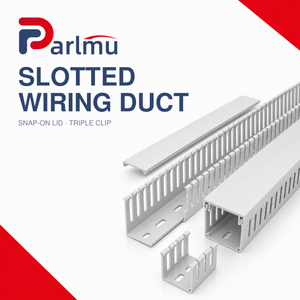
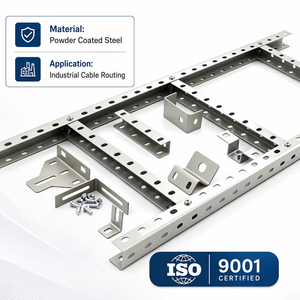
Channel cable trays (often referred to in Japan as raceways or solid-bottom U-channels) form the foundational backbone for high-density power distribution, instrumentation, and telecommunications cabling. Sourcing cable routing systems for Japanese engineering, procurement, and construction (EPC) projects requires uncompromising alignment with stringent national regulations, architectural earthquake-proofing criteria, and rigorous metallurgic testing.
Japanese electrical contractors (General Contractors & Subcontractors / ゼネコン & サブコン) operate under distinct atmospheric demands. In maritime coastal installations—such as Yokohama, Kobe, or offshore wind terminal facilities—standard pre-galvanized sheet metal degrades rapidly due to high humidity and airborne chlorides.
To overcome this, our production facility supplies Zinc-Aluminum-Magnesium (ZAM) alloy coated channel trays. ZAM features a self-healing cut-edge behavior: when cut or perforated on-site, the magnesium-infused zinc patina migrates over exposed core steel, forming a robust protective barrier of simonkolleite, resisting salt spray corrosion up to four times longer than conventional continuous galvanized steel.
Under Japan's Building Standard Act (建築基準法) and seismic mitigation guidelines, cable trays suspended from floor slabs must endure intense lateral and longitudinal horizontal accelerations. Standard channel profiles can experience localized buckling at connector joints during seismic oscillations.
Our engineered channel trays feature continuous inward-curled lips (C-channel configuration) with cold-formed strengthening ribs across the base. This cross-sectional geometry enhances torsional rigidity, allowing maximum deflection resistance across spans up to 3.0 meters while preventing vibrational fatigue and disconnects during Level 2 seismic events.
| Tray System | Core Substrate | Surface Treatment | Corrosion Life (C4/C5 Maritime) | Primary Japanese Application |
|---|---|---|---|---|
| Solid Channel / U-Trunking | SPCC / Q235B Carbon Steel | Hot-Dip Galvanized (JIS H 8641 ≥550g/m²) | 30 - 50+ Years | Thermal Power Plants, Subways & Coastal Plants |
| ZAM Perforated Channel | SuperDyma / ZAM Steel | Zn-Al-Mg Self-Healing Coating | 40+ Years | Photovoltaic Farms, Coastal Factories & Rail |
| Sanitary Stainless Channel | SUS304 / SUS316L | Acid Pickled & Electro-Polished | 50+ Years (Impervious) | Cleanrooms, Food Processing, Pharma & EV Battery |
| High-Impact PVC Trunking | Flame-Retardant Rigid PVC | UV-Stabilized Self-Extinguishing | 20+ Years (Indoor/Sub-floor) | Commercial Telecom, Data Centers & Server Rooms |
1. Next-Generation Semiconductor Fabs & EV Gigafactories: With substantial ongoing investments in Kumamoto (JASM) and Hokkaido (Rapidus), ultra-clean cable management is paramount. Our electro-polished SUS304 and SUS316L channel trunking systems provide zero zinc vapor or outgassing risks, ensuring particle-free environments for class-10 to class-100 cleanrooms.
2. Offshore Wind and Renewable Substations: With the Japanese government's ambitious Green Growth Strategy targeting carbon neutrality, renewable installations are migrating into punishing coastal salt zones. Hot-dip galvanized channel trays with heavy zinc coatings (≥600 g/m²) and ZAM raceways are rapidly superseding conventional painted trays due to their extended maintenance lifecycle.
3. Seismic Modernization of Commercial High-Rises: Urban renewal initiatives across Tokyo, Osaka, and Nagoya demand slim, high-load cable channels that can integrate into constrained ceiling plenums and raised access floors, meeting strict acoustic dampening and fire containment regulations.
Combining heavy-duty press electroforging, CNC cold-roll profiling, and certified corrosion engineering.
Utilizing high-tonnage automated hydraulic forming and CNC turret tooling capable of producing channel walls from 1.0 mm to 3.5 mm with exact dimensional consistency, square returns, and zero flange skewing.
Our in-house hot-dip galvanizing facilities comply fully with JIS H 8641 (HDZ 55 / HDZ 45) specifications. Continuous bath temperature management guarantees pure metallurgical zinc-iron alloy bonding free of dross pimples or sharp zinc spikes.
We manufacture custom bends, horizontal elbows, tees, crosses, and eccentric reducers fabricated directly to BIM/CAD models. Each fitting provides a seamless internal curvature (100 mm to 600 mm bend radii) safeguarding high-gauge cables.
Addressing compliance, freight logistics, material specifications, and installation practices for cross-border projects.
Yes. Our cable tray systems are manufactured in compliance with JIS C 8436 (metallic trunking) and JIS C 8440 (raceways and cable support systems). For hot-dip galvanizing, we adhere to JIS H 8641 specifications (HDZ 55 / HDZ 45), ensuring minimum average coating weights of 550 g/m² (approx. 76 μm). Comprehensive Mill Test Certificates (MTC) according to EN 10204 3.1 and zinc thickness test reports are systematically provided with each shipping container.
Japanese General Contractors (ゼネコン) mandate strict burr-free surfaces to avoid slicing delicate cross-linked polyethylene insulated cables during pulling operations. We implement a multi-stage deburring protocol: automated mechanical deburring post-punching, rotary wire-brush edge finishing, and individual tactile white-glove inspections before galvanizing or coating. Post-galvanizing inspection specifically screens for and removes zinc drip spikes and rough accumulation.
Our coastal production and port loading facilities allow rapid transit. Ocean transit to major Japanese base ports (Tokyo, Yokohama, Nagoya, Osaka, Kobe, and Hakata) is approximately 3 to 6 days. Standard manufacturing lead time for full container load (FCL) orders is generally 15 to 20 days. Fast-track production lines are available for critical construction phases and emergency project schedules.
Absolutely. While standard export lengths are typically 2.0 m, 2.4 m, or 3.0 m, we routinely fabricate specific lengths based on standard Japanese architectural module spacing (such as 910 mm / 1820 mm ceiling joist modules or metric 3000 mm spans). Custom punching patterns—including specific knockout diameters for Japanese JIS conduit adapters (G16, G22, G28, etc.)—can be incorporated directly into the automated tooling process.
ZAM is highly recommended for coastal solar farms, logistics hubs near ports, and facilities with high airborne ammonia or salt. Unlike post-fabrication HDG, ZAM sheet metal possesses a unique chemical self-healing mechanism that protects raw cut edges from rust creep. Furthermore, ZAM provides a visually uniform, spangle-consistent, matte architectural finish that Japanese specifiers often prefer for exposed ceiling plenum concepts without needing post-painting.
Send your drawings, bill of quantities (BOQ), or technical tender specifications. Our structural engineers review load capacities, deflections, and material compliance for rapid turnarounds.