Engineered for high ground fault dissipation, heavy soil salinity resistance, and industrial cable containment across regional infrastructure projects.
In low and high-voltage power networks, earthing (grounding) plate systems act as the primary interface for dissipating hazardous fault currents, switching transients, and atmospheric lightning strikes directly into the Earth's crust. For electrical engineers and engineering, procurement, and construction (EPC) contractors designing infrastructure within the Levant and Eastern Mediterranean corridors, earthing plate design must account for dynamic soil resistivity, ionic thermal evaporation, and corrosive subterranean soil chemistries.
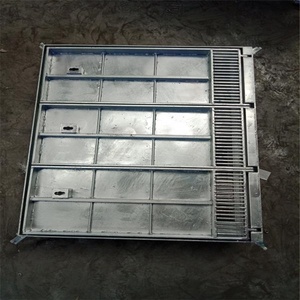
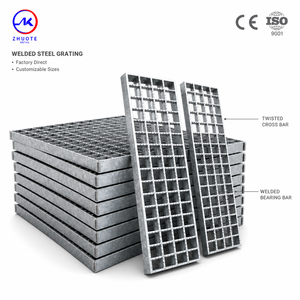
Unlike driven copper-clad rods that depend on narrow radial current discharge columns, Galvanised Earthing Plates (Solid Steel Plates and Lattice Earth Mats) present an extensive two-dimensional conductive surface area. This configuration drastically reduces the grounding system's surge impedance and localized step-and-touch potential gradients. Manufactured from high-tensile structural carbon steel (ASTM A36, S275JR, or S355JR) and subjected to comprehensive hot-dip galvanizing per EN ISO 1461, these grounding assemblies establish an impermeable zinc-iron alloy barrier layer that withstands mechanical impact and chemical degradation.
When high short-circuit currents surge through an earthing installation, intense I²t heating occurs at the metal-soil contact zone. In arid or rocky ground profiles, standard thin-wall conductive tapes or low-grade steel rods frequently experience vapor barrier formation and thermal runaway, resulting in ground isolation. Our heavy-duty galvanized earthing plates—custom fabricated in thicknesses from 3.0 mm up to 12.0 mm—provide superior thermal capacity, absorbing short-duration high-energy discharges without warping or joint micro-cracking.
Furthermore, the zinc coating serves a dual protective role: it acts as a tough mechanical barrier and provides sacrificial cathodic protection. If abrasive backfill or installation tools scratch the outer zinc layer, the electronegative zinc preferential-corrosion mechanism protects the underlying structural steel substrate, ensuring an operational service life exceeding 30 to 50 years across diverse geological formations.
| Engineering Attribute | Solid Galvanised Steel Earthing Plate | Lattice / Mesh Earthing Grid Mat | Compliance & Test Method |
|---|---|---|---|
| Standard Dimensions | 600 × 600 mm, 900 × 900 mm, 1000 × 1000 mm | 600 × 600 mm, 1200 × 1200 mm (Custom grid pitch) | Project specific CAD / OEM to order |
| Plate / Bar Thickness | 3.0 mm, 5.0 mm, 6.0 mm, 8.0 mm, 10.0 mm | 25 × 3 mm up to 50 × 6 mm bearing flats | EN 10025-2 / ASTM A36 |
| Zinc Coating Weight | ≥ 610 g/m² (Nominal average > 85 μm) | ≥ 610 g/m² to ≥ 700 g/m² (Up to 100 μm) | BS EN ISO 1461 / ASTM A123 |
| Terminal Lug Connections | Pre-drilled 2-hole or 4-hole pad; welded riser strap | Integrated welded connection tails / clamp fittings | IEC 62561-1 Class H (heavy duty) |
| Short-Circuit Withstand | Exceptional transient thermal inertia (kA/1s rated) | Optimal multi-path current diffusion | IEEE Std 80 / IEC 60364-5-54 |
| Soil Backfill Compatibility | Best paired with Bentonite or low-resistivity compound | Excellent contact with rocky, gravelly subsoils | Resistivity reduction target < 5 Ω |
Deploying electrical earthing equipment in Israel requires addressing unique regional microclimates and environmental extremes. From the high-salinity maritime breezes of the Mediterranean coastal plain to the hyper-arid, rocky terrain of the Negev Desert and the mineral-heavy soils surrounding the Dead Sea rift valley, grounding materials face rigorous operational environments.
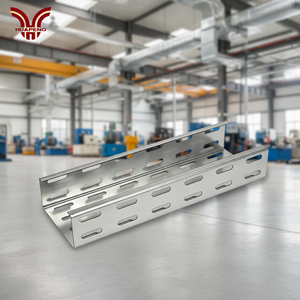
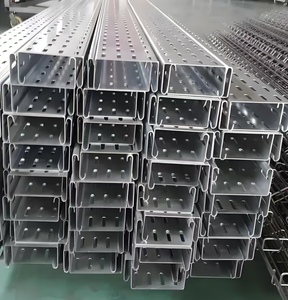
Facilities across Ashdod, Haifa, and Tel Aviv operate in marine environments saturated with airborne chlorides. Heavy galvanized plates and electro-polished stainless steel cable containments resist chloride attack and dissipate continuous harmonic leakage currents safely.
Arid desert regions feature shallow limestone, flint strata, and exceptionally high soil resistivity. Lattice earthing mats embedded with bentonite slurry create wide, stable grounding baselines for central inverter stations and transformer steps.
In high-tech corridors like Herzliya Pituach and Matam Science Park, server facilities require zero-reference equipotential planes to protect sensitive computing gear from transient voltages. Custom-perforated plates ensure low-impedance ground bonding.
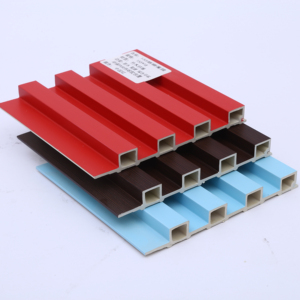
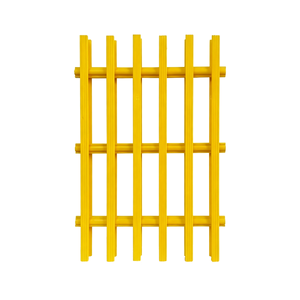
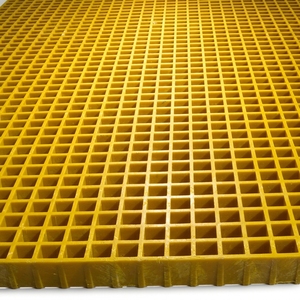
The Dead Sea basin exhibits high mineral salt concentrations and elevated ambient temperatures. We supply customized extra-thick hot-dip galvanized earthing plates and specialized FRP composite platforms to prevent chemical and galvanic degradation.
Railway expansion projects (such as Tel Aviv's Red and Green Light Rail lines) demand strict return-current grounding and stray-current mitigation. Solid welded earthing assemblies protect passenger platforms and track-side signaling gear.
Critical security facilities require low-inductance grounding per military specifications. Our precision OEM/ODM fabrication delivers customized perimeter earthing plates with exothermically welded copper tape risers for immediate integration.
The Israeli Ministry of Energy and infrastructure regulators have accelerated grid modernization, driven by the expansion of natural gas distribution, utility-scale renewable generation, and urban micro-tunneling. Engineering teams now emphasize lifecycle predictability and safety compliance when sourcing grounding components:
Backed by decades of experience in electroforged grating, structural steel fabrications, and export metallurgy, our facilities provide comprehensive OEM/ODM manufacturing. We supply tier-1 contractors with electrical grounding and containment systems engineered for challenging installations.
Our plant operates advanced PLC-controlled machinery delivering over 100 tonnes of hydraulic clamping force and 2,200 amperes of electrical fusion, creating seamless joints without filler metals or structural voids.
In-house galvanizing kettles maintain tight control over bath temperature, flux chemistry, and immersion cycles, producing uniform, high-adhesion coatings up to 85–100 μm per BS EN ISO 1461.
Our design team works directly from structural CAD files, delivering custom perimeter cutouts, welded vertical risers, banding flat bars, and specialized multi-lug terminal configurations.
Key technical and logistics inquiries regarding galvanized earthing plates, testing protocols, customs compliance, and port handling.
Our galvanized earthing plates are manufactured strictly using structural low-carbon steel per EN 10025-2 (S235JR/S275JR) and hot-dip galvanized in full conformity with BS EN ISO 1461 / ASTM A123. The Standards Institution of Israel recognizes IEC 62305 (lightning protection) and IEC 60364-5-54 (earthing arrangements). Our plates meet the minimum dimensional requirements (≥ 500 × 500 mm with minimum thickness ≥ 3 mm to 5 mm for steel electrodes) and provide the electrical cross-section and mechanical resilience required for complete regulatory sign-off.
Solid copper plates can accelerate galvanic corrosion when connected to steel reinforcing bars (rebar) embedded in concrete foundations due to copper's noble electrochemical potential. Galvanized steel, conversely, matches the electrochemical behavior of structural foundation steel, eliminating galvanic corrosion cells. Additionally, in the rocky subsoils of the Negev and Judean Hills, driven copper rods often buckle or strip their thin cladding against limestone strata; heavy galvanized steel plates offer structural durability and resist mechanical deformation during backfilling and mechanical compaction.
Yes. As an OEM/ODM specialist, every order can be customized to your project drawings. We punch or laser-cut connection holes (standard M10, M12, or M16 patterns), weld galvanized flat-bar vertical risers, and supply matching bimetallic or stainless steel (AISI 316) grounding clamps. Performing all welding and hole drilling prior to the final hot-dip galvanizing bath ensures total zinc envelope encapsulation, preventing raw exposed edge rust.
Every shipment is accompanied by complete quality documentation, including EN 10204 Type 3.1 Mill Inspection Certificates validating steel chemical composition and tensile strength, Magnetic Coating Thickness Gauge test reports verifying zinc depth (μm) per batch, and Certificate of Origin documents. Pre-shipment third-party inspections (e.g., SGS, Bureau Veritas) can be coordinated upon request.
Production cycles typically require 15 to 25 business days depending on order volume and custom machining requirements. Finished goods are banded on heavy fumigated ISPM-15 timber pallets, steel-strapped with waterproof polymer wrapping, and loaded into 20ft or 40ft ocean containers. Direct container vessel routes service the Port of Ashdod and Port of Haifa, ensuring reliable and secure delivery schedules for critical infrastructure timelines.
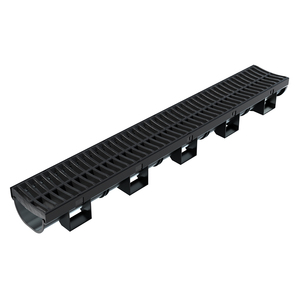
Whether you require standard 600×600×5mm earthing plates, customized substation grounding mats, or complementary cable management trays for high-profile installations, our engineering group will evaluate your project drawings and deliver competitive export pricing.