Tested for dynamic mechanical load capacity, environmental corrosion resistance, and thermal airflow dissipation across major Indian ports, power corridors, and hyperscale data complexes.
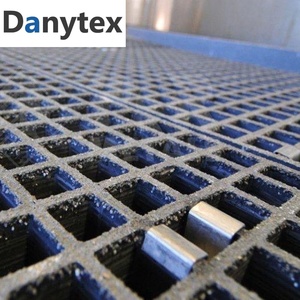
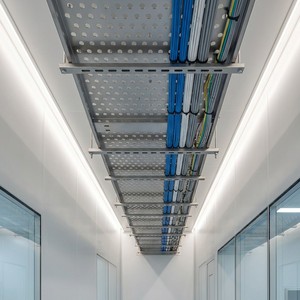
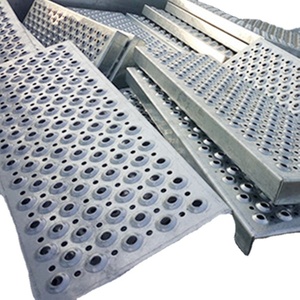
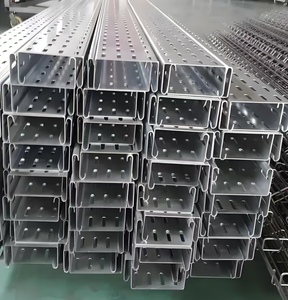
The swift industrialization of India under strategic frameworks such as Make in India, the National Infrastructure Pipeline (NIP), and the expansion of designated Special Economic Zones (SEZs) has placed rigorous technical demands on heavy-duty cable management and structural plant access systems. Major electrical and civil EPC contractors operating across Mumbai, Gujarat, Bangalore, Chennai, and the National Capital Region (NCR) are moving away from traditional, poorly ventilated conduit systems. Modern multi-megawatt facilities require high-performance, CE certified wire mesh cable trays, electroforged floor gratings, and industrial walkways capable of enduring continuous current-induced heat generation, high ambient humidity, and seismic mechanical stresses.
As an engineering manufacturer and global exporter, our supply program integrates compliance with the European standard EN 61537 (Cable management — Cable tray systems and cable ladder systems), CE Low Voltage Directive (LVD) 2014/35/EU, and harmonized Indian Standards including IS 1079 and IS 2062 for high-tensile structural steel. Our basket wire mesh trays are constructed with high-yield drawn steel wires resistance-welded into a uniform 50 mm × 100 mm mesh pattern, maximizing mechanical rigidity while delivering 360-degree ambient ventilation that eliminates thermal cable derating even in summer plant environments where ambient temperatures exceed 48°C.
A critical challenge faced by electrical project directors in India is power cable thermal degradation. Solid-bottom trunking and sub-standard cable ladders restrict airflow, creating localized heat traps. Under IEEE and IEC 60287 guidelines, electrical conductor capacity must be down-rated by as much as 15% to 25% when grouped tightly in closed enclosures. By deploying open basket wire mesh trays and precision perforated cable trays (such as HUAPENG AISI 304/316 slotted profiles), continuous convection ensures immediate dissipation of heat generated by heavy resistive and capacitive loads. This directly saves power loss across mega-facilities and extends cable insulation lifespan.
| Containment Parameter | CE Wire Mesh Basket Tray | Perforated Sheet Metal Tray | Structural Heavy Ladder Tray | FRP / GRP Walkway Grating |
|---|---|---|---|---|
| Primary Material | Q235B / AISI 304 / 316L Wire | IS 1079 Mild Steel / SS 304 | Heavy Gauge Rolled Steel | Pultruded Isophthalic Resin |
| Surface Protection | Hot-Dip Galvanized / Electro-Polish | HDG (IS 4759) / Powder Coating | Hot-Dip Galv. (>85μm) | Flame Retardant UV-Stable Gelcoat |
| Thermal Dissipation Rate | Optimal (92% open free air) | Moderate (35%-45% open slots) | High (75% open rung layout) | Non-conductive / Insulating |
| Installation Labor Index | Fastest (Direct cut & bend) | Intermediate (Factory elbows) | Rigid (Requires heavy splice bolts) | Simple (Hand-tool cut on site) |
| Standards Compliance | IEC 61537 / CE / NEMA VE-1 | IS 1079 / BS 6946 / CE | IS 2062 / NEMA 20B / CE | ASTM E84 Class 1 / ISO 9001 |
*All mechanical Safe Working Load (SWL) limits documented over spans from 1.5 meters to 3.0 meters with maximum deflection factor ≤ L/200 under static uniformly distributed loads.
India represents a complex geographic terrain ranging from extremely saline coastal belts along Mumbai, Mundra, and Chennai, to high-chemical corrosive processing zones in Dahej and Visakhapatnam. Our CE certified wire mesh trays, electroforged steel gratings, and FRP walkway systems solve localized engineering hurdles across major Indian capital projects:
Overhead server hall cable distribution demanding cleanroom-grade zinc-whisker-free containment. High-density Cat6A/fiber optic routing with sweeping radius accessories prevents signal attenuation.
Harsh atmospheres saturated with hydrocarbons, sulfurous fumes, and sea spray. Hot-dip galvanized gratings and AISI 316 stainless wire trays resist severe C5-M industrial-marine corrosion profiles.
Ultra-scale solar farms in desert zones subjected to high UV exposure, diurnal thermal cycling (-5°C to 50°C), and dust storms. Open mesh trays eliminate abrasive sand accumulation around DC power strings.
Sanitary washdown environments requiring zero particulate traps. Acid-washed and electropolished AISI 304/316 stainless steel wire trays and anti-skid dimple plank walkways ensure GMP compliance.
Heavy cable riser rooms and boiler galleries subjected to mechanical vibration and continuous traffic. Heavy-duty electroforged bar gratings and chequered floor plates support maintenance rolling loads.
Underground passenger tunnels and marine cargo handling areas where non-combustibility and rapid egress safety are mandated under National Building Code (NBC) 2016 Part 4 fire life safety codes.
Procurement practices across tier-1 Indian engineering consultancies (such as Engineers India Limited, Tata Consulting Engineers, and MN Dastur) are undergoing a structural shift driven by modern international engineering benchmarks:
Leading Indian EPCs executing domestic turnkey projects with international financial backing (ADB, World Bank, JICA) now specify CE marking alongside Bureau of Indian Standards (BIS) conformity. The dual certification validates metallurgical yield, weld shear strength, and electrical bonding continuity under EN 61537.
With aggressive project delivery timelines in fast-track data center builds across Maharashtra and Tamil Nadu, contractors are replacing traditional welded perforated channels with field-cuttable wire mesh trays, reducing site installation time and on-site welding hot-work permits by up to 60%.
Standard commercial pre-galvanized coatings (15-20 microns) rapidly fail in Indian coastal zones. Engineering specifications increasingly demand high-specification hot-dip galvanizing per ISO 1461 / IS 4759 with minimum 85 microns thickness, or pultruded fire-retardant FRP gratings for splash zones.
Combining heavy-duty PLC electroforging machinery with advanced CAD-driven wire mesh production, Omkar Gratings Pvt Ltd (Omkareshwar Engineering) provides turnkey manufacturing and export capabilities tailored for international EPC standards and Indian infrastructure requirements.
Our automated PLC-controlled forge welding lines apply over 100 tonnes of hydraulic pressure combined with 2200 A current, seamlessly fusing bearing bars and twisted square cross bars without filler metals, eliminating internal stress cracks.
Production spans mild steel (IS 2062 / Q235B), stainless steel (AISI 304, 316, 309 for extreme temperatures), marine-grade non-ferrous alloys, and glass-reinforced resin (FRP/GRP) designed for aggressive chemical environments.
Complex circular cut-outs, pipe clearance penetrations, toe-plates, and kick-plates are precision-banded in-house. Panels are coded and marked directly to site GA drawings for swift, bolt-down field assembly without site modification.
Full control over hot-dip galvanizing baths ensures uniform zinc coating up to 110 microns. Stainless products undergo comprehensive acid pickling, passivation, and electro-polishing to restore the chrome-oxide anti-corrosion barrier.
Every batch is subjected to deflection and yield stress verification in line with international load testing protocols. Full Quality Assurance Documentation (MTC, Inspection Release Notes, Galvanizing Thickness Reports) is standard.
Heavy-duty steel strapping, edge corner guards, vapor-corrosion-inhibitor (VCI) film wrapping, and heat-treated wooden dunnage ensure zero-damage arrivals at Nhava Sheva (JNPT), Mundra, Chennai, and overseas transshipment hubs.
Clear engineering and commercial answers to frequent queries submitted by Indian project managers, electrical consultants, and procurement heads:
CE certification confirms that wire mesh trays comply with the essential health, safety, and environmental protection benchmarks of the European Low Voltage Directive (LVD) and standard EN 61537. For international joint ventures, high-tier commercial data centers, and multi-national pharmaceutical plants constructed in India, global insurance underwriters and engineering auditors require CE marked containment systems. This guarantees verified electrical electrical continuity (bonding resistance < 5 mΩ per joint) and structural deflection safety margins under maximum conductor bundle weight.
Electroforged gratings are fabricated on high-output PLC lines where high electrical amperage (~2200 A) melts the contact zone while hydraulic rams exert over 100 tonnes of compressive force to embed the twisted square cross bar directly into the flat bearing bar. This creates a solid, homogeneous metallurgical joint without filler rod porosity or weld spatter. Manual welded gratings, while adaptable for low-volume odd shapes, depend on individual manual arc welds which can harbor slag inclusions and micro-cracks under severe heavy forklift rolling loads.
In coastal and marine zones classified as C4 to C5-M corrosivity categories under ISO 12944, standard pre-galvanized sheets (15–20 μm) experience rapid red rust failure within 12 to 24 months. Our post-fabrication hot-dip galvanizing process immerses the fully welded wire mesh tray into molten zinc at 450°C, building a protective zinc-iron alloy layer with a minimum thickness of 85 μm to over 100 μm. This sacrificial coating delivers a maintenance-free service life exceeding 25 years even in humid, chloride-dense environments.
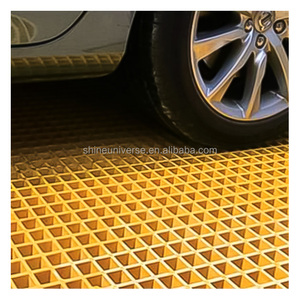
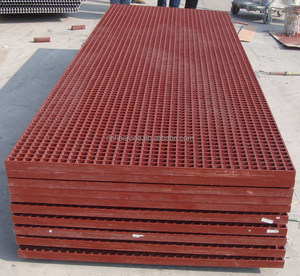
Pultruded phenolic FRP gratings are recommended where high fire resistance, low smoke toxicity, and extreme chemical immunity are mandatory. Phenolic resins offer superior fire-retardant performance (tested to ASTM E84 Class 1 and low flame spread index), making them ideal for offshore platforms, marine vessel decks, battery storage rooms, and enclosed underground metro walkways. Additionally, FRP weighs up to 70% less than carbon steel, reducing structural dead load on elevated piperacks and drastically simplifying site handling without crane logistics.
To provide a rapid, fully priced quotation including freight estimates to Indian ports (Nhava Sheva / JNPT, Mundra, Hazira, or Chennai Port), our engineering department requires: (1) Wire diameter or bearing bar dimension and pitch; (2) Tray width (50 mm to 900 mm) and side flange height (35 mm, 50 mm, 75 mm, 100 mm); (3) Material grade (IS 2062 mild steel, AISI 304, AISI 316, or FRP); (4) Surface treatment specification (HDG to IS 4759 / ISO 1461, electro-polished, or painted); (5) Total linear meters or square meters; and (6) Any project-specific GA drawings detailing cut-outs or accessories.
Unlike conventional sheet metal trays that require rigid factory-ordered fittings, wire mesh trays can be configured directly in the field. Using heavy-duty asymmetric wire cutters, installers snip designated side-wire wires, bend the tray to the required radius (90° horizontal bend, inside/outside riser, or tee junction), and lock the joint using fast-connecting splice couplers and reinforced backing plates. This eliminates downtime caused by design revisions on site and reduces procurement inventory by over 40%.
Connect with our technical sales engineers to review project drawings, receive detailed load calculation tables, or obtain an export quotation for Indian industrial infrastructure projects.